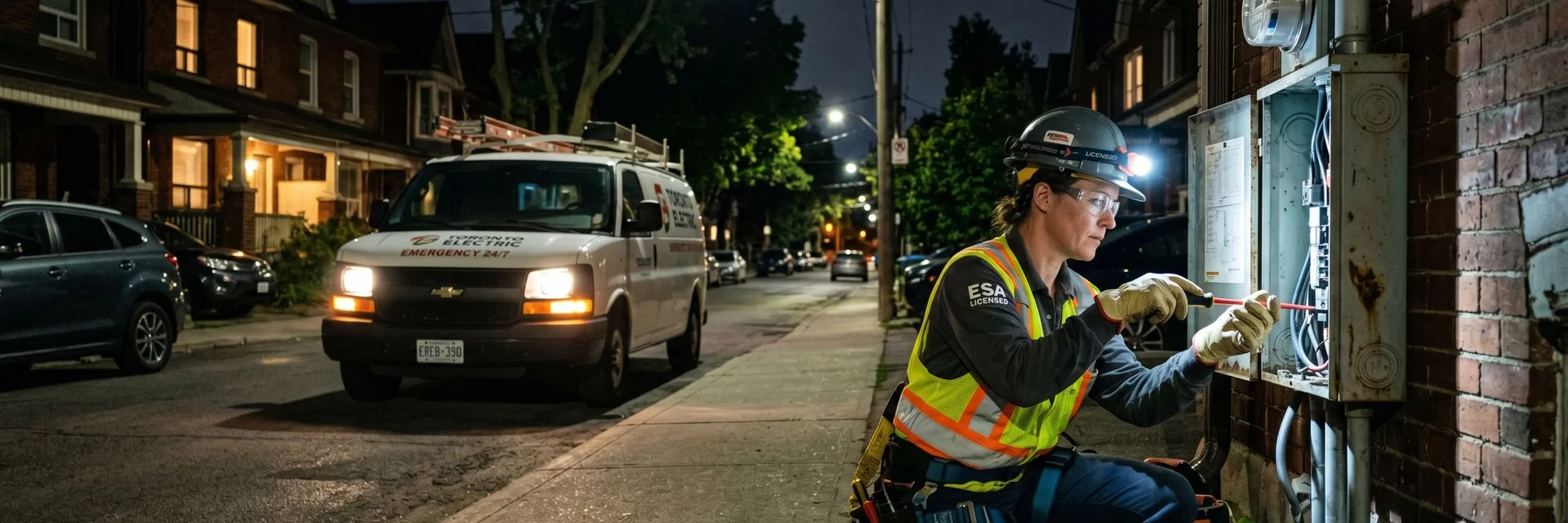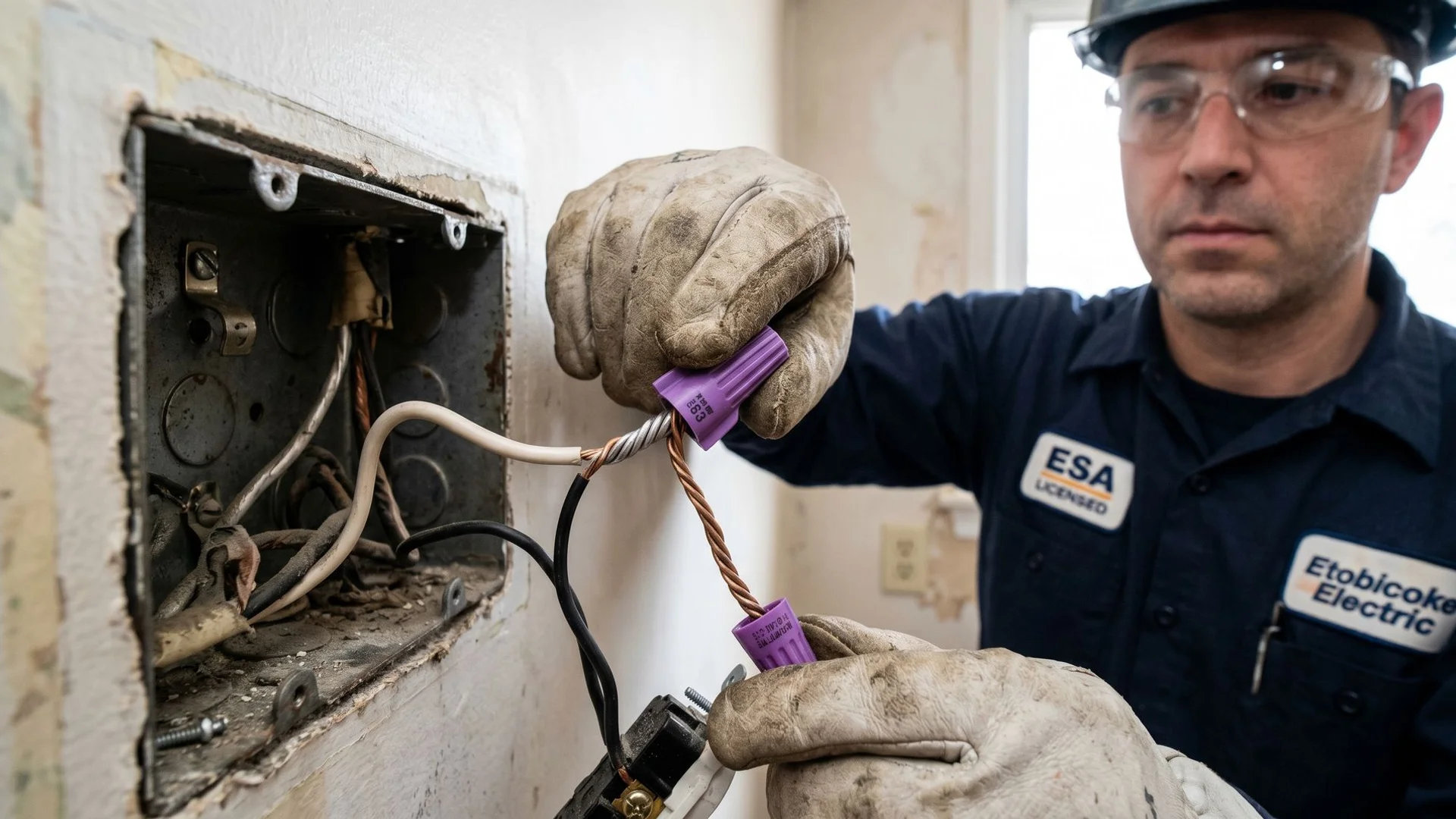
Toronto Electrical Contractor is an ESA-licensed electrical contractor based in Toronto, Ontario, that remediates aluminum branch-circuit wiring in 1965-1975 homes across the GTA. With 15+ years of experience and 1,500+ completed projects, every job we take on is permitted in-house and inspected by the Electrical Safety Authority (ESA).
Have you ever flipped a light switch and noticed a faint flicker, or felt a warm outlet cover? Those small quirks often point to a hidden fire hazard in older homes.
If your detached house, semi, bungalow, or townhouse was built between 1965 and 1975, there is a good chance it has single-strand aluminum branch-circuit wiring behind the walls. Builders used it because copper prices spiked at the time, and it shows up today on home inspections across North York, Scarborough, and Etobicoke.
This page walks you through what aluminum wiring means for your property, what your insurer will ask for, and the ESA-approved ways to fix it.
Why Aluminum Branch Wiring Overheats and Fails
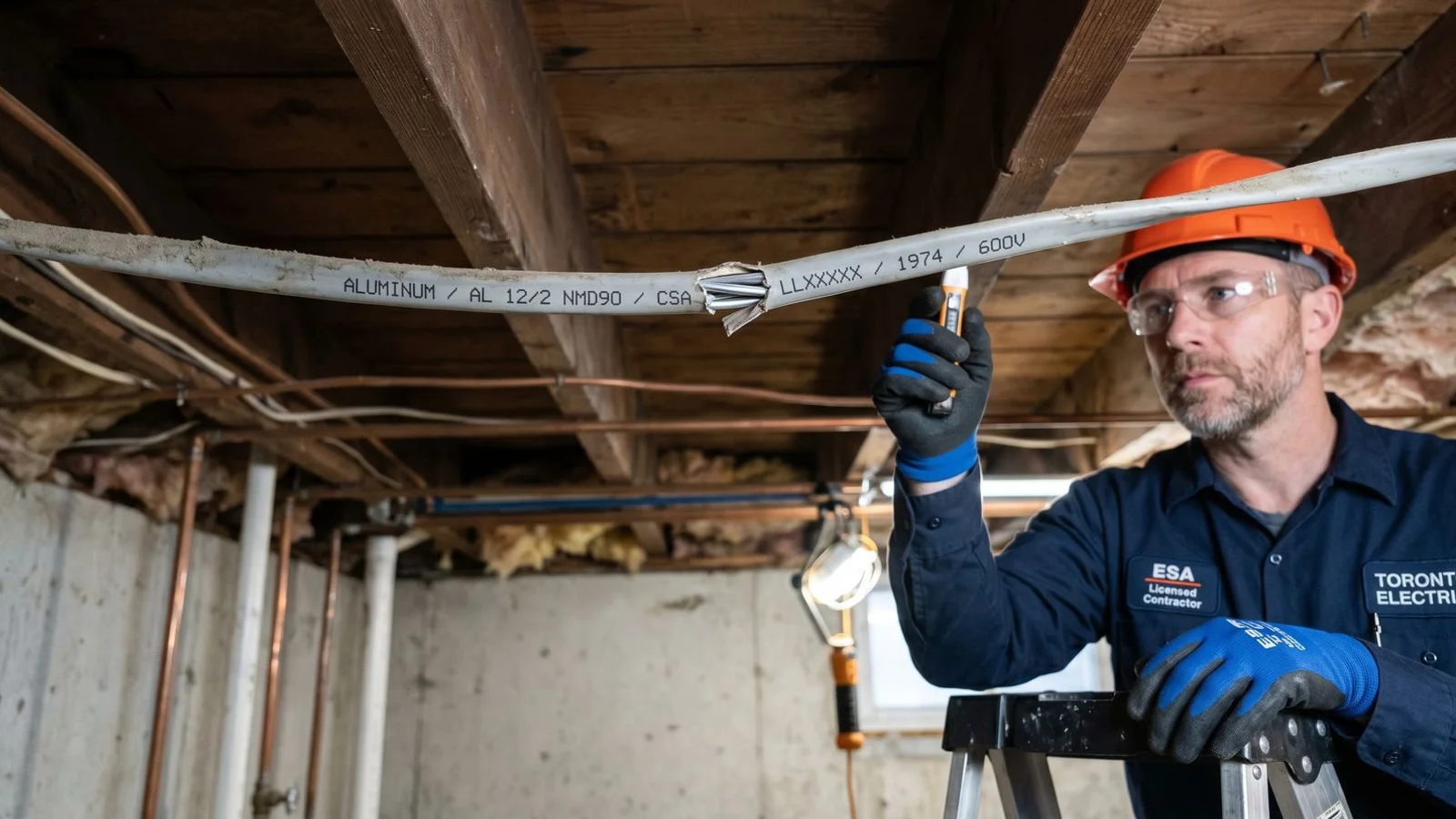
The core issue is how the metal behaves over time. Aluminum expands and contracts at a very different rate than copper wiring when heated by electrical current. This constant thermal cycling slowly loosens the connections around the brass screws on your outlets and the steel terminals inside your junction boxes.
When those connections loosen, a chain reaction begins behind your walls:
- The exposed aluminum develops a thick layer of oxidation.
- This aluminum oxide acts as a poor conductor, significantly raising electrical resistance.
- The increased resistance generates excess heat at the connection point.
- The heat further accelerates the loosening process, creating a vicious cycle.
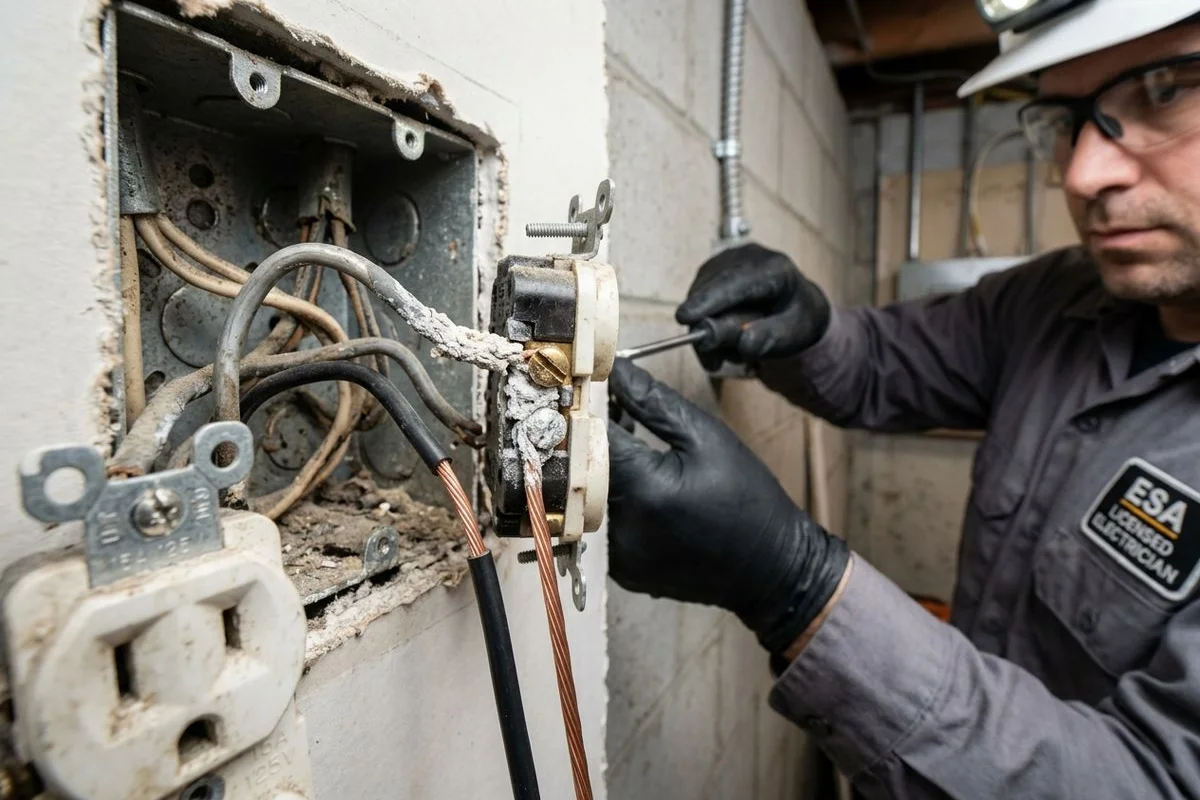
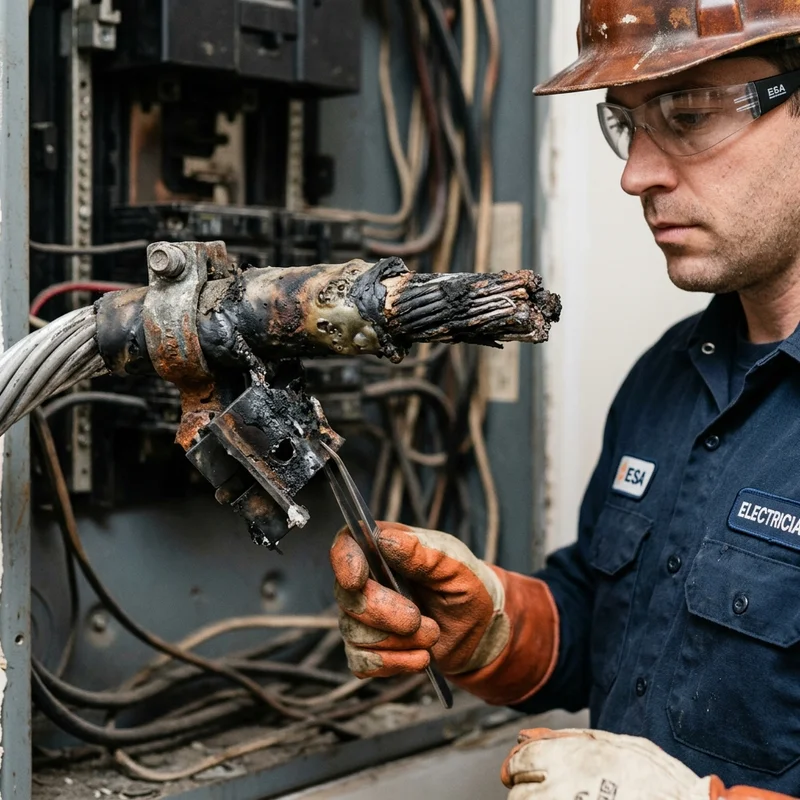
Left alone, this cycle leads to an arc fault inside your wall. It shows up as a scorched device box during a pre-purchase inspection, or as a structure fire. The U.S. Consumer Product Safety Commission found that homes with aluminum wiring are 55 times more likely to experience a fire hazard condition than those wired with copper.
To check your own home, head down to the basement or into an open attic and look at the exposed cable jackets. If you see the letters “AL” or “ALUMINUM” stamped on the casing, you have identified the culprit. A full electrical safety inspection confirms the extent before you buy, sell, or renew your policy.
Solid aluminum service-entrance and feeder cable is safe and does not need remediation. This heavy-duty wire connects your meter, panel, and sub-panels. The issue is isolated to the single-conductor branch-circuit aluminum running to your switches, outlets, and fixtures.
Electrical Safety Authority Sign-Off for Ontario Insurers
Most homeowners discover aluminum wiring right when they are trying to secure home insurance. As of 2026, unmodified aluminum wiring is one of the most common reasons for insurance non-renewal across Ontario. Insurers view older, unmitigated connections as an elevated liability risk.
Pre-purchase inspections almost always flag these systems on 1965 to 1975 housing stock, whether it is a resale bungalow in Wexford or a condo townhouse complex in Don Mills. That flag usually triggers a strict 30 to 60 day remediation window, or an outright refusal to insure the property.
Most Ontario insurance providers require the following items for approval:
- A professional assessment by a Licensed Electrical Contractor.
- Proof of remediation using ESA-approved methods, completed to the Ontario Electrical Safety Code.
- The official ESA Certificate of Acceptance.
The Electrical Safety Authority issues a Certificate of Acceptance after professional pigtailing or a full replacement passes inspection. This is the exact document your insurer needs to see to approve your policy.
Toronto Electrical Contractor handles the entire compliance process from start to finish. We file the permit, complete the work, and schedule the official inspection. You then receive the Certificate of Acceptance alongside a sample insurer letter to attach directly to your renewal package.
How Does AlumiConn Pigtailing Fix Aluminum Wiring?
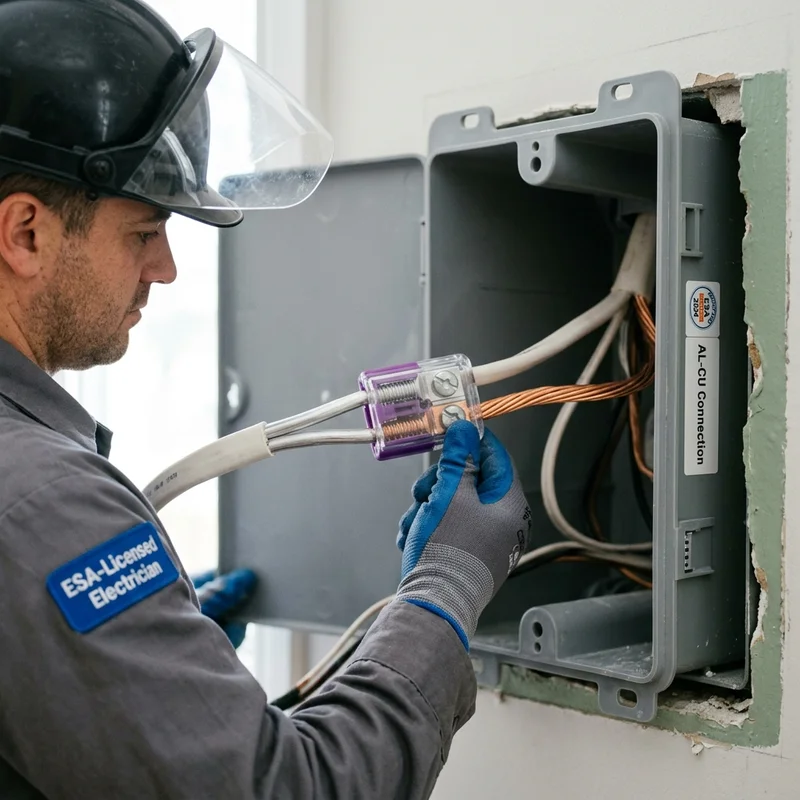
If a full rewire sounds overwhelming, there is a widely accepted, budget-friendly solution. ESA-approved pigtailing installs a short length of copper wire, known as a pigtail, between the original aluminum branch-circuit wire and your device terminal. This transition eliminates the oxidation risk at the most vulnerable spots.
The connection is made inside an approved connector. We use the AlumiConn, a small three-port set-screw connector, or the Ideal Twister AL/CU, a purple twist-on cap filled with an antioxidant compound that prevents future corrosion.
This method addresses the root cause of the fire hazard. The aluminum no longer touches a brass or steel terminal, and the oxidation pathway is interrupted.
| Connector Type | Key Feature |
|---|---|
| AlumiConn | Secure three-port set-screw design |
| Ideal Twister AL/CU | Purple twist-on cap with built-in antioxidant |
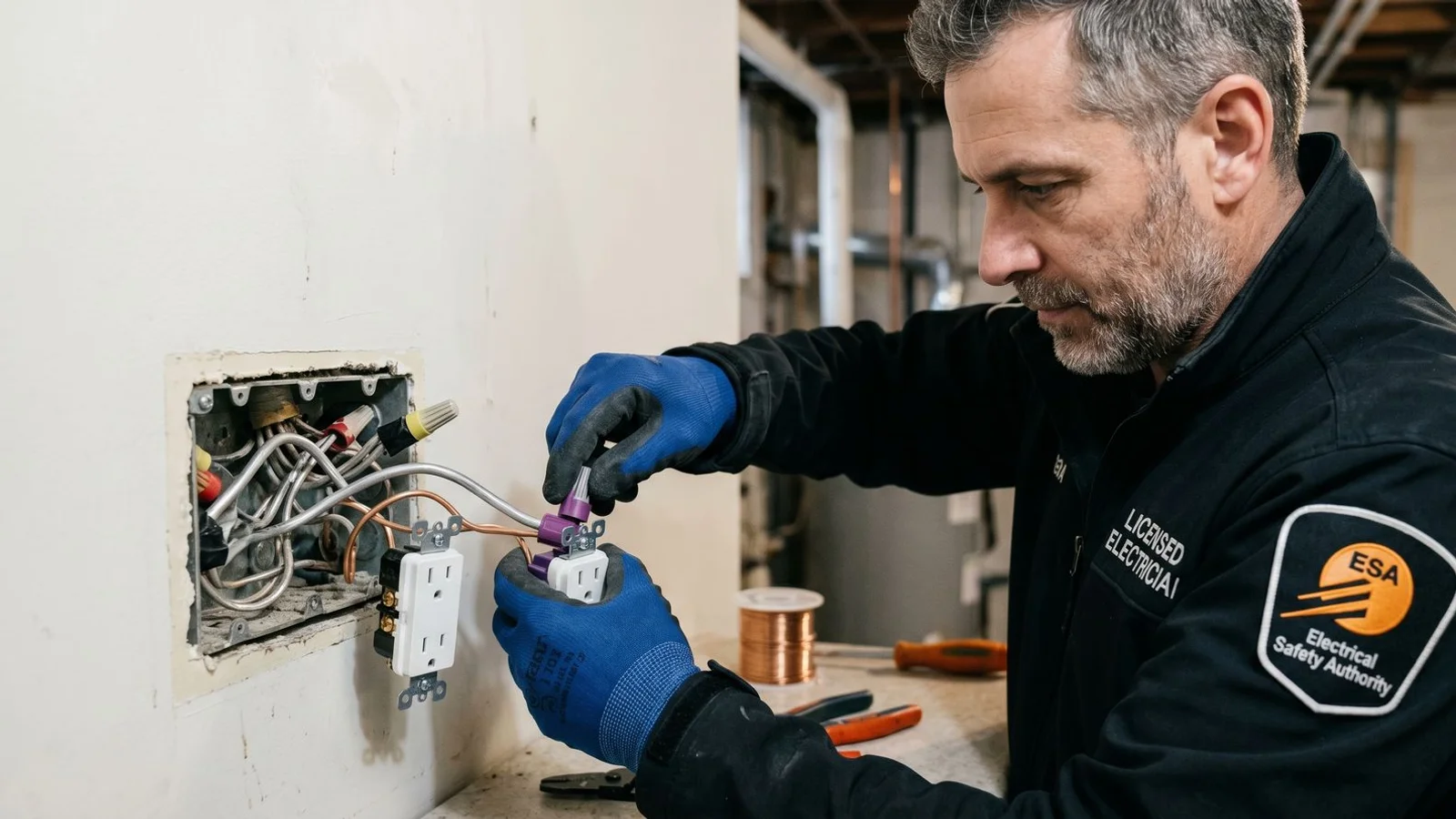
Our technicians pigtail every termination on every aluminum branch circuit, rather than only the easy-to-reach outlets. That covers all the critical connection points:
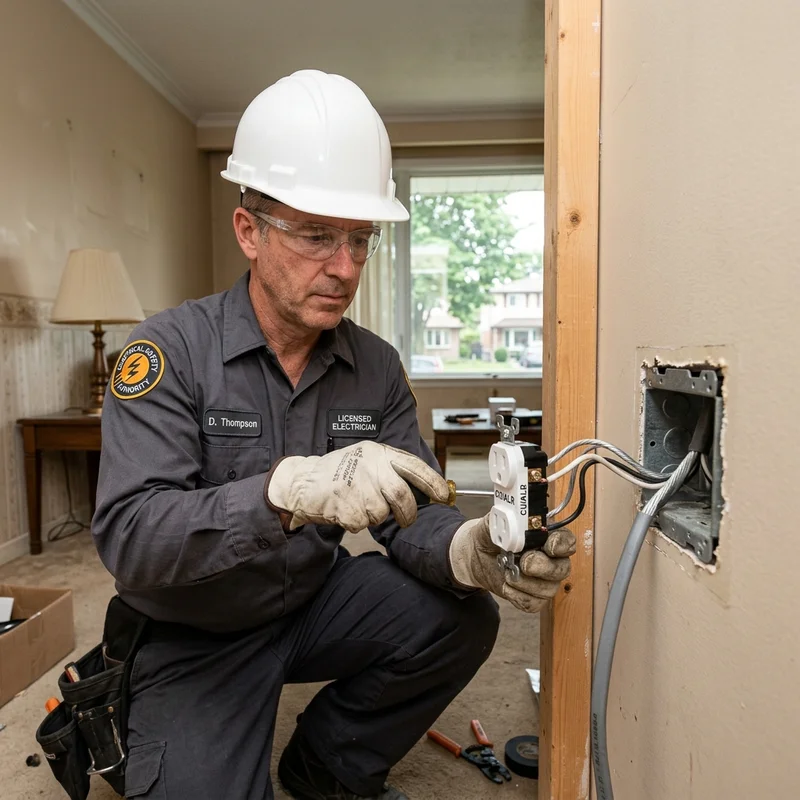
- Outlets and switches (where CO/ALR-rated devices replace the original components)
- Light fixtures (adding a pigtail right at the fixture box)
- Junction boxes (securing a pigtail at every single junction)
- Panel lugs (verifying AL-rated lugs and applying anti-oxidant compound)
Here is a breakdown of typical pigtailing costs in the GTA (2026 pricing):
| Service Detail | Estimated Cost |
|---|---|
| Per Device Pigtailing | $75 to $150 each |
| Typical Total Project (50 to 80 devices) | $5,000 to $10,000 |
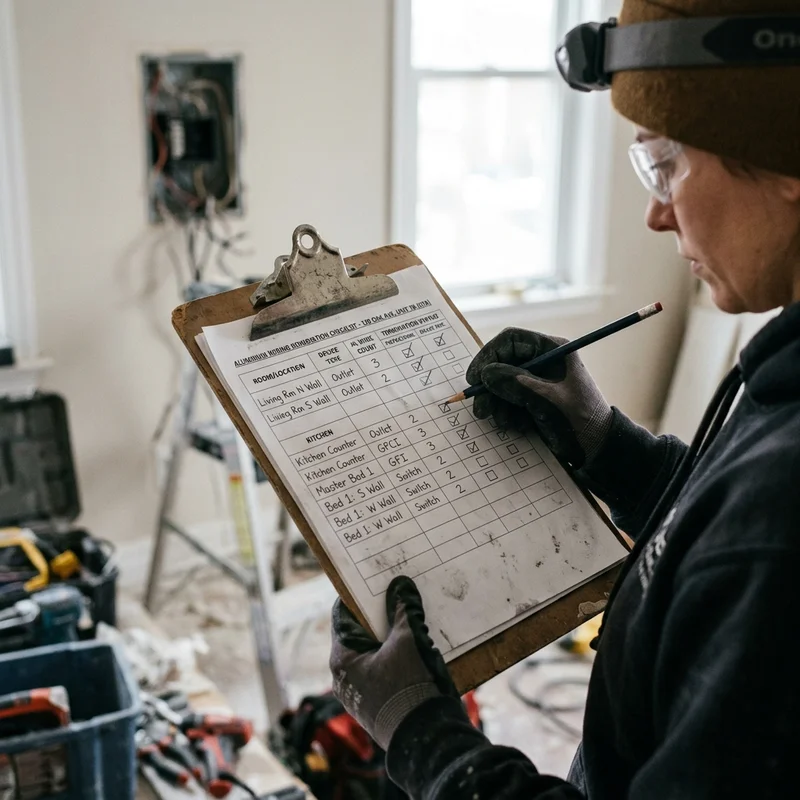
We count and quote per device so you know exactly what you are paying for upfront. A typical 2,000 square foot home lands in this range, which includes your ESA permit and final inspection.
When Is Full Copper Rewiring the Better Choice?
Sometimes a localized repair is not enough to guarantee long-term safety. We recommend a full aluminum-to-copper wire replacement instead of pigtailing in three specific scenarios. Replacing the wiring entirely is a permanent solution that modernizes your home.
Existing Arc Damage
If a few terminations already show severe heat distress, like scorched device boxes or melted insulation, pigtailing the remaining ones is only a partial fix. Full replacement of the affected branches addresses the actual defect and ensures no hidden thermal damage is left behind your drywall.
Major Renovation in Progress
If you are already gutting a kitchen or bathroom, pulling fresh copper cable through opened-up walls is straightforward, and the added labour is small because no drywall has to be opened just for the wiring.
We advise clients to tackle electrical upgrades while the studs are exposed to avoid paying for drywall repairs twice.
Specific Insurer Requirements
A handful of Ontario insurers require full replacement to issue a policy and reject the pigtailing option. We tell you which requirements apply during your initial quote. If your policy is with one of those carriers, a full rewire is the only path that closes the file.
For a full replacement, bundling a panel upgrade is highly recommended. New copper branch circuits trigger modern AFCI and GFCI breaker requirements under the Ontario Electrical Safety Code, and older electrical panels do not have the physical space for these larger safety breakers.
Aluminum Wiring Remediation Across Toronto and the GTA
Aluminum wiring follows the historic building booms across the region. We regularly find it in these neighbourhoods:
- North York: Detached and semi-detached homes built between 1965 and 1975 in Don Mills, Bayview Village, and Bathurst Manor.
- Scarborough: The classic postwar bungalows found throughout Wexford and Bendale.
- Etobicoke: Established subdivisions like Markland Wood and Rexdale.
- Mississauga: Postwar properties, particularly in Cooksville and the older sections of Erin Mills.
- The Annex and High Park: Older heritage homes often hide aluminum in 1960s or 1970s additions, sometimes layered directly over original knob-and-tube systems.
Searching for aluminum wiring help near you in Brampton, Vaughan, Markham, or Richmond Hill? The same 1965-1975 subdivisions exist there, and we quote and permit them the same way.
Layered electrical scopes in older neighbourhoods, such as aluminum additions over knob-and-tube, are best handled as a single bundled project. Fixing multiple electrical eras at once saves you from paying for separate, disruptive repairs later.
How Our Remediation Compares
| Feature | Typical Provider | Toronto Electrical Contractor |
|---|---|---|
| ESA permit | Sometimes left to the homeowner | Filed in-house under our LEC on every job |
| Pricing | Hourly estimate | Per-device quote, $75-$150 per device |
| Scope | Outlets and switches only | Every termination, including fixtures, junction boxes, and panel lugs |
| Insurance paperwork | Invoice only | ESA Certificate of Acceptance plus sample insurer letter |
| Emergency response | Business hours | 24/7, under 60 minutes across the GTA |
Call Toronto Electrical Contractor at (416) 900-2963 or request a free estimate to book your remediation and secure your ESA Certificate of Acceptance.