Basement Wiring: Finished Rec Room or Legal Suite?
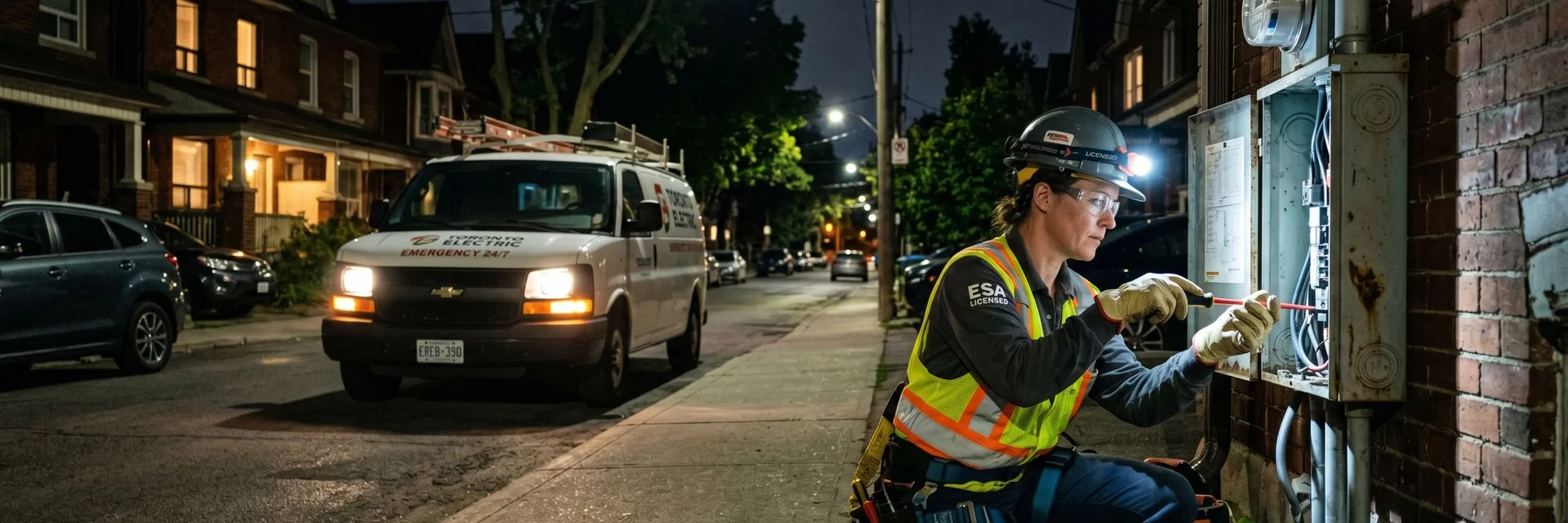
Toronto Electrical Contractor is an ESA-licensed electrical contractor based in Toronto that wires basement renovations, legal basement apartments, and secondary suites across the GTA. With 15+ years in the trade and 1,500+ completed projects, our licensed electricians pull every ESA permit in-house and line up inspections with your City of Toronto building permit.
Most basements we wire sit under detached and semi-detached homes, post-war bungalows, and side-splits. Every one of those jobs falls into one of two categories. The two scopes look similar on the surface, but the costs and code requirements are completely different.
Finished Basement Renovation
You are finishing the basement for your own personal use. This includes spaces like a rec room, home gym, home office, or a kids’ play area.
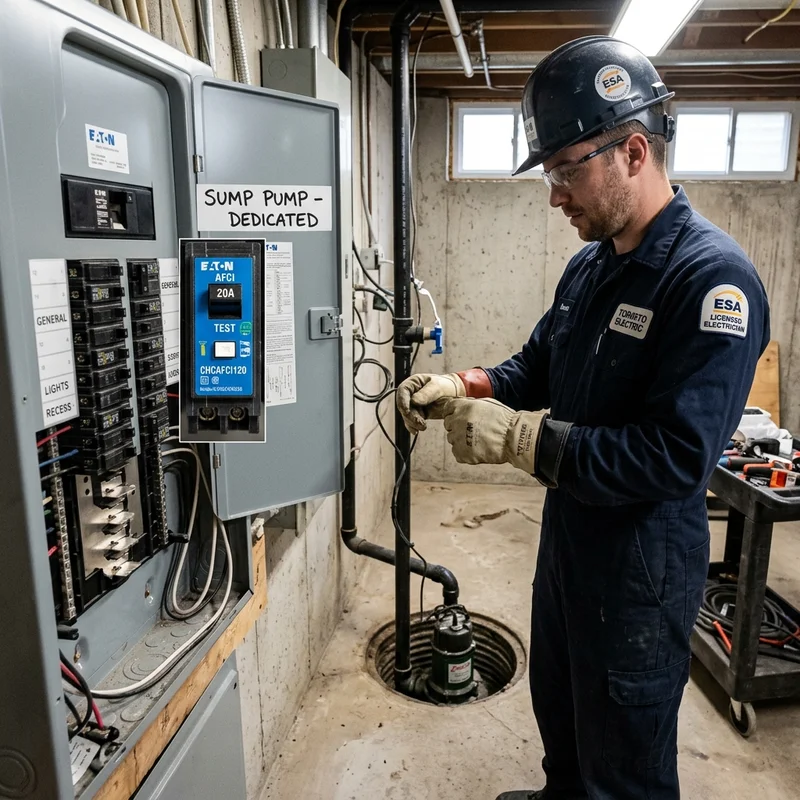
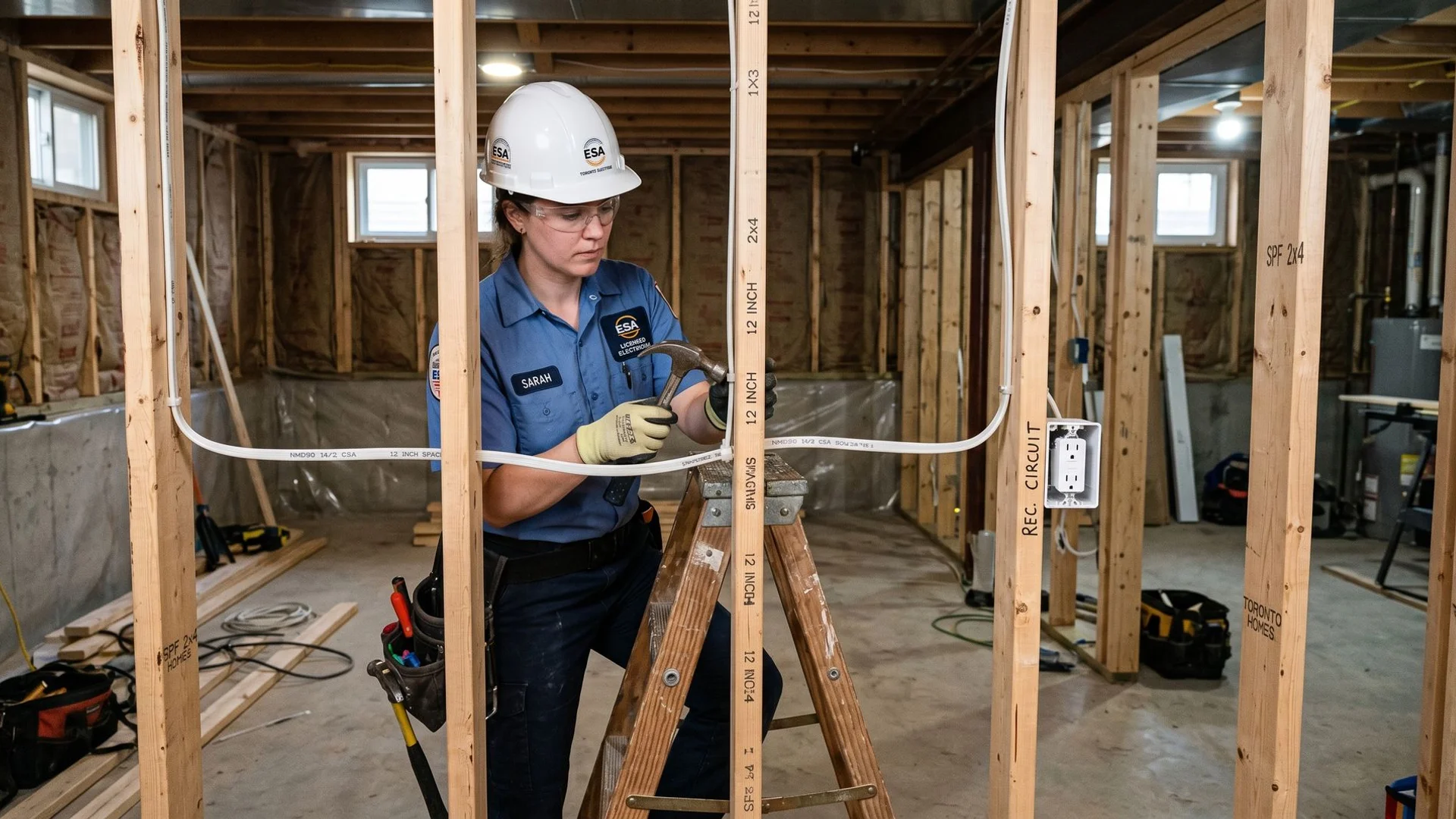
The scope here is typical residential branch-circuit work. You usually need 8 to 12 receptacles, pot lights or standard lighting, and maybe a wet bar or sump pump.
Some projects need a 240V circuit for a sauna or workshop tool. The electrical portion of this work typically costs between $3,000 and $5,000.
Legal Basement Apartment (Secondary Suite)
You are creating a completely separate, legally rented unit, which Ontario now calls an additional residential unit (ARU). A full basement renovation for a suite in Toronto costs $80,000 to $150,000 in 2026.
The electrical scope is a major part of that budget. This project requires several specific additions to meet local bylaws:
- A separate unit kitchen with full code-required circuits.
- Separate laundry hookups.
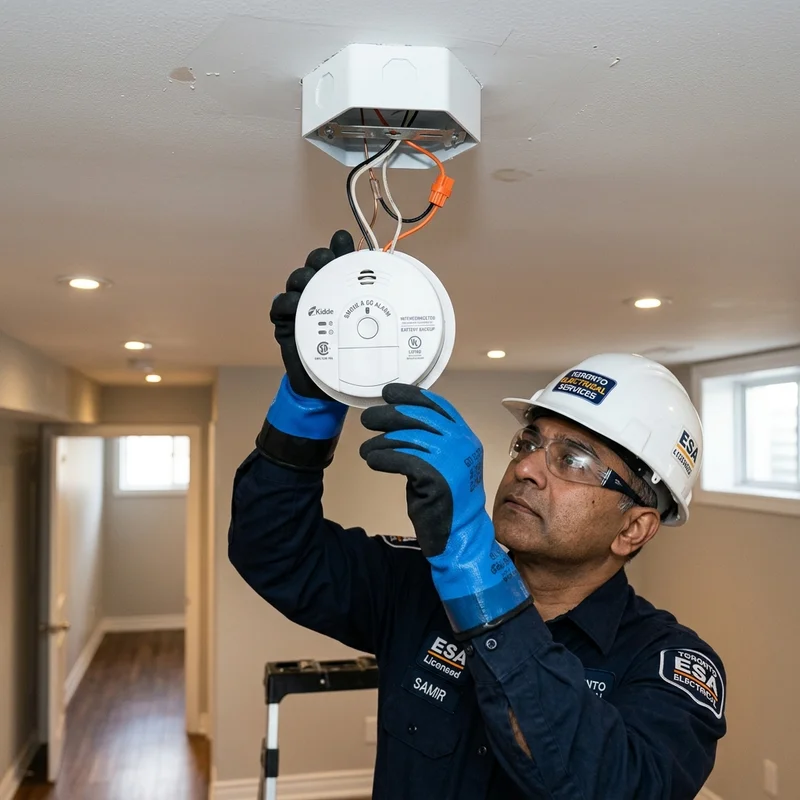
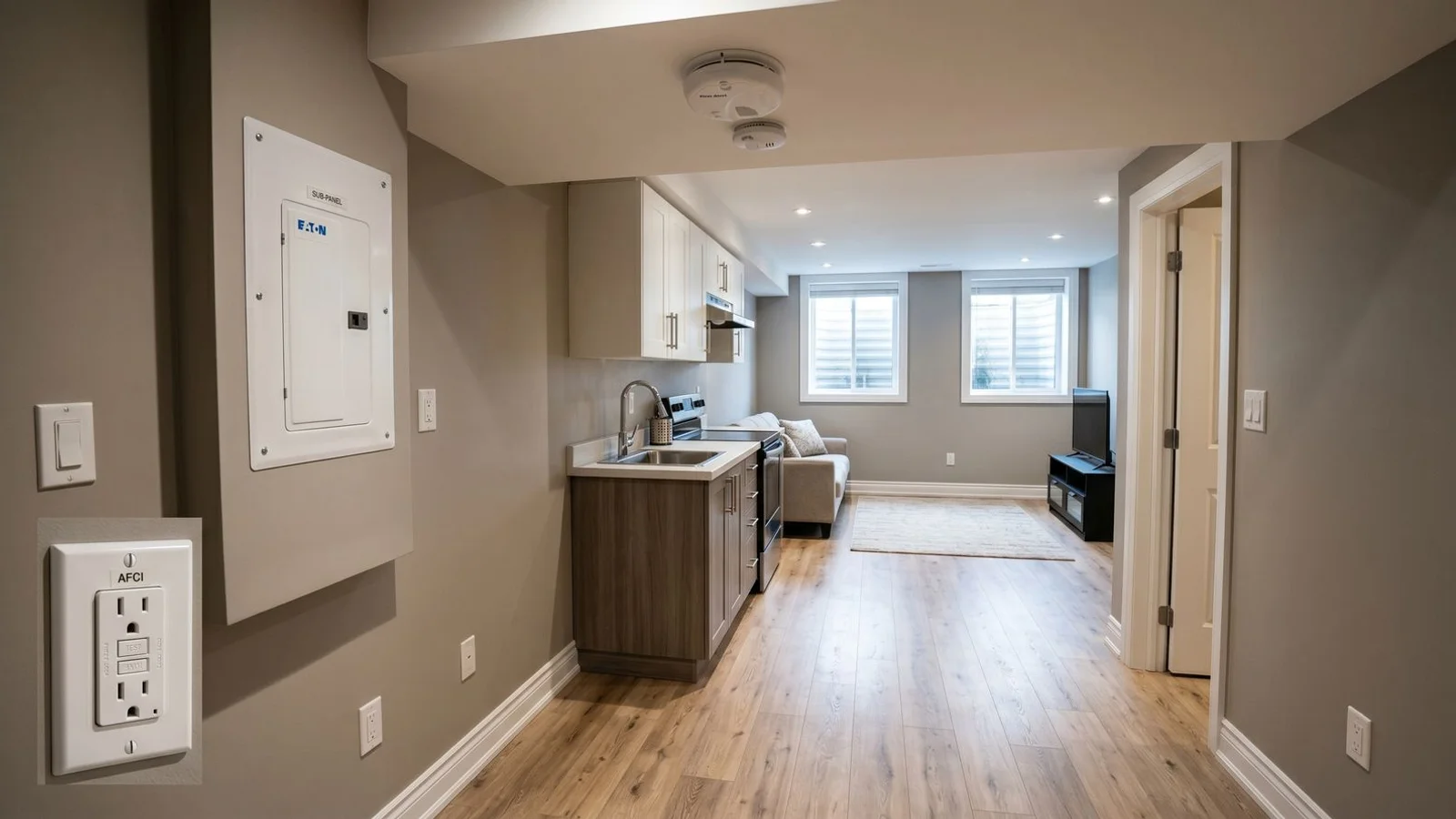
- Interconnected smoke and carbon monoxide (CO) detection.
- Fire-rated penetrations between the unit and main house.
Our installations usually include a separate sub-panel for billing or service separation. You must follow full City of Toronto secondary-suite bylaw compliance.
The electrical portion alone typically runs $7,000 to $14,000. We handle both types of projects.
The information below focuses on the legal apartment scope. This is the more intensive project, and it is where most local property owners have questions.
Legal Second Suite Wiring Requirements in Toronto
Toronto actively encourages secondary suites to boost housing supply. Ontario’s Bill 23 lets most homeowners add up to three units on a residential lot, which has made basement apartments one of the most common renovations in the city.
The city’s secondary-suite rules apply across the former municipalities of North York, Scarborough, and Etobicoke, and neighbouring GTA cities like Mississauga and Brampton have their own second-unit bylaws. Electrical compliance forms a large share of those rules.
Our licensed electricians follow the Ontario Electrical Safety Code (OESC) on every suite. You need to meet several major requirements to pass your inspections.
Kitchen and Laundry Power Needs
Unit kitchens require heavy power to meet safety standards. They need at least two split-circuit countertop outlets.
You must install a dedicated circuit for a dishwasher, a dedicated microwave or microhood circuit, and a fridge circuit. Most living-area circuits also require Arc Fault Circuit Interrupter (AFCI) protection.
Unit-side laundry equipment demands its own power supply. You need a dedicated 240V dryer circuit and a separate 120V washer circuit.
HVAC, Smoke Detectors, and Fire Separation
Heat pumps or electric baseboards add significant load to your system. Mini-split installations always need a dedicated 240V circuit.
Interconnected smoke and CO alarms are a top inspection item. Alarms in the unit and the main house living areas must be wired together.
If one alarm sounds, they all sound. We run this specific interconnect wire during the rough-in stage.
Fire separation is another critical safety factor. Any spot where an electrical cable passes through a fire-rated wall or ceiling needs a listed firestop seal.
Toronto Electrical Contractor’s electricians coordinate directly with your framing contractor, so every penetration is sealed to fire code before the drywall goes up.
The Sub-Panel Advantage
Most legal apartments get a separate sub-panel. This setup is practical for tenant-billable separation if you plan on sub-metering.
It also keeps the rental unit’s circuits separate from the main house. A standard 100A main panel lacks the breaker space for an entire kitchen, laundry, and HVAC scope.
| Sub-Panel Benefit | Why It Matters |
|---|---|
| Tenant Billing | Allows for clear separation of electrical usage if sub-metering is installed. |
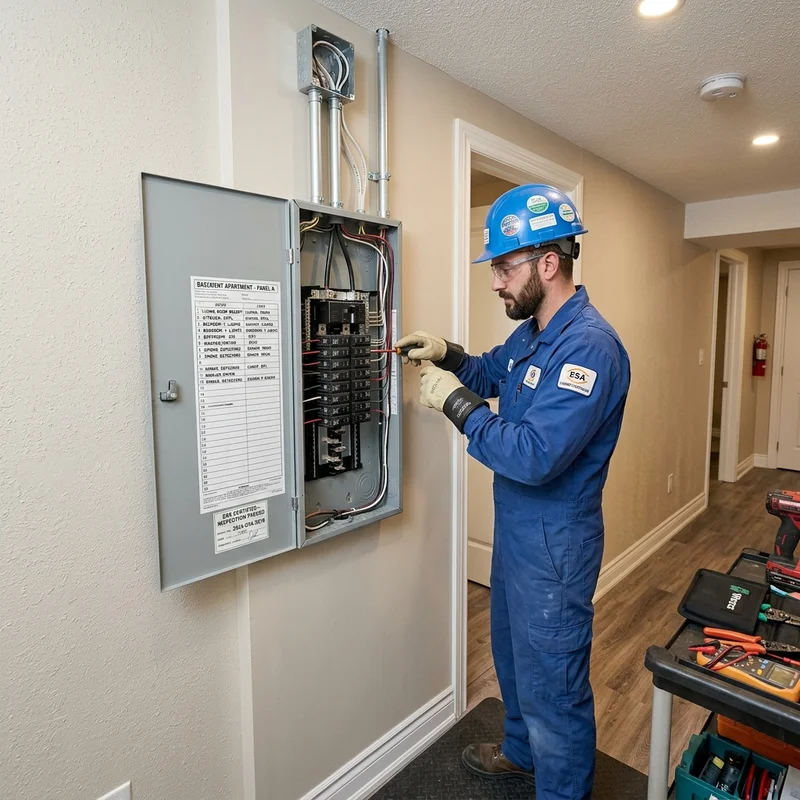
| Code Compliance | Groups the unit’s AFCI/GFCI-protected circuits in one labelled panel for the ESA inspector. |
| Breaker Capacity | Provides the physical space needed for the heavy 240V kitchen and laundry circuits. |
How Does the ESA Rough-In and Final Inspection Work?
The work happens in three distinct phases, sequenced around your building permit inspection schedule.
An Electrical Safety Authority (ESA) permit typically costs between $200 and $800 in Ontario. For a rental suite, a Licensed Electrical Contractor must pull this permit, and Toronto Electrical Contractor files it in-house on every job.
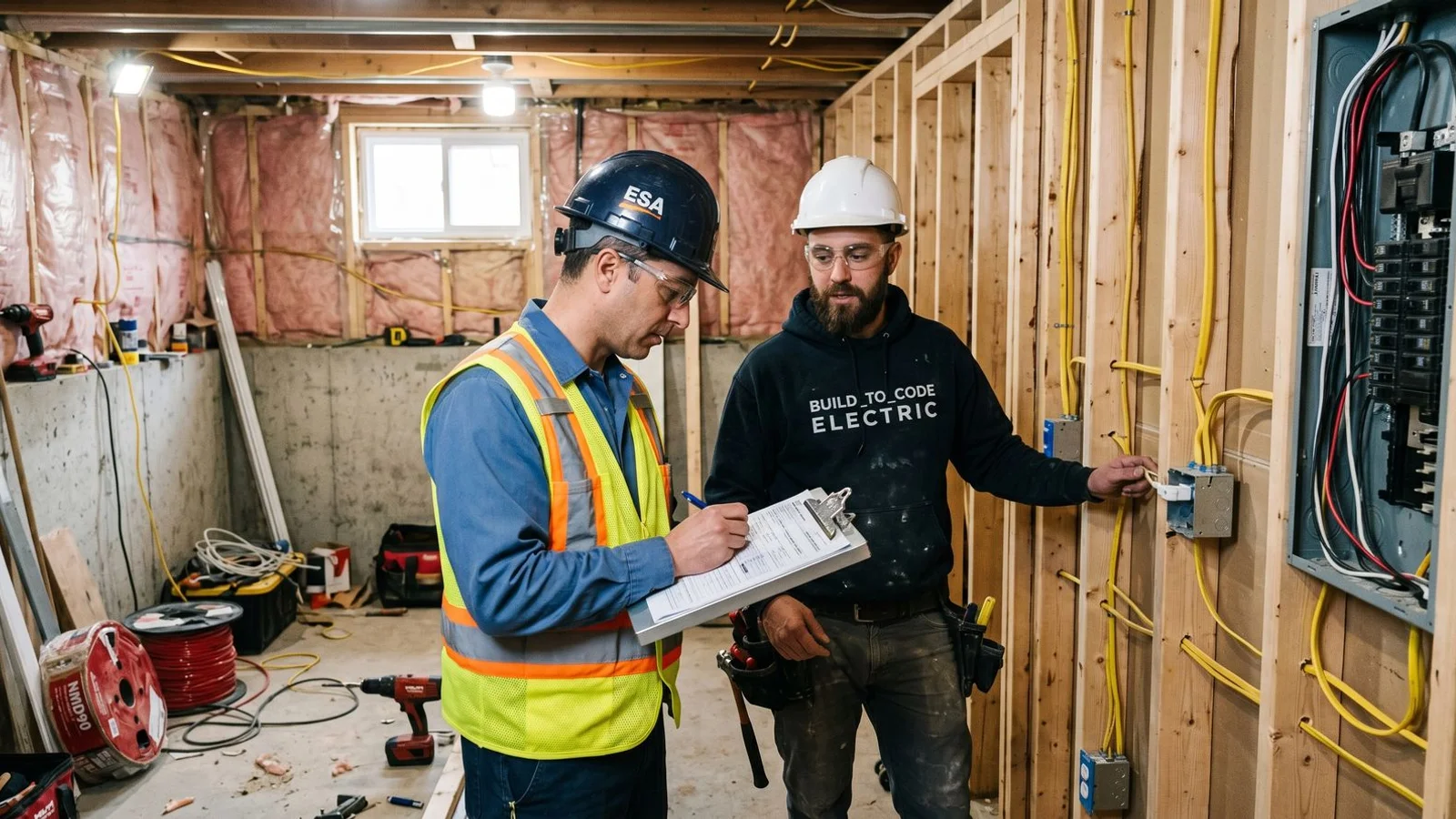
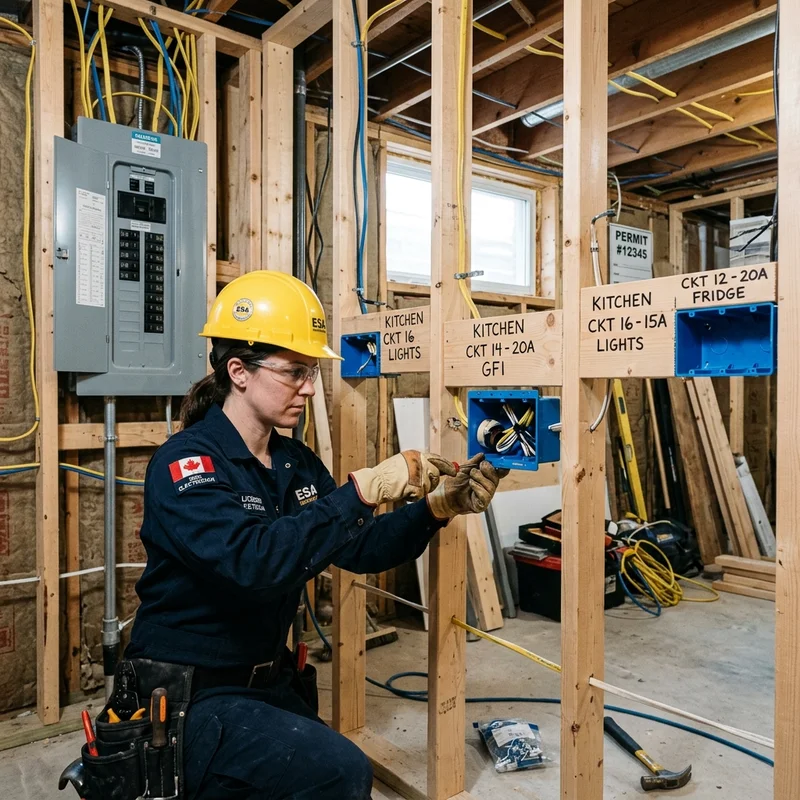
- 1. Rough-in (before drywall): Your electrician mounts boxes, runs cables, and installs the sub-panel to the Ontario Electrical Safety Code. We also place the smoke and CO interconnect wire. An ESA rough-in inspection verifies all wiring before insulation or drywall closes the walls. You cannot skip this step.
- 2. During drywall: No active electrical work happens during this phase. Our electricians coordinate with the framing and drywall trades to handle penetration sealing.
- 3. Final: Your contractor installs devices, hangs fixtures, and completes the panel directory. We test AFCI and GFCI breakers using their self-test functions. The smoke and CO alarms are fully commissioned at this stage.
The ESA final inspection issues the Certificate of Acceptance. This certificate is the exact document the City needs to close your building permit.
It is also non-negotiable for your home insurance.
Basement Electrical Plus a Panel Upgrade: One Permit, One Certificate
About 60% of the legal apartment projects we do bundle a panel upgrade into the scope. The standard 100A main panel usually cannot support the new sub-panel feed alongside the existing main house load. A 100A to 200A upgrade costs $1,800 to $3,500, and we coordinate the Toronto Hydro disconnect and reconnect when the service size changes.
Sometimes, the existing main panel is an outdated brand like Federal Pacific or Zinsco. You cannot add new circuits to these older, unsafe models.
Bundling the work brings three clear benefits to your basement electrical renovation:
- Single Permit: You only pay for one ESA permit for the entire project.
- One Certificate: You receive a single Certificate of Acceptance for your records.
- Maximum Safety: Your sub-panel runs cleanly from a brand new 200A main service.
For post-war bungalows in North York neighbourhoods like Willowdale and Don Mills, and in Scarborough areas like Bendale and Wexford, this is almost always the right move. The original 60A and 100A services in these homes are too small for a second unit.
A panel upgrade costs the same whether you do it now or in two years, but doing it alongside the basement means one permit, one inspection sequence, and one set of walls opened instead of two.
How Our Basement Projects Compare
| Feature | Typical Provider | Toronto Electrical Contractor |
|---|---|---|
| ESA permit | Sometimes left to the homeowner or general contractor | Filed in-house on every job |
| Pricing | Hourly or time-and-materials | Flat-rate quote before work starts, free estimate |
| Inspections | ESA and City visits booked separately | ESA rough-in and final timed with your City of Toronto building inspections |
| Panel capacity | Checked after rough-in | Load calculation included in the quote |
| Close-out | Varies | ESA Certificate of Acceptance for your building permit and insurer |
Looking for a licensed basement electrician near you? Our crews work across Toronto and the GTA, from Etobicoke and Mississauga to Markham and Richmond Hill. Call (416) 900-2963 or request a free estimate, and we will walk you through the permit process and quote your basement at a flat rate.