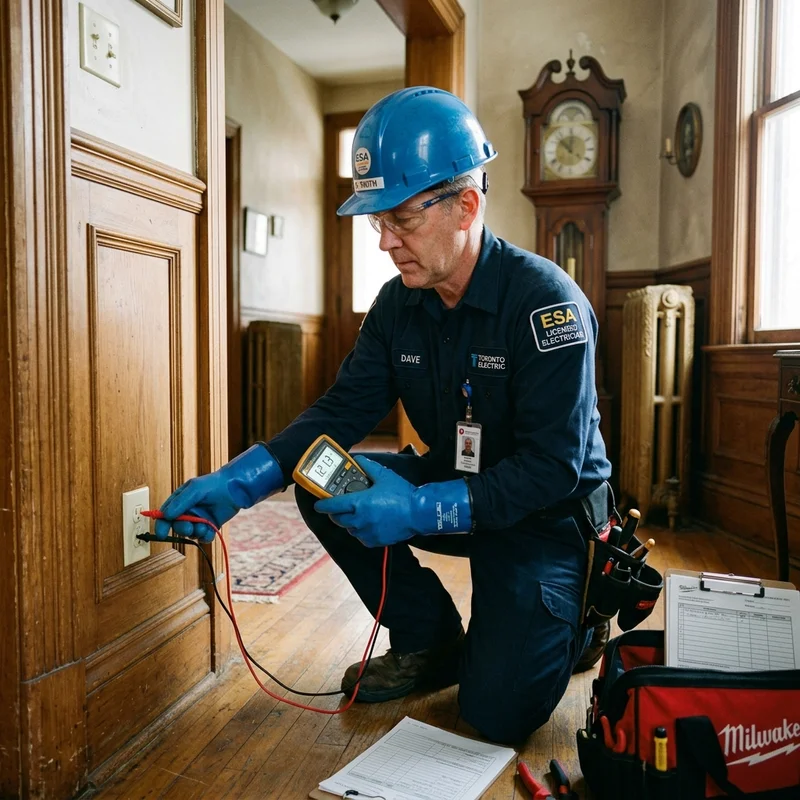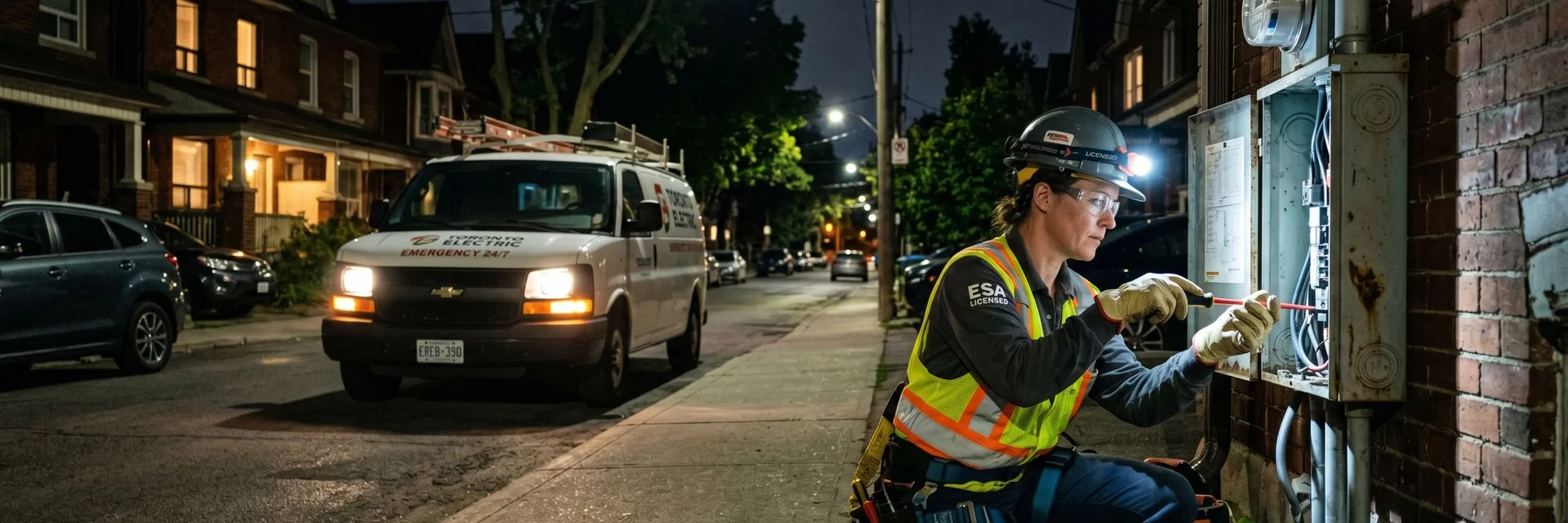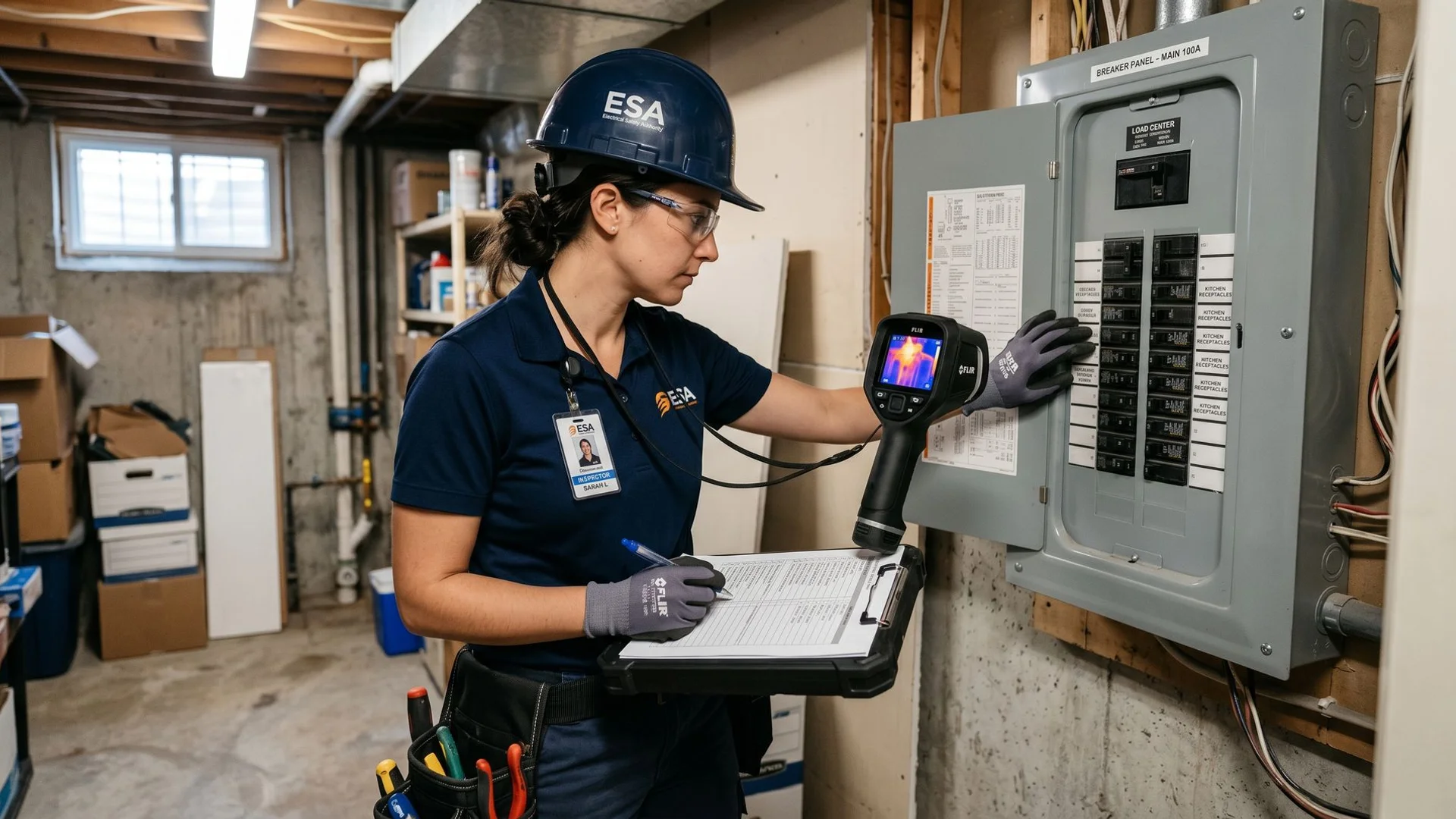
Toronto Electrical Contractor is an ESA-licensed electrical contractor in Toronto that performs electrical safety inspections for home buyers, sellers, landlords, and insurance renewals on residential and commercial properties across the Greater Toronto Area. With 15+ years in the trade and 1,500+ projects completed, the crew delivers a written, ESA-recognized deficiency report within 48 hours for $250-$450 on a typical home (2026 pricing).
Buying an older Toronto house on a conditional offer, or holding an insurance letter about knob-and-tube? Hidden wiring issues can delay a closing or cost you coverage.
Every inspection is measured against the current Ontario Electrical Safety Code (OESC), so you get documented answers instead of guesswork. Here is exactly what to expect from the process.
Do You Need an Electrical Safety Inspection in Toronto?
Four triggers account for nearly every inspection we book. Each one comes with a deadline, so our electricians offer same-week appointments at no surcharge.
- Pre-purchase: Your home inspector flags electrical concerns during the conditional period, and your lawyer or buyer’s agent needs a formal report from a licensed electrical contractor. Pre-purchase makes up roughly 60% of our inspection volume. Buyers typically face a 5 to 10 business day window before the condition deadline.
- Insurance renewal: Your insurer sends a letter demanding proof of remediation. Companies like Intact or TD Insurance often target knob-and-tube, aluminum wiring, or older panels. You need a current condition report to maintain coverage.
- Pre-listing: Sellers of semi-detached homes, bungalows, and Victorian row houses built before 1980 benefit from foresight. A full inspection reveals what a buyer’s inspector will find anyway, and you get a firm remediation quote right away. This approach usually costs less than negotiating a price drop later.
- Landlord licensing or post-DIY: Toronto’s Multi-Tenant (Rooming) Houses licensing bylaw, in effect since March 2024, requires operators to document electrical safety. Owners adding a legal basement apartment or secondary suite need the same paper trail. Unpermitted DIY work from previous owners is another major trigger.
We inspect residential properties, including detached houses, semis, row houses, condo townhouses, and rental units, plus retail storefronts, offices, and small mixed-use buildings for commercial clients. Commercial properties are quoted by scope.
What Our ESA-Recognized Inspection Report Covers
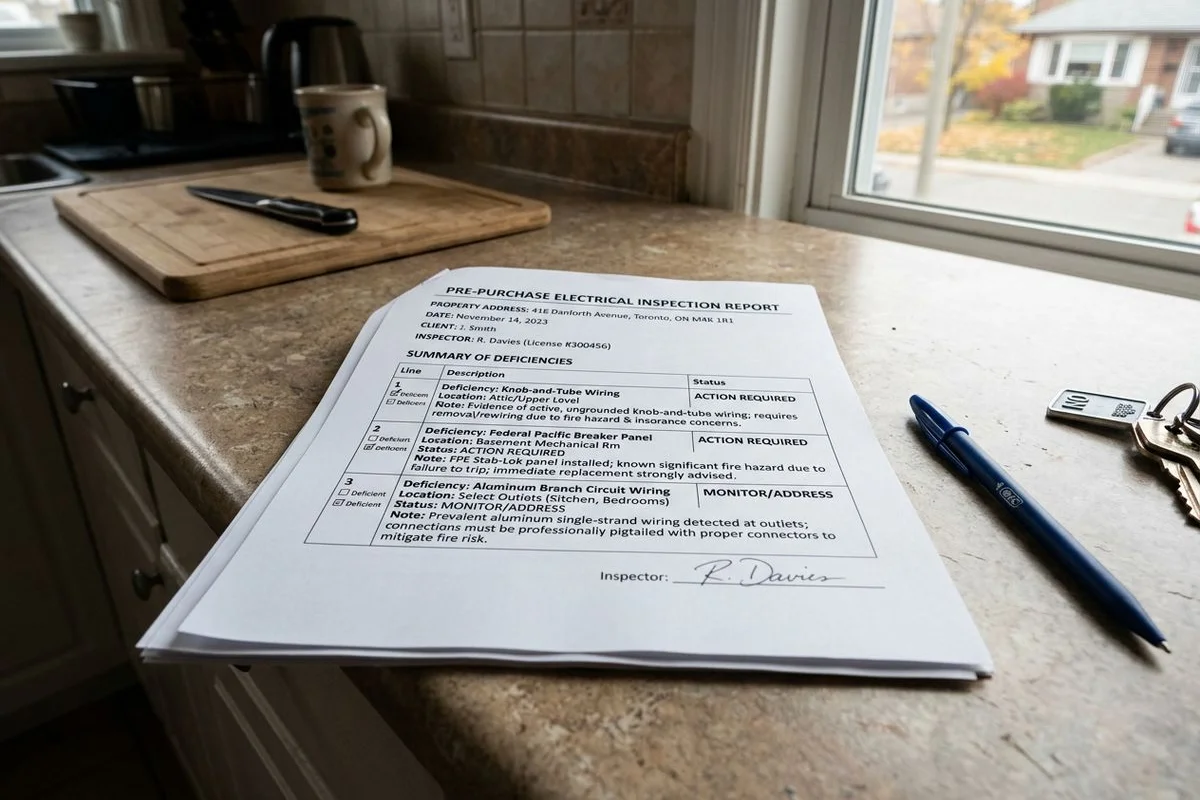
Every written report from Toronto Electrical Contractor details your panel and service condition. Branch-circuit assessments and device-level sample tests form the core evaluation, each checked against the OESC.
We also pull your Electrical Safety Authority (ESA) permit history. The final paperwork leaves no stone unturned.
| Inspection Area | Specific Actions Performed | Key Hardware Checked |
|---|---|---|
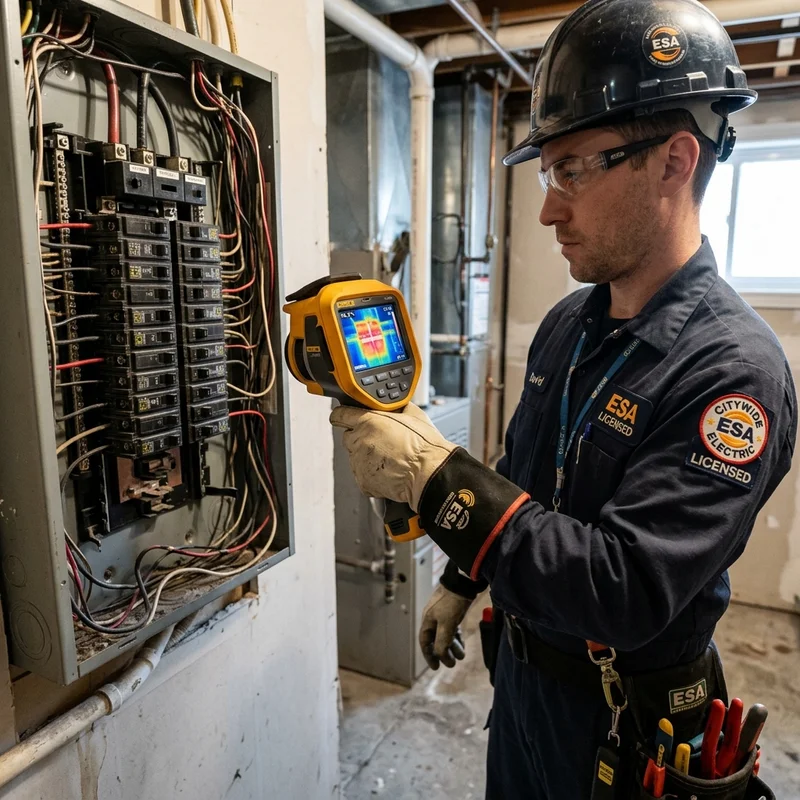
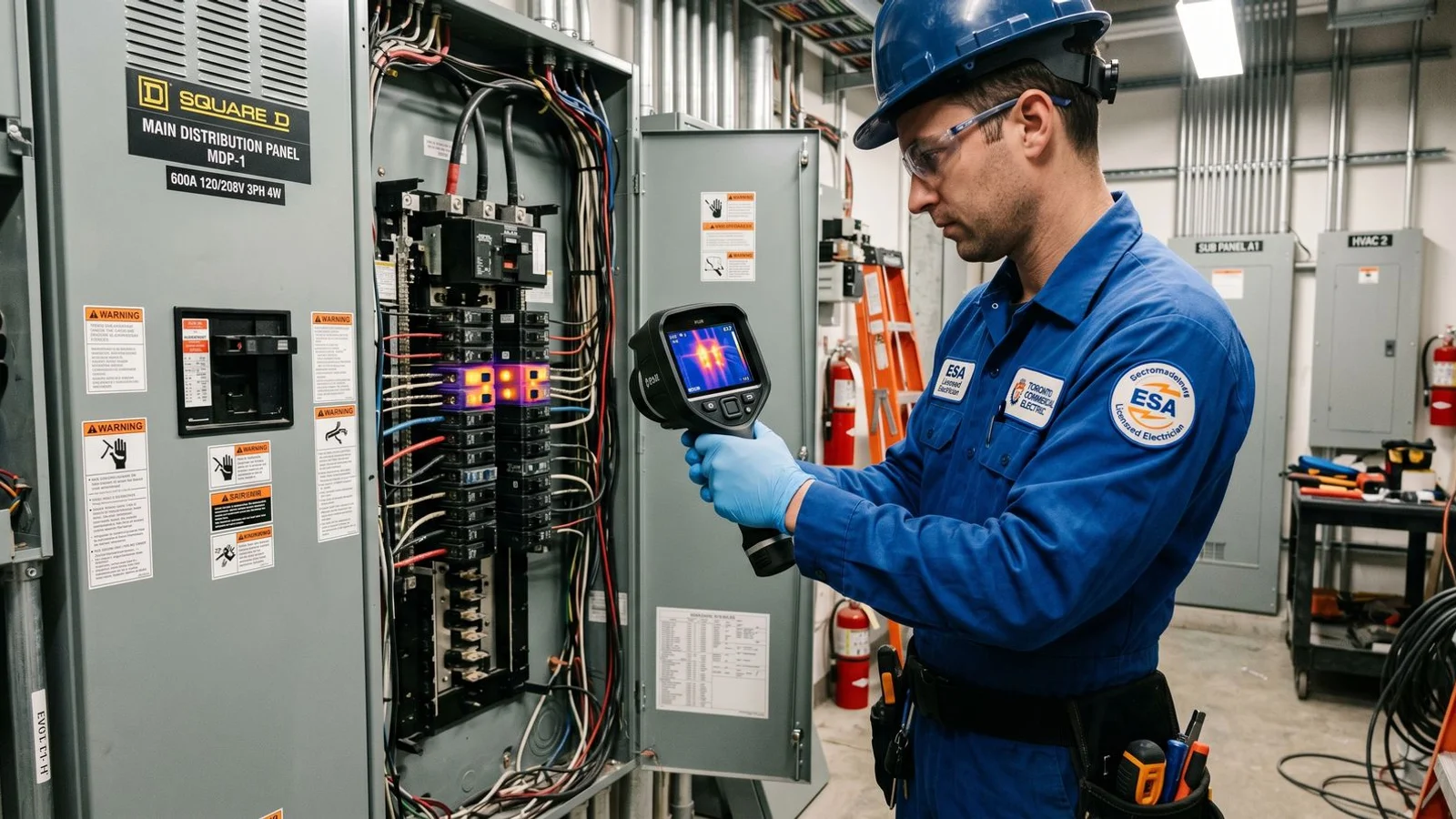
| Panel and Service | Remove cover for visual checks and thermal scans. | Federal Pacific, Zinsco, Square D, Siemens panels. |
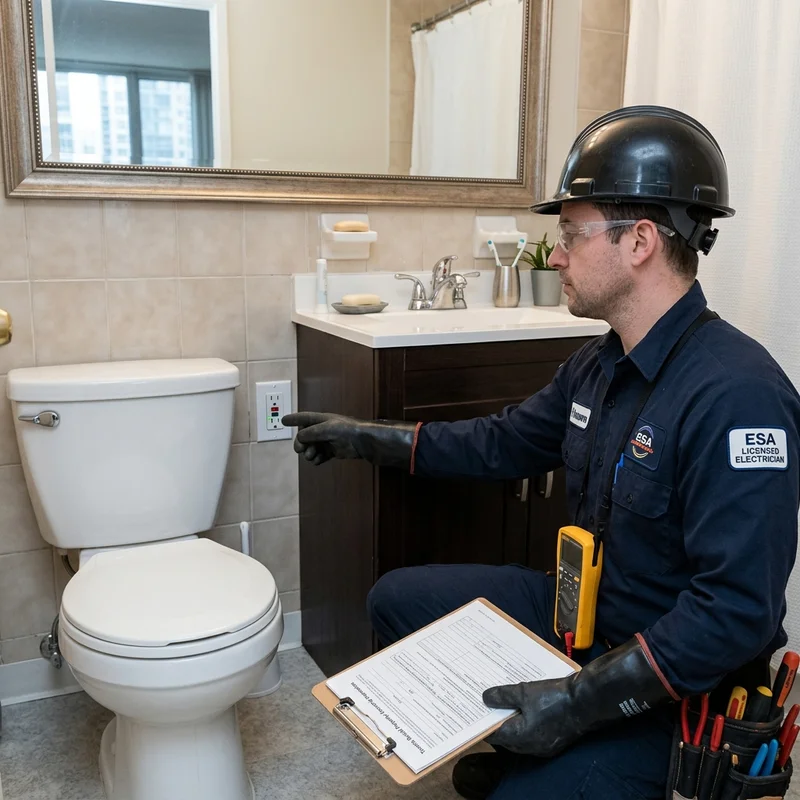
| Branch Circuits | Test 4 to 6 receptacles per circuit for polarity. | GFCI/AFCI breakers, wet location outlets, junction boxes. |
| Permit History | Pull publicly available ESA permit records. | EV chargers, basement renovations, service upgrades. |
Clear photos document every deficiency found on site.
Our team uses these details to generate a precise remediation quote.
- Thermal Scanning: Using FLIR technology to spot overheating breakers.
- Torque Checks: Securing accessible lugs against immediate fire risks.
- Visual Mapping: Locating knob-and-tube or aluminum wiring per circuit.
Most homeowners do not realize this public permit database even exists.
We identify unpermitted work by comparing what we see on site to the ESA records.
What We Find in Toronto Homes, Decade by Decade
Wiring standards have changed dramatically over the last century. Your neighbourhood often dictates the specific hazards hiding behind the walls.
We see distinct patterns based on the decade of construction. Knowing these trends helps you prepare for potential repair costs.
The current Ontario Electrical Safety Code requires stricter AFCI and GFCI protection than the codes most Toronto homes were built under.
Our reports highlight the gap between original construction and current safety standards.
- Pre-1950 homes: Victorian and Edwardian houses in The Annex, High Park, Riverdale, Cabbagetown, and Forest Hill frequently hide active knob-and-tube on bedroom and attic circuits. You will often find two-wire ungrounded outlets throughout the house. Many still run on original 60A or 100A feeds. A Federal Pacific or Sylvania-Zinsco panel added in the 1960s is another typical find.
- 1960s to 70s housing: Post-war bungalows and side-splits in North York, Scarborough, and Etobicoke often feature aluminum branch-circuit wiring. Federal Pacific Stab-Lok panels and original fuse boxes remain widespread. Dedicated kitchen circuits are usually absent.
- 1980s to 90s housing: Subdivision homes in Mississauga, Vaughan, and Markham look clean on the surface. Occasional Federal Pacific panels still hold out in these areas. We often find AFCI and GFCI protection gaps relative to the current OESC. Unpermitted DIY work in finished basements is highly common.
- 2000s and newer housing: Finished-basement DIY projects in newer detached homes and condo townhouses still cause headaches. Missing AFCI protection on bedroom circuits is a frequent code violation. Many modern homes have undersized services for new heavy loads. Adding dual EV chargers and electric heat pumps often requires a service upgrade coordinated with Toronto Hydro.
How the Report Protects Your Closing or Insurance Renewal
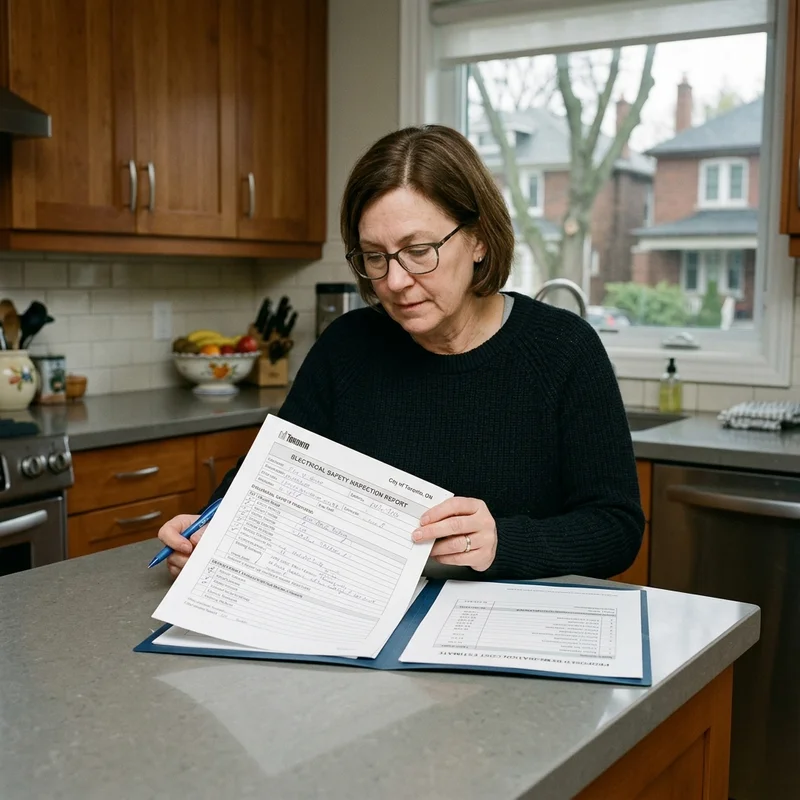
A detailed report turns a scary unknown into a clearly quantified scope of work. Vague home inspector notes become hard numbers your realtor and lawyer can use.
Pigtailing a full house of aluminum wiring with ESA-approved AlumiConn connectors is often quoted around $8,500. A 100A to 200A panel upgrade triggered by an outdated Federal Pacific panel or fuse box runs $1,800-$3,500 (2026 pricing).
Buyers use these figures to negotiate a fair price reduction.
Our written quotes give your lawyer the documentation needed for closing credits.
“Major Ontario insurers offer premium discounts ranging from 2% to 5% for verified wiring upgrades.”
Insurance renewals follow the same logic. The report shows your provider what was found, and the follow-up work proves the hazards are gone.
Toronto Electrical Contractor packages the report, the remediation work, and the resulting ESA Certificate of Acceptance together. This complete bundle is what insurers ask for to reinstate full coverage.
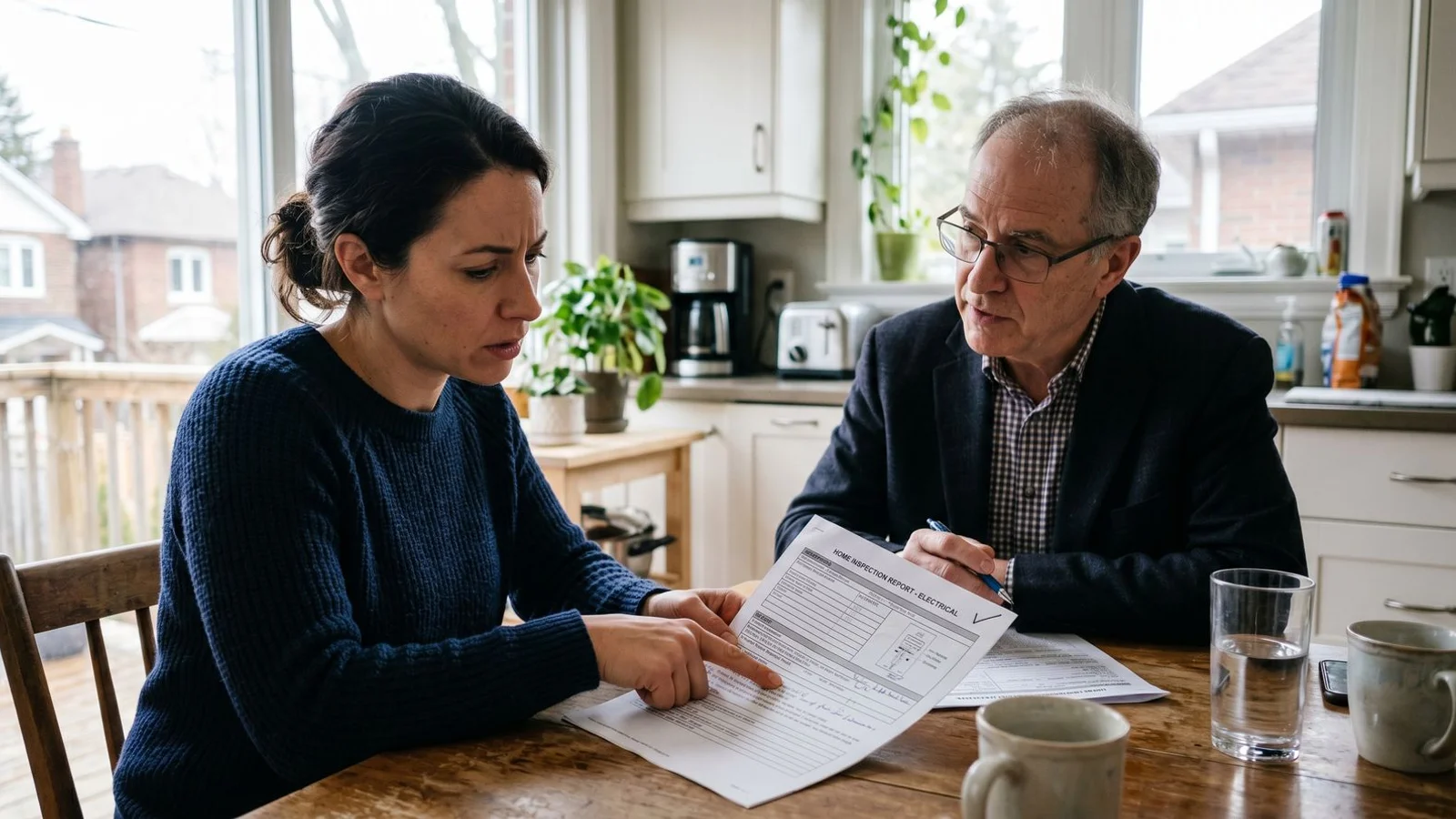
Sellers get to choose their exact strategy before listing.
- Remediate immediately: Fix the issues to command top dollar on the open market.
- Sell as-is: Provide full disclosure and adjust the asking price fairly.
Either path beats losing a great offer to an unexpected discovery.
How Our Inspections Compare
| Feature | Typical Provider | Toronto Electrical Contractor |
|---|---|---|
| Who inspects | General home inspector covering every system at a high level | ESA Licensed Electrical Contractor, electrical-only deep dive |
| Testing depth | Visual check and a few outlets | Panel cover off, thermal scan, 4 to 6 receptacles per circuit, GFCI/AFCI verification |
| Report turnaround | Notes bundled into a general home inspection report | Written deficiency report with photos within 48 hours |
| Remediation pricing | Referral to “a qualified electrician” | Flat-rate remediation quote included with the report |
| Insurer paperwork | Not provided | Sample insurer letter included |
| Scheduling | Rush fees for tight closing dates | Same-week booking at no surcharge, $250-$450 typical |
Looking for an electrical inspection near you? Our electricians book same-week visits across Toronto, North York, Scarborough, Etobicoke, and the rest of the GTA. Call (416) 900-2963 or request a free estimate to protect your largest investment.