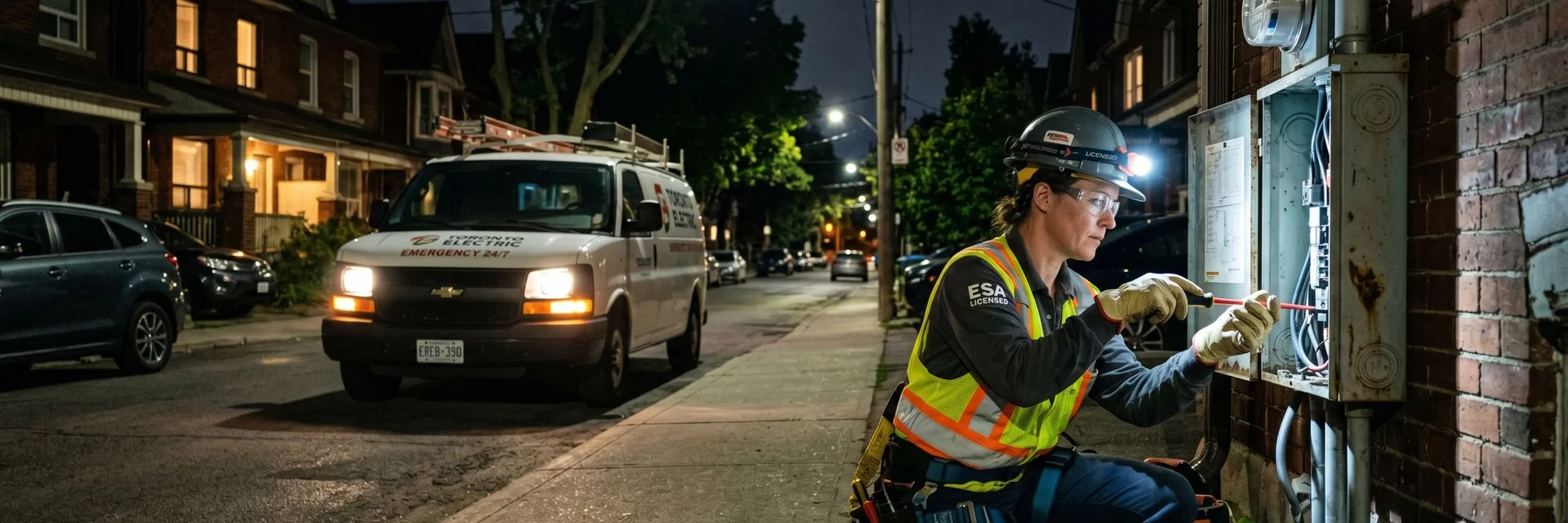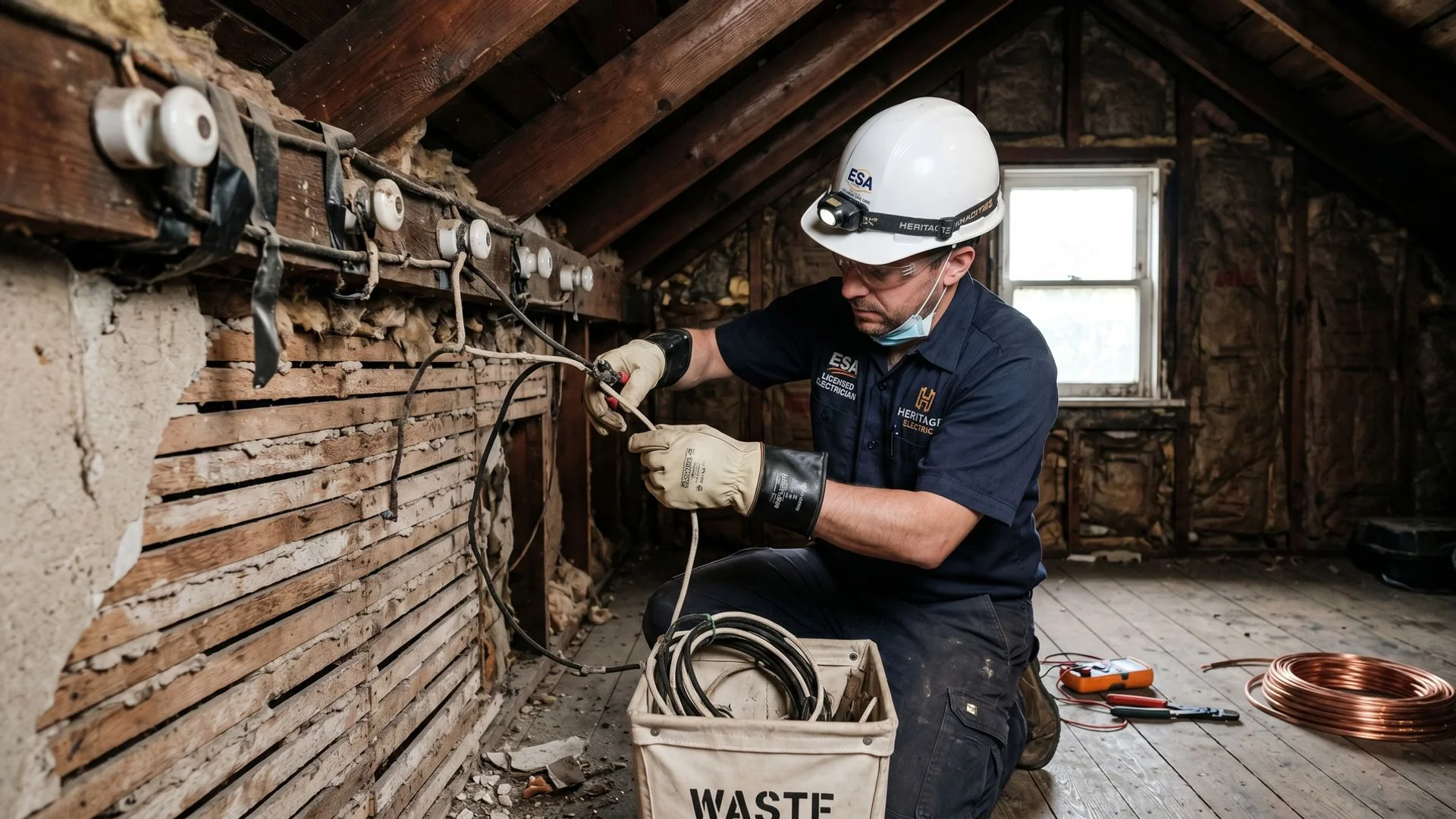
Toronto Electrical Contractor is an ESA-licensed electrical contractor based in Toronto that removes and replaces knob-and-tube wiring in pre-1950 homes across the GTA. With 15+ years in the trade and 1,500+ completed projects, our electricians pull every ESA permit in-house and hand you the Certificate of Acceptance your insurer asks for.
If your insurer just sent a non-renewal letter, we know how stressful that news feels. Century homes and other older homes are beautiful, but many still hide outdated electrical systems behind their plaster walls.
Here is what a complete Knob and Tube Wiring Replacement really takes, from the first circuit test to the final ESA sign-off.
Why Insurers and the ESA Flag Knob-and-Tube Wiring
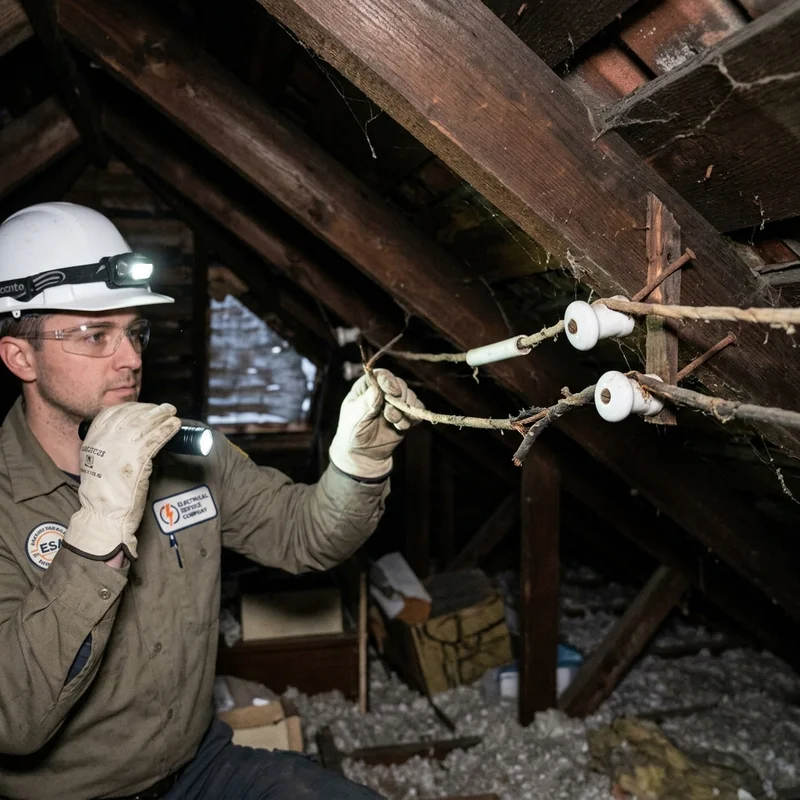
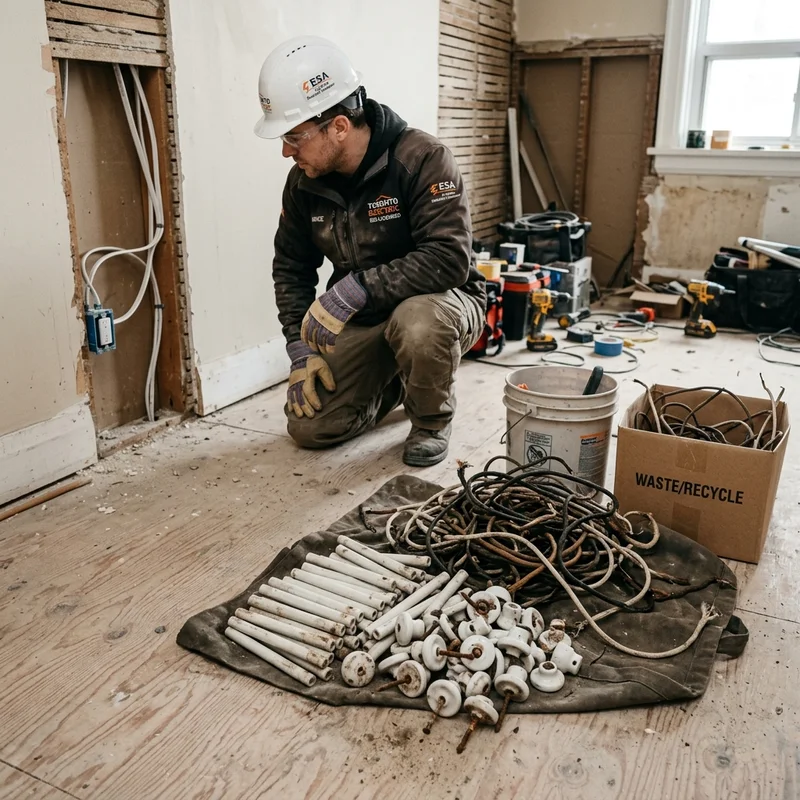
We often see the original porcelain knobs and cotton-wrapped copper wire during home inspections. This system was the dominant residential wiring method in Toronto and across Ontario from roughly 1880 to the 1940s.
Those rubber and cloth materials naturally degrade over 50 to 80 years, creating three compounding problems over time.
- Crumbling insulation exposes bare copper inside your walls.
- Heat buildup is severe because modern blown cellulose or fibreglass batt insulation buries wires designed to cool in the open air.
- No ground wire exists, which means plugging in a modern window AC or a space heater easily overloads the 1920s-rated circuits.
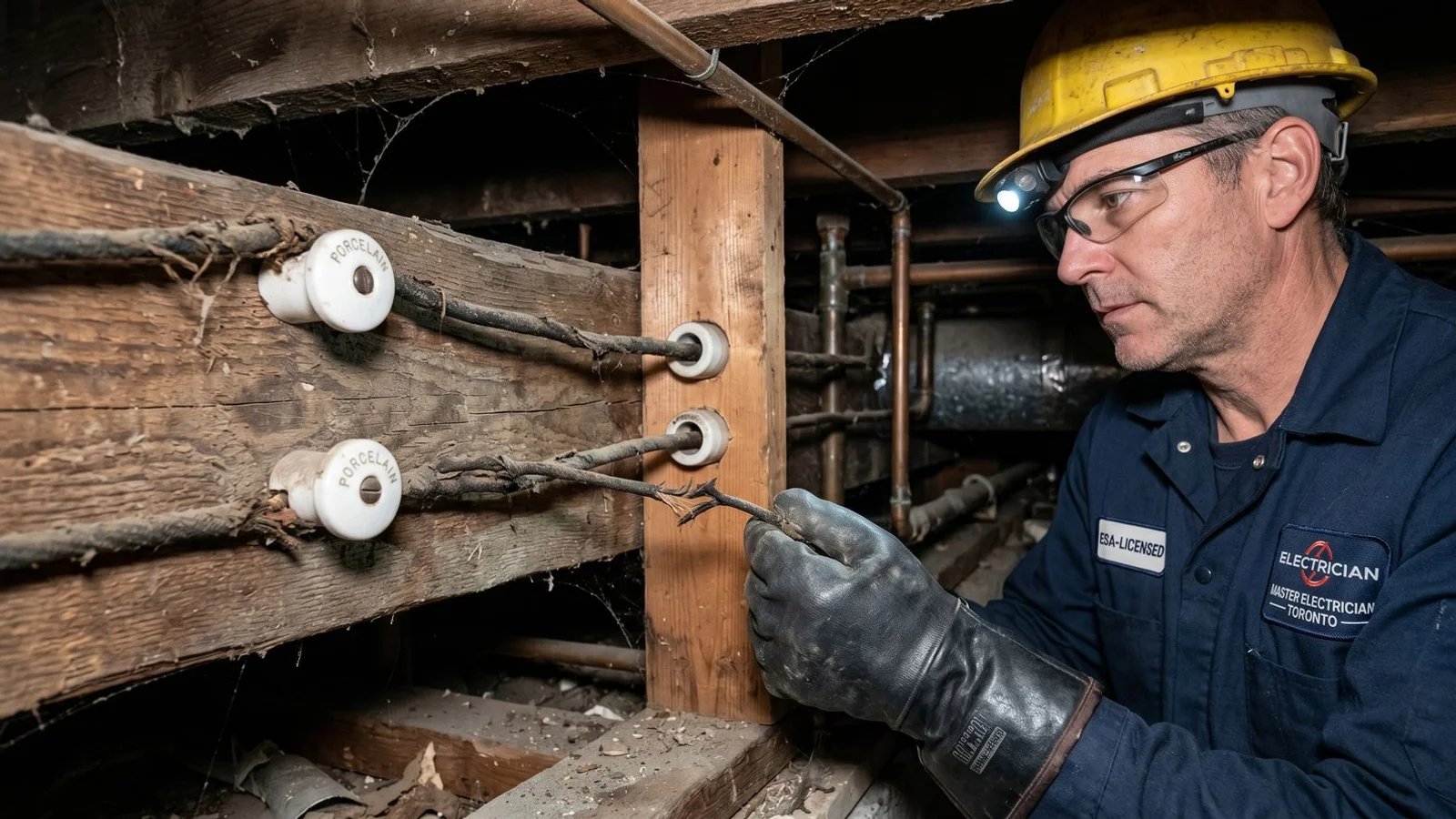
Toronto Electrical Contractor’s electricians treat these hazards as the first priority on every job. These risks led the Electrical Safety Authority to remove all installation rules for this method from the Ontario Electrical Safety Code, so no new knob-and-tube can be installed in Ontario today.
Major insurers like TD and Intact refuse new policies on active systems or double the premiums. A full removal backed by an ESA Certificate of Acceptance is the documented route back to standard insurance rates.
Is Your Old Wiring Still Live? Active vs Abandoned Runs
Our first step on every project is determining exactly what still carries electricity. Many Victorian semis, row houses, and bay-and-gable homes in Leslieville, Parkdale, and Roncesvalles had partial rewires between the 1970s and 1990s, where earlier contractors updated the kitchen and bath but skipped the attic and second-floor bedrooms.
That leftover wire often still powers your upstairs lighting and several receptacles. We open accessible junction boxes to trace circuits back to the panel, turning this exploratory endeavor into a clear map of your home.
| Status | Definition | Insurance Impact | Action Required |
|---|---|---|---|
| Active | Carries live current | Coverage denied or high premiums | Mandatory removal |
| Abandoned | Disconnected from panel | Accepted by most providers | Leave in wall or remove |
Providing a written assessment showing only abandoned runs is usually enough for most insurance companies. We will quote the extra labour to pull those dead conductors out of your basement and attic if your specific carrier demands complete physical removal from inside the walls.
Some providers, like Square One Insurance, can give buyers a short 30 to 60-day grace period to complete this work after closing.
Rewiring Plaster-and-Lath Walls in Toronto’s Century Homes
We find the most active legacy systems in pre-1950 properties across Toronto, specifically in the Victorian and Edwardian homes of The Annex, High Park, Cabbagetown, Rosedale, Riverdale, Forest Hill, and Bloor West Village. Century homes feature beautiful plaster-and-lath walls, original crown mouldings, and sometimes a Heritage Toronto designation that legally restricts what you can modify.
Following the City of Toronto Heritage Permit Guide requires careful planning and a delicate touch.
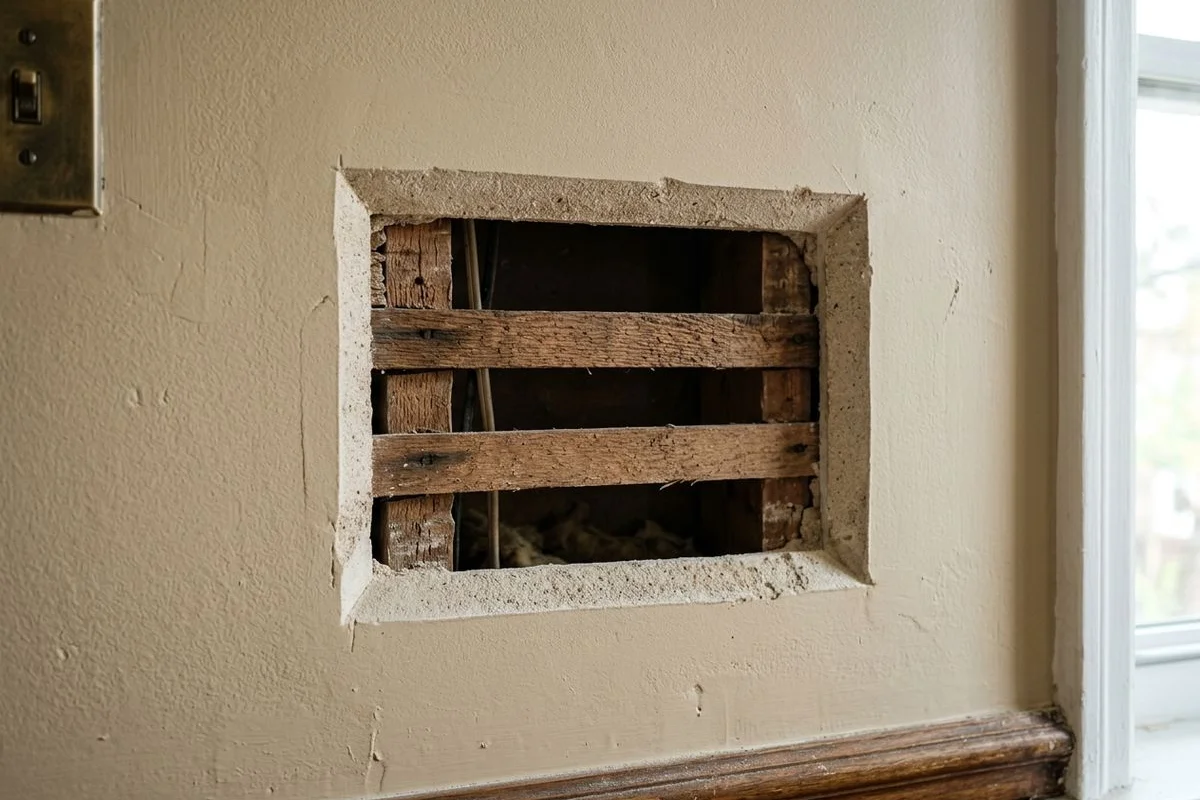
Our standard rewire approach in heritage homes includes:
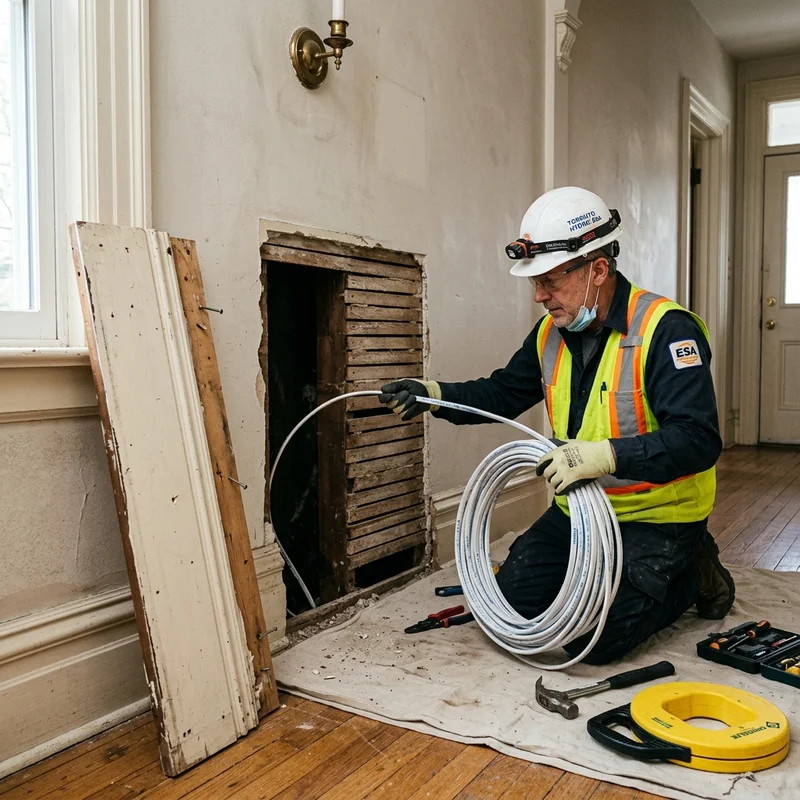
- Fishing new NMD90 (Loomex) cable through wall cavities behind existing baseboards.
- Using closet walls and access panels in mechanical rooms as primary fish points.
- Cutting small access holes sized perfectly to fit modern replacement boxes.
- Patching with traditional lime plaster rather than standard drywall to maintain historic integrity.
- Working strictly with hand tools within one metre of designated original mouldings.
- Saving and carefully reinstalling original door trim and baseboards wherever possible.
We handle these specific challenges daily, ensuring your home retains its historic charm. This plaster-friendly approach carries a labour premium of roughly 40 to 60 percent compared to a standard drywall project.
In 2026, a full-home rewire runs $8,000 to $15,000 on a flat-rate written quote. Straightforward layouts sit at the lower end, while multi-storey heritage restorations requiring extensive plaster preservation sit closer to the top.
What Does an ESA Certificate of Acceptance Prove to Your Insurer?
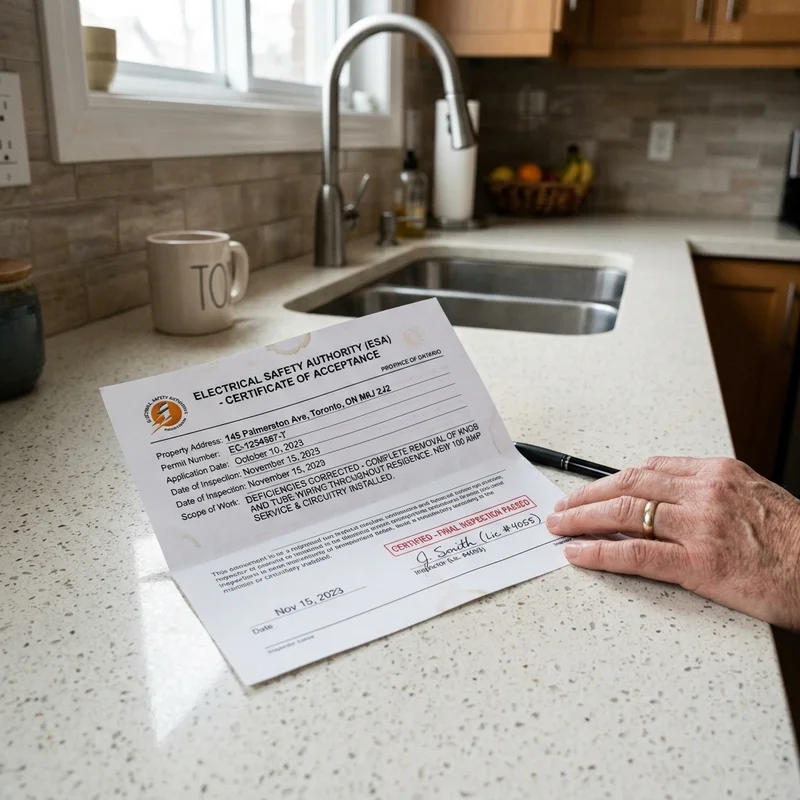
Every Toronto Electrical Contractor rewire ends with an official Certificate of Acceptance issued by the Electrical Safety Authority. This is the document that closes the file with your insurance provider or mortgage lender.
Filing a notification of work under Rule 2-004 is mandatory in Ontario, and the final inspection proves several vital points.
The certificate documents that:
- All previously identified active wire has been replaced or properly abandoned.
- New wiring fully meets the current Ontario Electrical Safety Code.
- The work was performed by an ECRA/ESA Licensed Electrical Contractor under a valid permit.
- An independent ESA inspector visually verified the installation.
We hand you this certificate along with a sample insurer letter to attach straight to your renewal package.
Most companies reinstate your standard coverage and drop those heavy premium loadings within two to four weeks of receiving the proof.
Knob and Tube Replacement Plus a Panel Upgrade: One Permit, One Project
We upgrade the panel on about half of our rewiring projects because one combined job costs less than two separate ones. An old 60A fuse box or 100A panel usually cannot support the modern AFCI and GFCI breakers required for your new, grounded circuits, and we coordinate the Toronto Hydro disconnect and reconnect when the service size changes.
The ESA inspector will block the final sign-off until a recalled Federal Pacific or Zinsco board gets replaced anyway.
| Project Approach | Cost Efficiency | ESA Permit Required | Project Timeline |
|---|---|---|---|
| Separate Projects | Higher total cost | Two separate permits | Extended disruption |
| Bundled Upgrade | Saves on combined labour | Single combined permit | Completed at the same time |
Our clients appreciate that doing a panel upgrade at the same time means paying for one permit and receiving one Certificate covering the entire system. Post-war additions often layered 1960s aluminum over the original 1910s copper runs.
For older estates in The Annex or High Park, we also frequently bundle aluminum wiring remediation to handle everything at once. One combined permit and one Certificate of Acceptance covers the whole electrical system.
How Our Rewires Compare
| Feature | Typical Provider | Toronto Electrical Contractor |
|---|---|---|
| ESA permit | Sometimes left to the homeowner | Filed in-house on every job |
| Pricing | Hourly estimate, final bill varies | Flat-rate written quote, $8,000-$15,000 for a typical full home |
| Plaster walls | Open walls, patch with drywall | Minimal-cut fishing, patched with traditional plaster |
| Insurer paperwork | Invoice only | ESA Certificate of Acceptance plus a sample insurer letter |
| Living in the home | Move out or whole-house outages | Room-by-room sequencing, power restored each evening |
Planning your Knob and Tube Wiring Replacement does not have to be overwhelming. Whether your home is a Victorian semi in the west end or a 1940s bungalow in Etobicoke or North York, we walk you through every step, protecting your heritage features while bringing your wiring up to the current Ontario Electrical Safety Code.
Looking for a licensed electrician near you for knob and tube work? Before you hire anyone, confirm their ECRA/ESA licence through the ESA’s online contractor lookup and read their Google or HomeStars reviews.
Ready to secure your home and drop those high insurance rates? Call (416) 900-2963 or request a free estimate for a written assessment and a flat-rate quote.