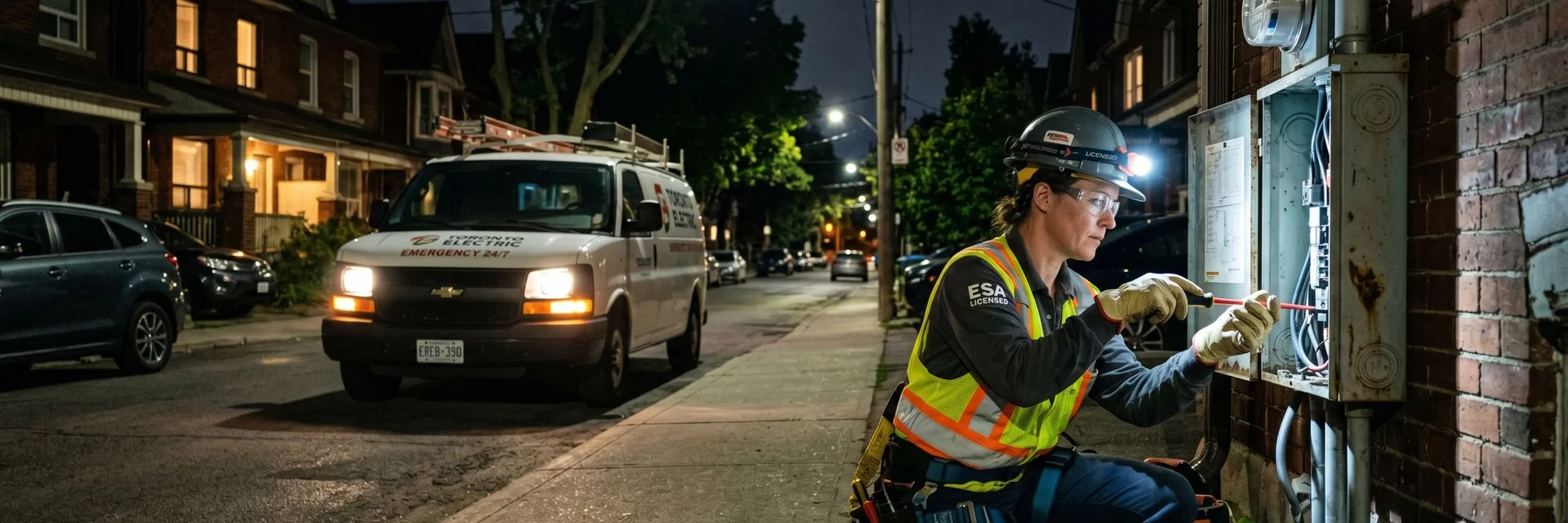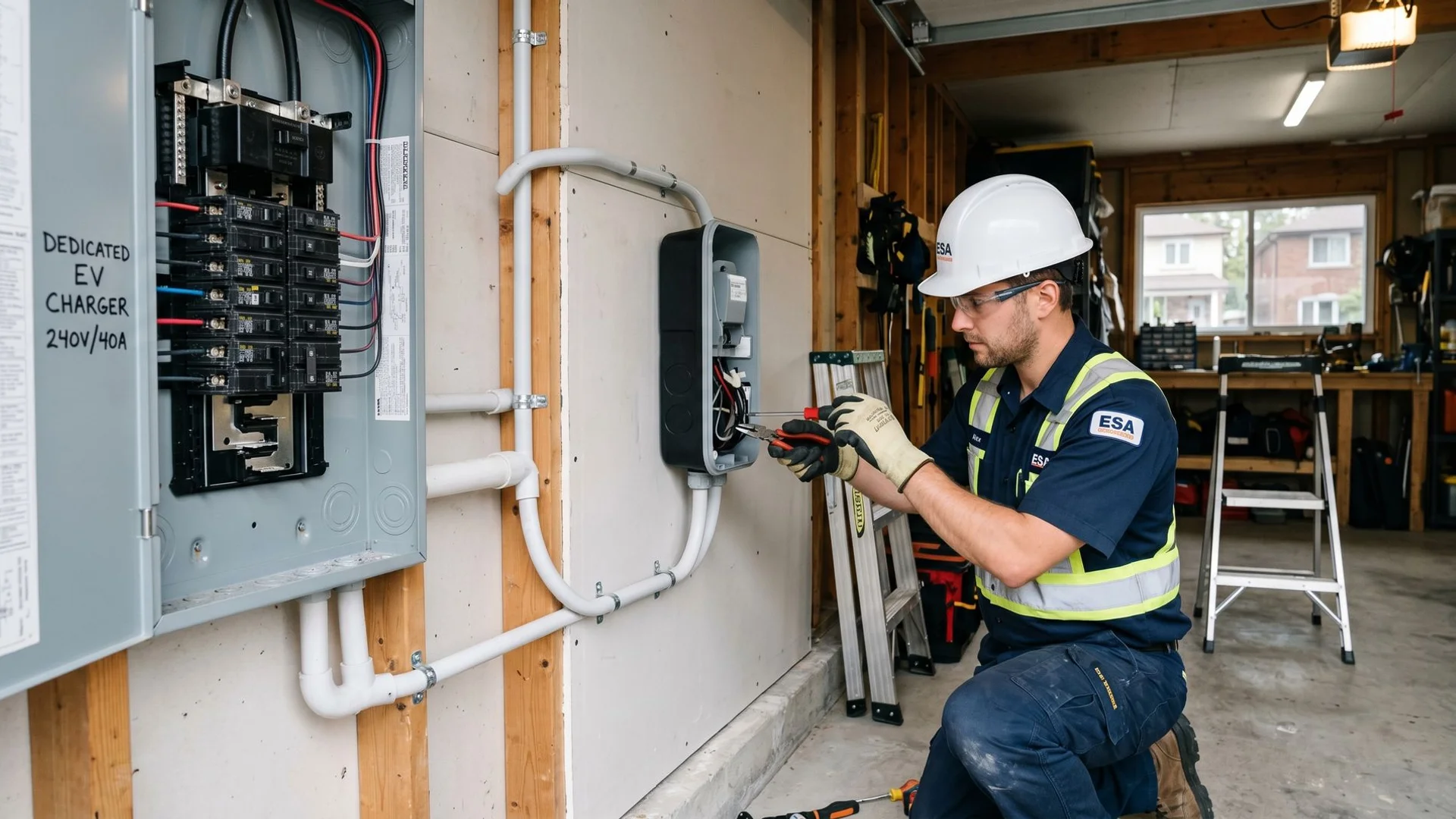
Toronto Electrical Contractor is an ESA Licensed Electrical Contractor (LEC) that installs Level 2 home EV chargers across Toronto and the GTA, from North York and Etobicoke to Scarborough, Vaughan, and Mississauga. Every install is quoted at a flat rate of $800 to $1,500, with the ESA permit filed in-house and the Certificate of Acceptance handed over at the end. The team works on every electric vehicle, including Tesla, Ford, GM, Hyundai, and BMW, and supplies Tesla Wall Connector, ChargePoint, and Grizzl-E units.
Whether you have a detached home with a garage, a semi-detached with a laneway parking pad, a townhouse, or a condo parking spot, this page covers what you need to know before booking an EV charger installation at your property.
Level 1 vs Level 2 vs DC Fast: Which Charger Fits Your Driving?
According to a 2026 study from MoneySuperMarket, the average Toronto driver has a daily round-trip commute of just 32 kilometres. A Level 2 charger provides roughly 25 to 40 kilometres of range per hour of charging. This means your daily commute gets replenished in about an hour.
Level 1 charging uses a standard 120V outlet and adds about 6 to 8 kilometres per hour. That slow speed works for a plug-in hybrid, but it falls flat for larger batteries. If you drive an F-150 Lightning, Tesla Model Y, or Mustang Mach-E, Level 1 will not keep up with daily driving.
Level 3, also called DC fast charging, is the type you find at highway and public charging stations. It runs on high-voltage commercial service and can add hundreds of kilometres in under an hour, but it is not practical or permitted for a typical residential panel. For homes in Toronto and across Ontario, Level 2 is the standard.
Level 1 vs. Level 2 vs. DC Fast Charging Speeds
| Charging Level | Power Source | Range Per Hour | Best For |
|---|---|---|---|
| Level 1 | Standard 120V Outlet | 6 to 8 km | Small Plug-in Hybrids |
| Level 2 | Dedicated 240V Circuit | 25 to 40 km | Full Battery EVs at Home |
| Level 3 / DC Fast | High-Voltage Commercial Service | Hundreds of km | Public Stations and Road Trips |
We see this pattern with new EV owners all the time. Most homeowners who try Level 1 for the first month switch to Level 2 within 60 days.
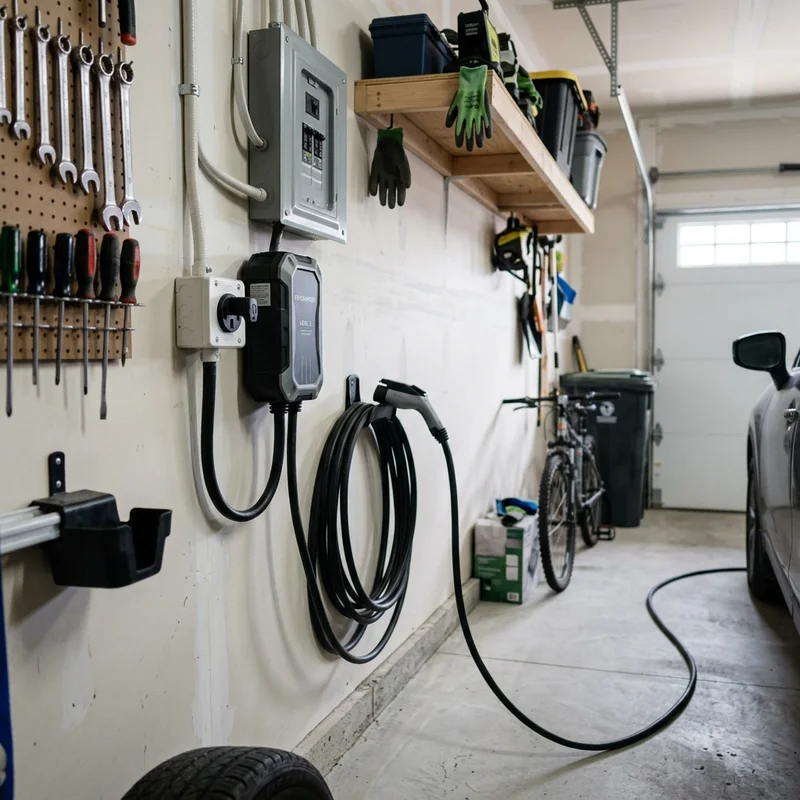
A Level 2 home install needs a dedicated 240V circuit pulled from your panel to the garage or driveway. The required ampacity for that circuit depends on your charger and panel capacity, so our electricians complete a load calculation under the Ontario Electrical Safety Code as part of every free estimate.
How Much Does EV Charger Installation Cost in Toronto?
Standard quotes run between $800 and $1,500 for a typical Toronto install (2026 pricing). You get a written, flat-rate breakdown before any work starts, so there are no hidden fees or surprise bills at the end of the project.
Every flat-rate installation includes these deliverables:
- The ESA permit (filed under our LEC number)
- All wire, conduit, and mounting hardware
- Installation labour for a single afternoon visit
- Final ESA inspection and Certificate of Acceptance
- Disposal of any removed boxes or wire
- Walkthrough on app pairing and load-sharing setup
Custom line items are listed separately so you can see exactly what drives the final price.
Variables That Impact Cost
Detached garages often need trenched conduit for underground wiring, which is common on deeper lots in Leaside and Don Mills. Finished basements require careful wire fishing through the drywall to reach the panel. Condo setups need specific load management hardware. Panel upgrades are quoted individually when your home needs more electrical capacity.
How We Compare to a Typical Installer
| Feature | Typical Provider | Toronto Electrical Contractor |
|---|---|---|
| Pricing | Hourly estimate, final bill varies | Flat-rate $800-$1,500, quoted in writing within 24 hours |
| ESA permit | Sometimes extra or left to the homeowner | Filed in-house and included in the price |
| Panel check | Assumed from panel size | Free load calculation with a written upgrade answer |
| Condo installs | Often declined | DCC-9 / DCC-11 install and condo-board package handled |
| Rebate paperwork | Not provided | ESA Certificate of Acceptance and paid invoice supplied |
Condo EV Charging With DCC-9 and DCC-11 Load Management
If you own a parking spot in a downtown Toronto, North York, Markham, or Vaughan condo, property managers may claim the building lacks electrical capacity. That is rarely the whole story. The building’s existing service cannot support every parking spot drawing a 40A charger at the same time, and condo boards would rather avoid the load math.
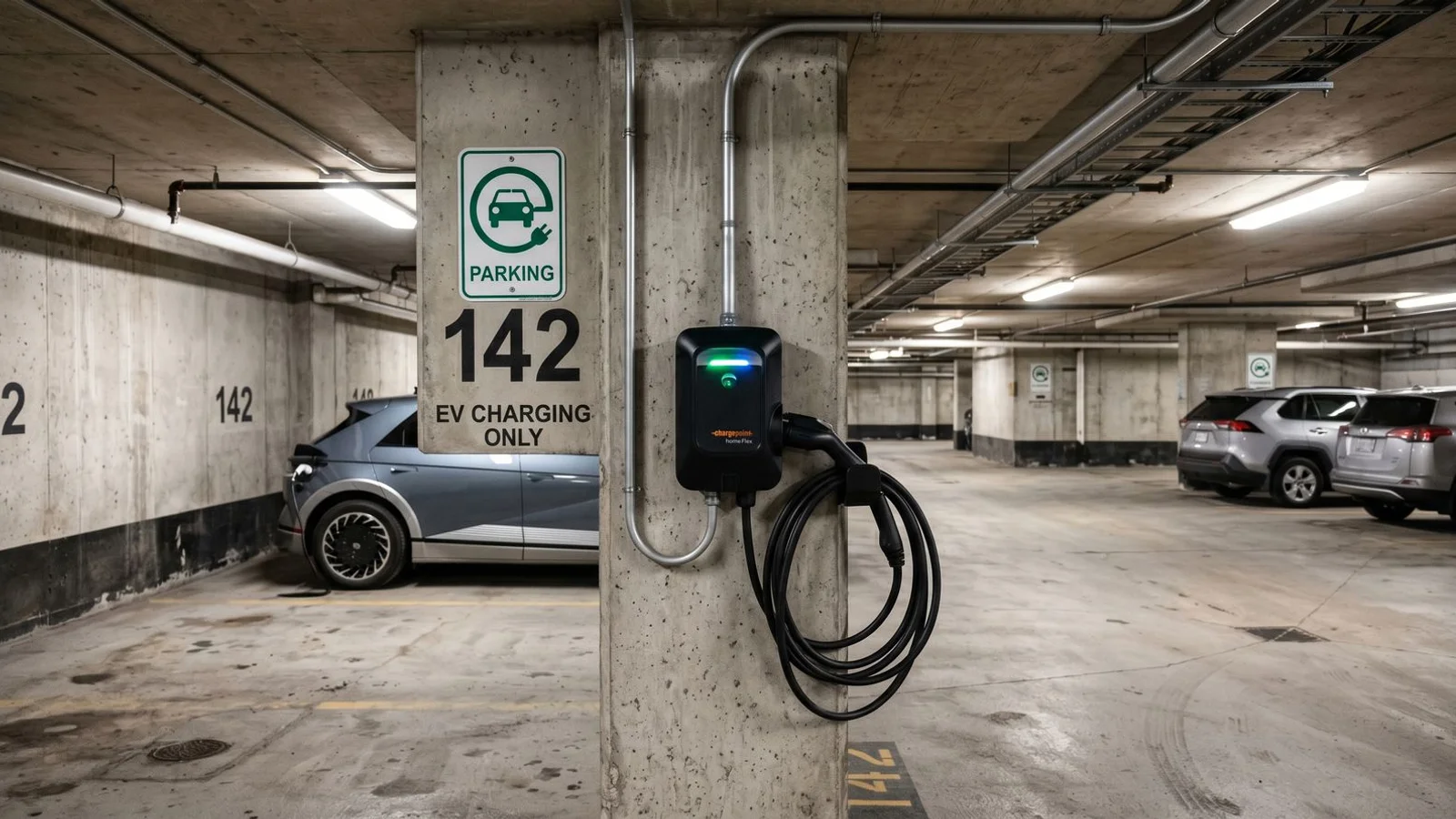
Ontario Regulation 48/01 under the Condominium Act changed the rules for EV owners in 2018. Condo boards must respond to your charger application within 60 days and can only refuse if the installation would breach safety laws or affect structural integrity.
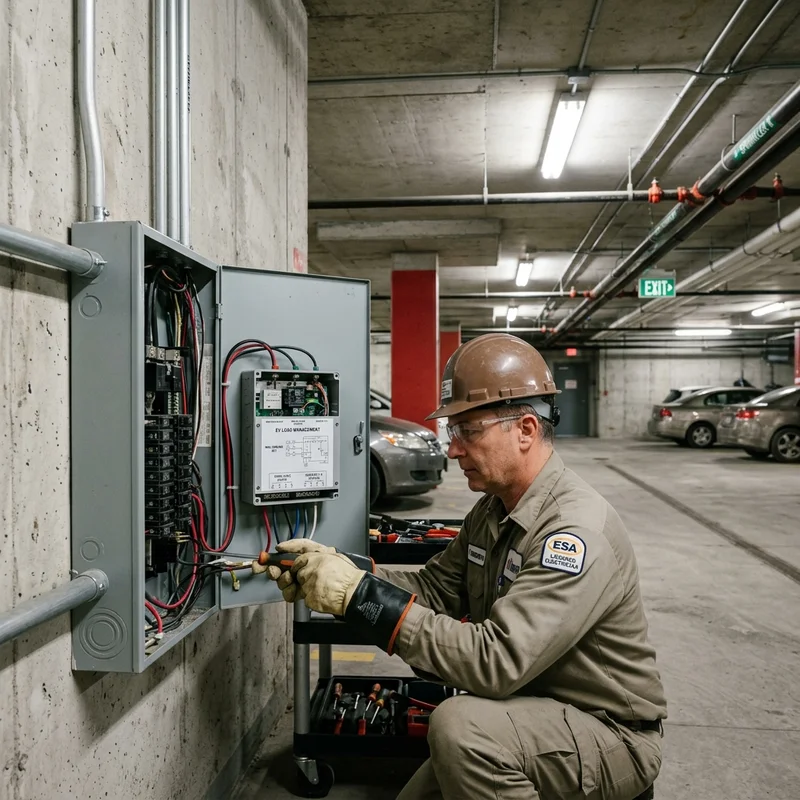
DCC-9 and DCC-11 load management devices are the technical answer to those safety requirements.
How Dynamic Load Management Works
These devices sit between the building or unit feed and your personal charger. They monitor the instantaneous load to prevent overloading.
- Automatic Throttling: Your charger pauses automatically if the building approaches maximum capacity.
- Off-Peak Speeds: You charge faster when building usage drops in the evening.
- Overnight Charging: You get full charging speed on most nights while everyone sleeps.
Toronto Electrical Contractor handles the full DCC installation from start to finish: the device itself, the condo-board approval package, the ESA permit, and post-install testing. The Ontario Right-to-Charge framework gives you a clear path to approval, and a load manager is usually what secures the board’s final sign-off.
The same load-management approach applies to commercial EV charging. For small commercial properties, multi-unit rentals, and workplace parking, we install networked Level 2 stations such as the ChargePoint CT4000 and Flo SmartTWO, sized with a load calculation so they share existing service without an expensive utility upgrade. Projects that need new service are coordinated with Toronto Hydro.
Outdoor Chargers Built for Ontario Winters
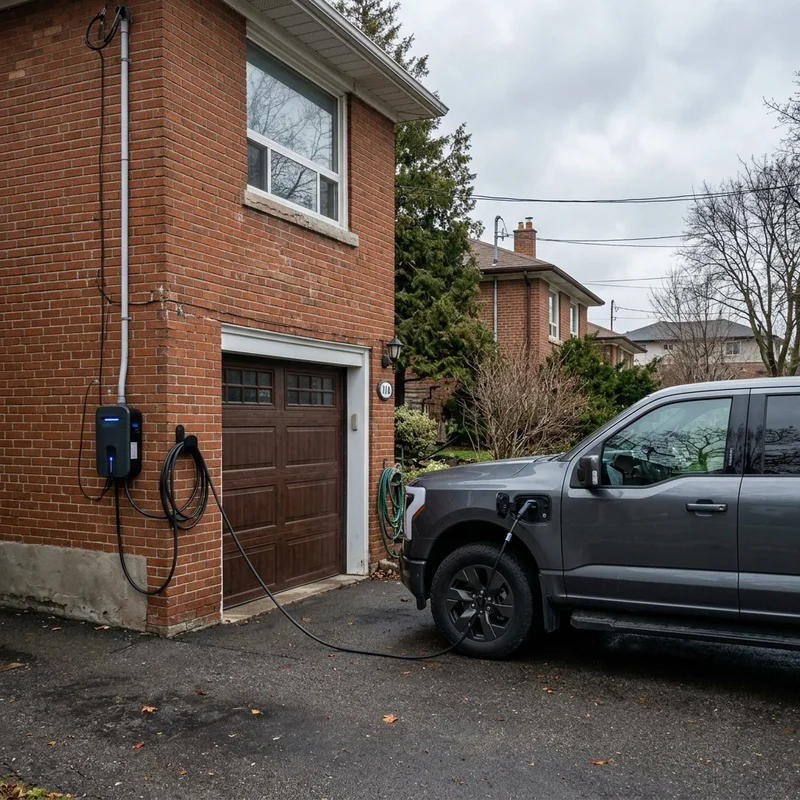
Most outdoor installations go on driveway-side walls, detached garages, carports, or laneway parking pads in neighbourhoods like Leslieville, the Annex, and High Park. Toronto winters bring ice, road-salt spray, and cold snaps below -25 degrees Celsius, and indoor-rated equipment does not survive that.
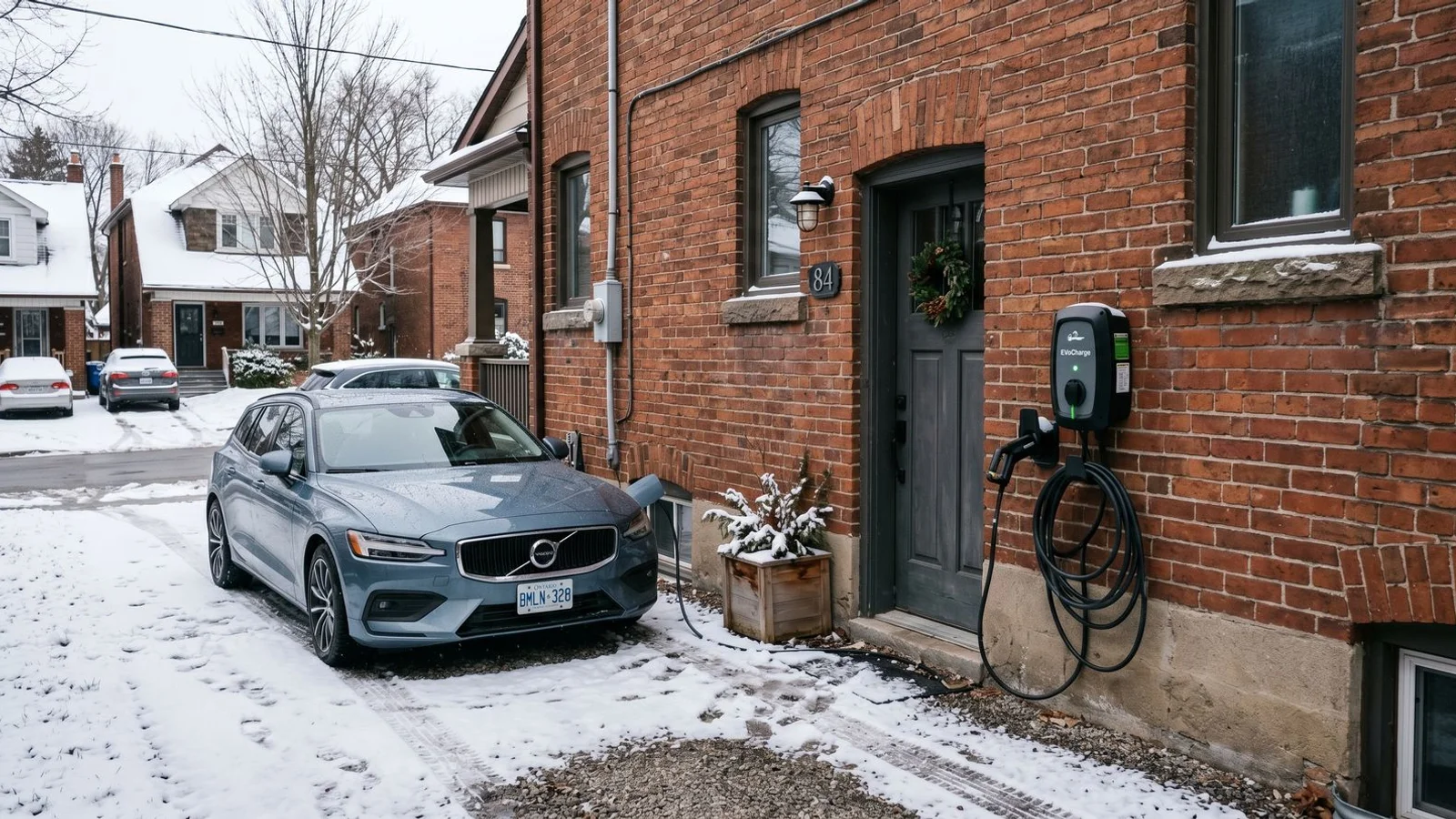
We use NEMA 4 outdoor-rated enclosures for every exposed location. The Canadian-made Grizzl-E Classic is a strong fit here, with a heavy-duty cast aluminum shell and a 25-foot cable that stays flexible at -30 degrees Celsius.
Essential Winter Features
- NEMA 4 Enclosures: Cast aluminum bodies block out moisture, rain, and snow.
- Flexible Cables: High-quality cords resist freezing and snapping during deep freezes.
- Service Loops: Extra conduit slack prevents weather-related tension on the wiring.
Our electricians mount your charger with a service loop. That extra slack lets anyone swap the unit later without re-pulling the rigid conduit.
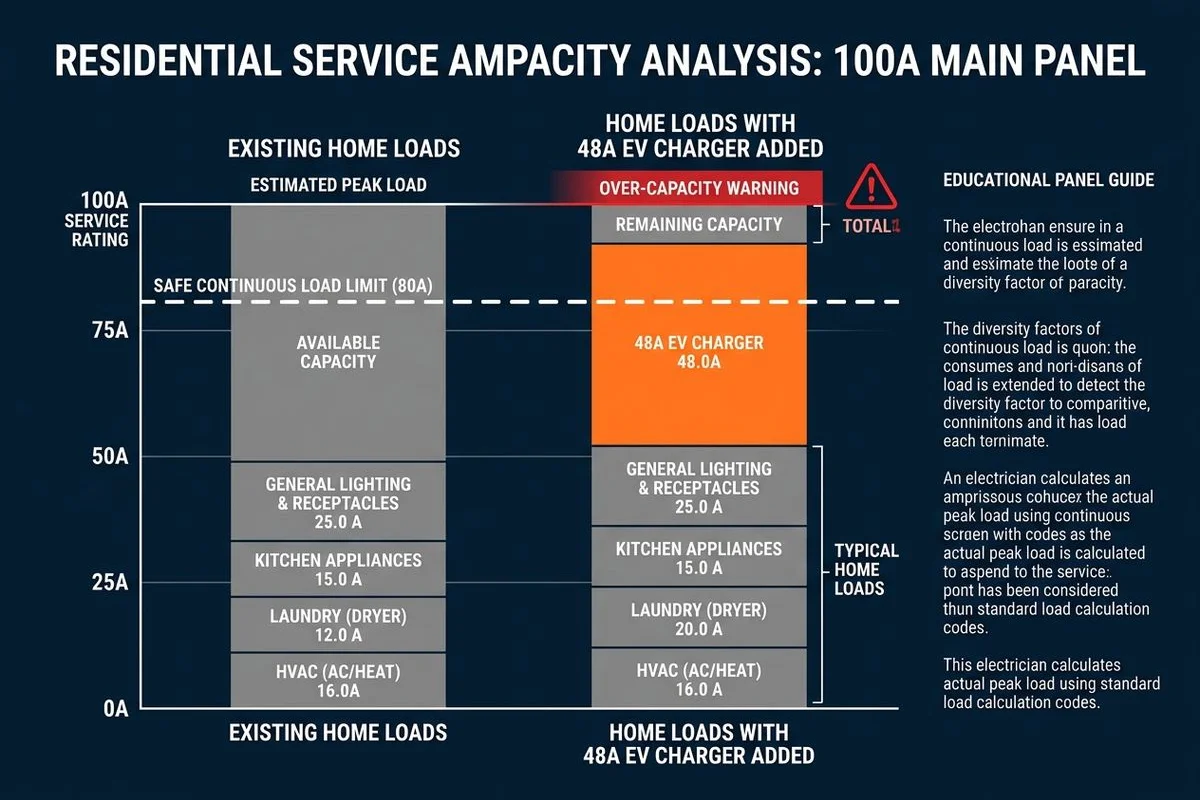
If you charge an F-150 Lightning or Rivian R1T outdoors, plan on a 48A setup. Truck batteries need maximum overnight power, and a 48A charger requires a 60A circuit to run safely. We often bundle a panel upgrade into the same project when an older 100A panel cannot handle the load.
Does Your Panel Need an Upgrade for an EV Charger?
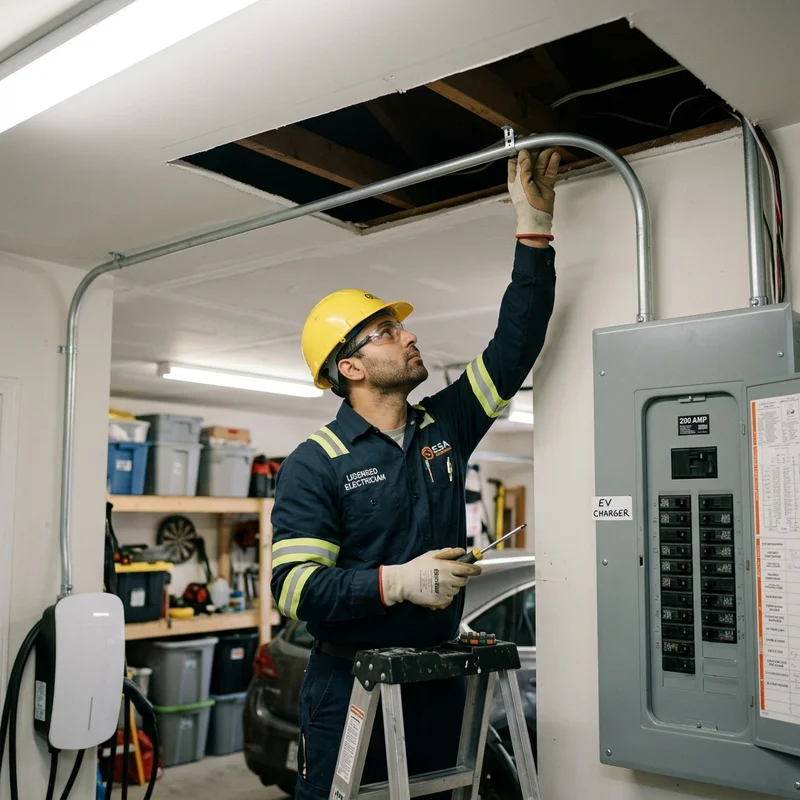
About 40% of the EV charger quotes we currently issue include upgrading a 100A panel to 200A, which is common in older Toronto homes in areas like East York and Etobicoke. You can check your current capacity by reading the number printed on your main breaker.
Three issues usually trigger a panel replacement before adding a charger.
Common Reasons for Upgrading
- Insufficient Capacity: An existing 60A or 100A service cannot support the required load calculation.
- Safety Hazards: Federal Pacific Stab-Lok and Zinsco panels are unsafe for adding new circuits.
- Zero Space: The current panel is full with no available breaker slots.
Bundling the work saves time and money. You avoid paying for a separate service trip and a second ESA permit. A combined panel upgrade and EV charger project typically lands between $2,800 and $4,500, still on flat-rate pricing with full permit coverage.
Wake Up to a Full Battery Every Morning
A properly installed Level 2 charger means you leave home with a full battery every day, without planning around public stations.
You get a setup that handles Canadian winters, meets the Ontario Electrical Safety Code, and comes with the ESA Certificate of Acceptance to prove it.
Book a free load calculation and flat-rate estimate with Toronto Electrical Contractor, or call (416) 900-2963. Our electricians will confirm your panel capacity, recommend the right charger for your vehicle, and get your garage or parking spot powered up.