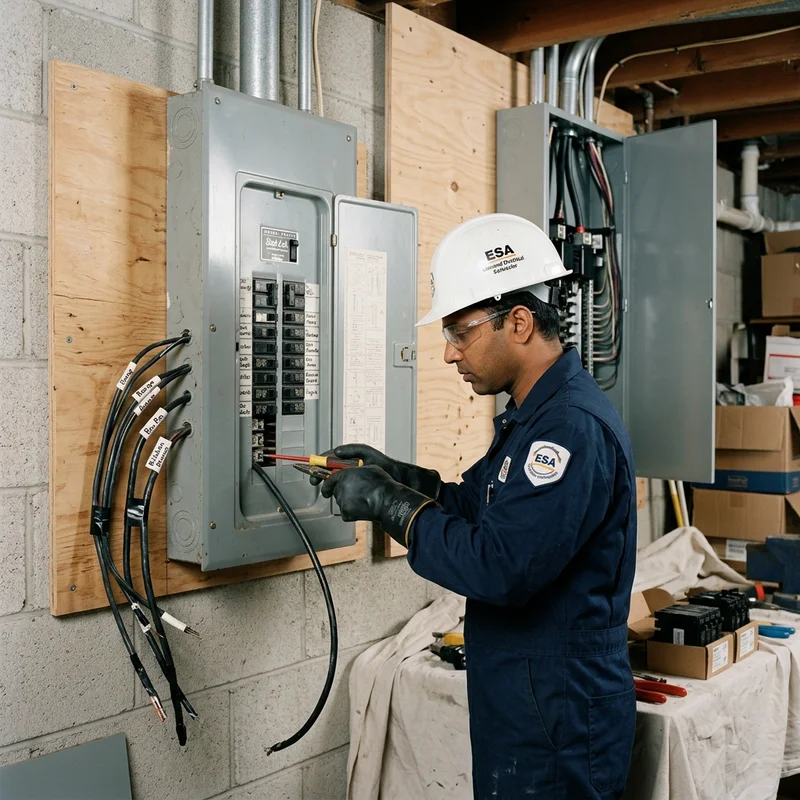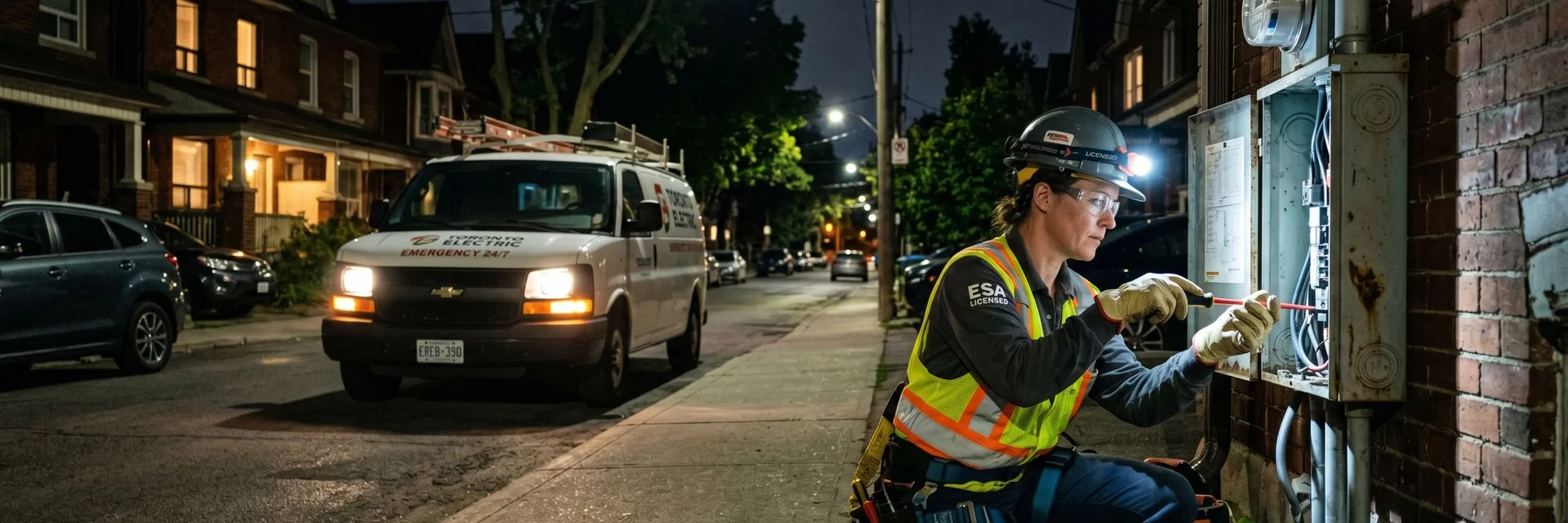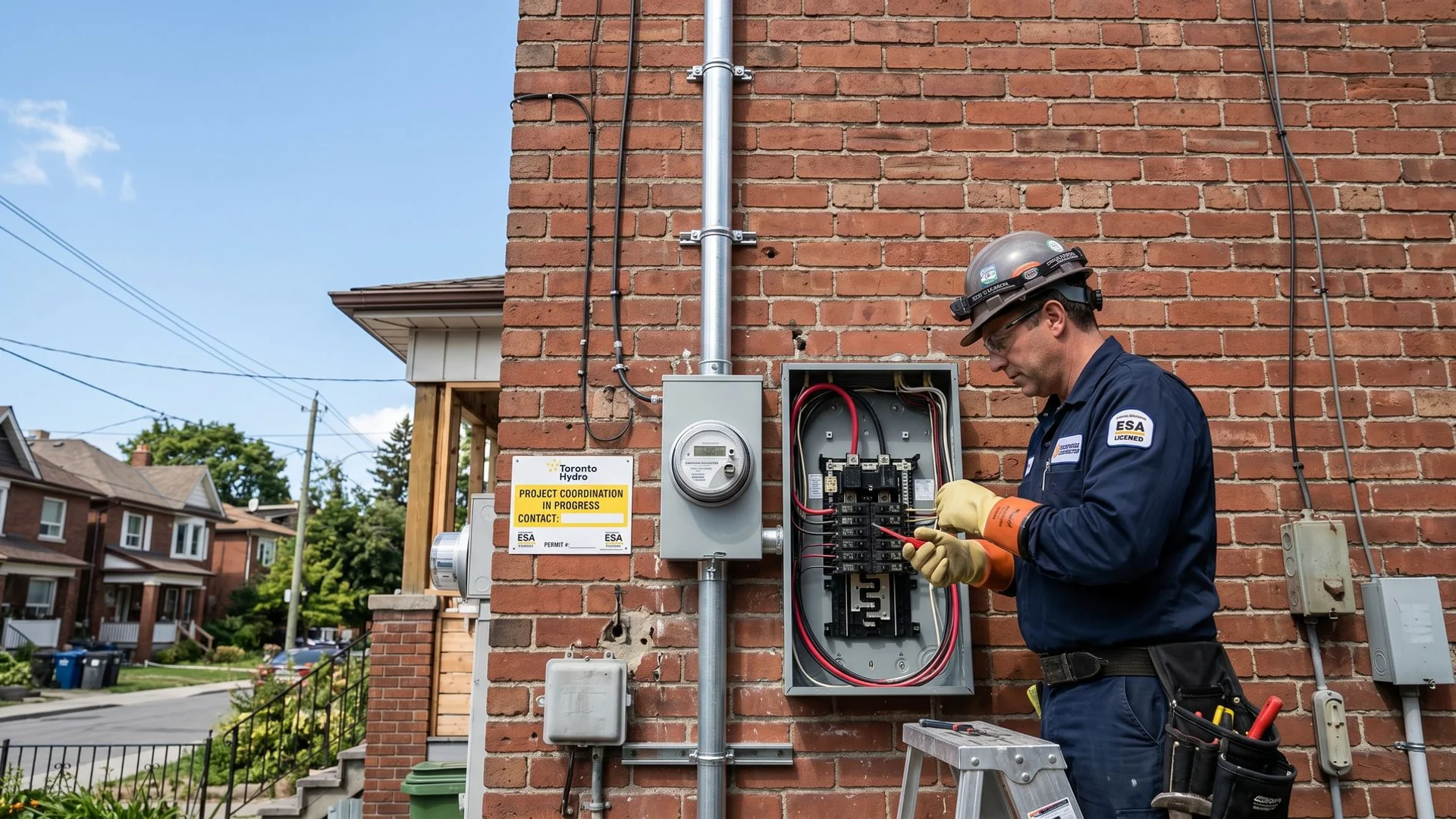
Toronto Electrical Contractor is an ESA-licensed electrical contractor in Toronto that delivers complete electrical panel upgrade service: 100A to 200A service upgrades, fuse box to breaker panel conversions, Federal Pacific and Zinsco replacements, and sub-panel additions. With 15+ years in the trade and 1,500+ projects completed across the GTA, the Toronto Electrical Contractor crew pulls every ESA permit in-house and quotes a flat rate before any work starts.
Lights flickering when the air conditioner kicks in? Ready to install an EV charger, only to learn your 100A panel cannot carry another 40A or 50A circuit? Those are the two calls we get most often from bungalows, semi-detached homes, and Victorian row houses across Toronto, and both are solved with a panel upgrade.
As a Licensed Electrical Contractor under Ontario’s ECRA/ESA licensing program, we handle the load calculation, the utility disconnect, the install, and the ESA inspection. Most residential jobs finish in a single day.
Signs Your Toronto Home Has Outgrown Its Panel
We often find that properties reach a breaking point for four main reasons: capacity, safety, insurance, and renovations. Most jobs hit two or three of these triggers at the same time.
Is Your Panel Big Enough for an EV Charger or Heat Pump?
Pre-1990 Toronto properties were sized for the loads of their era. A standard 60A or 100A box runs out of breaker space rapidly when you add heavy appliances.
Our rule of thumb is to recommend moving to 200A if you plan to install a heat pump or an electric vehicle charger. A Level 2 charger such as a Tesla Wall Connector, ChargePoint Home Flex, or Grizzl-E needs a dedicated 40-amp to 50-amp circuit, which easily maxes out an older 100A setup. The OESC also treats EV charging as a continuous load, which is where the “80% rule” comes in: continuous loads cannot exceed 80% of the breaker rating, so a 48A charger requires a 60A breaker.
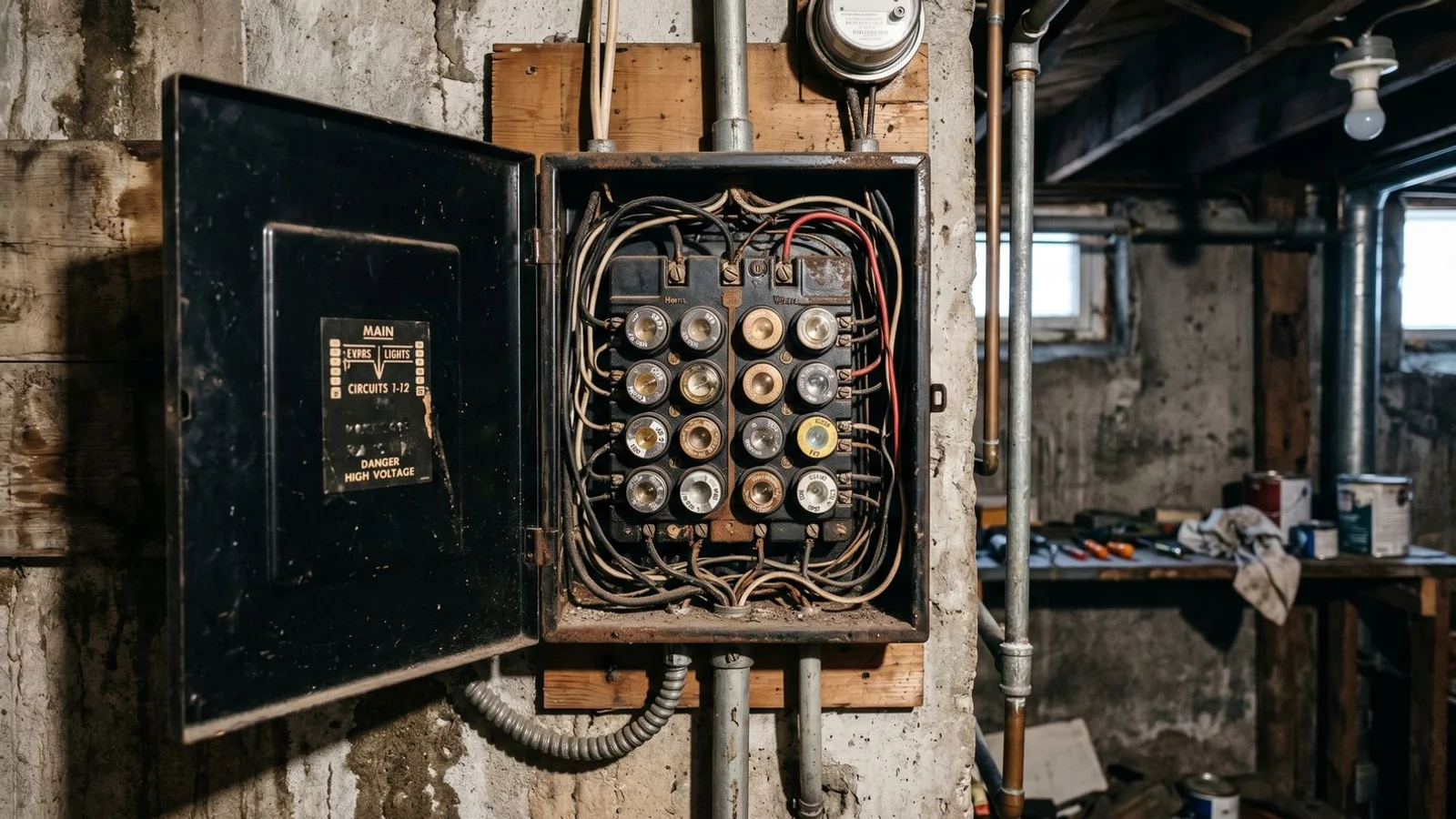
The Reality of Safety Hazards
Federal Pacific Stab-Lok and Zinsco equipment both have documented failure modes where internal switches fail to trip during a fault. This means the power stays on, the wire overheats, and you risk a serious wall fire.
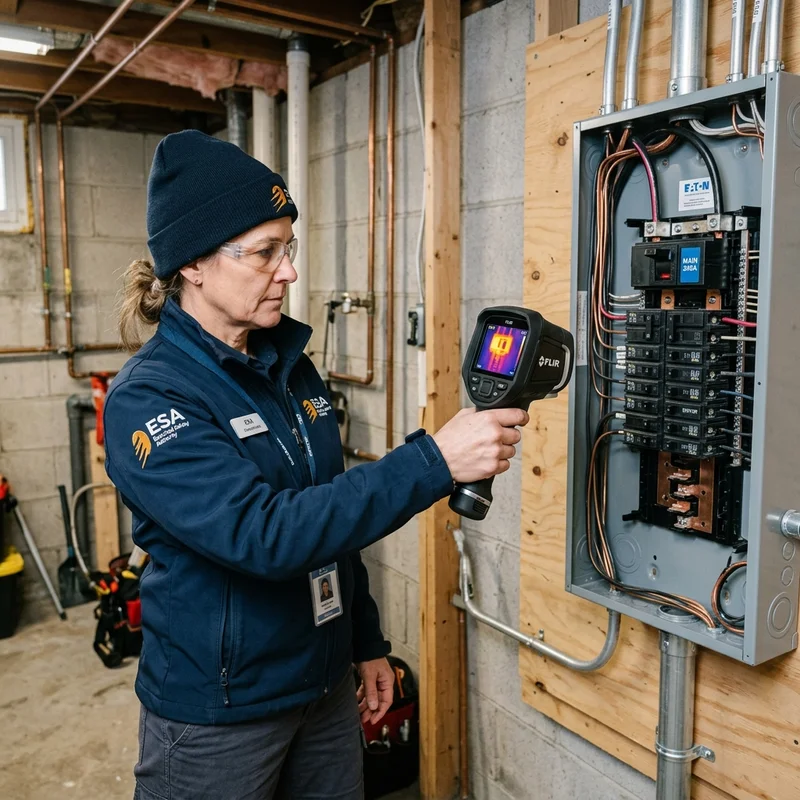
Every Toronto Electrical Contractor quote starts with a visual check of the breakers, bus bar, and service entrance. The Electrical Safety Authority considers these specific brands a serious defect requiring removal.
Meeting Strict Insurance Rules
Insurers across Ontario are increasingly aggressive about flagging older, outdated equipment at renewal time. You can expect a non-renewal letter or a strict 30-day to 60-day window to fix the issue if an inspection report mentions original fuse boxes.
Our licensed electricians provide the official ESA Certificate of Acceptance to satisfy your insurance agent and close the file. This document proves that the entire setup meets current safety codes.
Keeping Up With Renovation Codes
Adding a legal basement apartment, a laneway suite, a finished attic, or a major kitchen renovation almost always triggers the need for more power. The current Ontario Electrical Safety Code requires Arc-Fault Circuit Interrupter protection on most living-space circuits.
We install these AFCI breakers to protect your property from dangerous electrical arcing. These modern safety devices need physical space that an existing, older box simply does not have.
Electrical Panel Upgrade Cost in Toronto: What’s Included
A clear price helps you plan your budget without any hidden surprises. The $1,800 to $3,500 range (2026 pricing) covers a standard 100A to 200A residential upgrade in Toronto, North York, Scarborough, or Etobicoke.
We include the following components inside every standard quote:
- New 200A main breaker panel from trusted brands like Square D, Siemens, or Eaton
- All required AFCI and GFCI breakers per current OESC standards
- New service-entrance conductors running from your meter base to the panel
- Grounding electrode upgrades if your existing setup is non-compliant
- Complete disconnect and reconnect coordination with Toronto Hydro or Alectra Utilities
- ESA permit acquisition and the final official inspection
- Removal and recycling of your old equipment
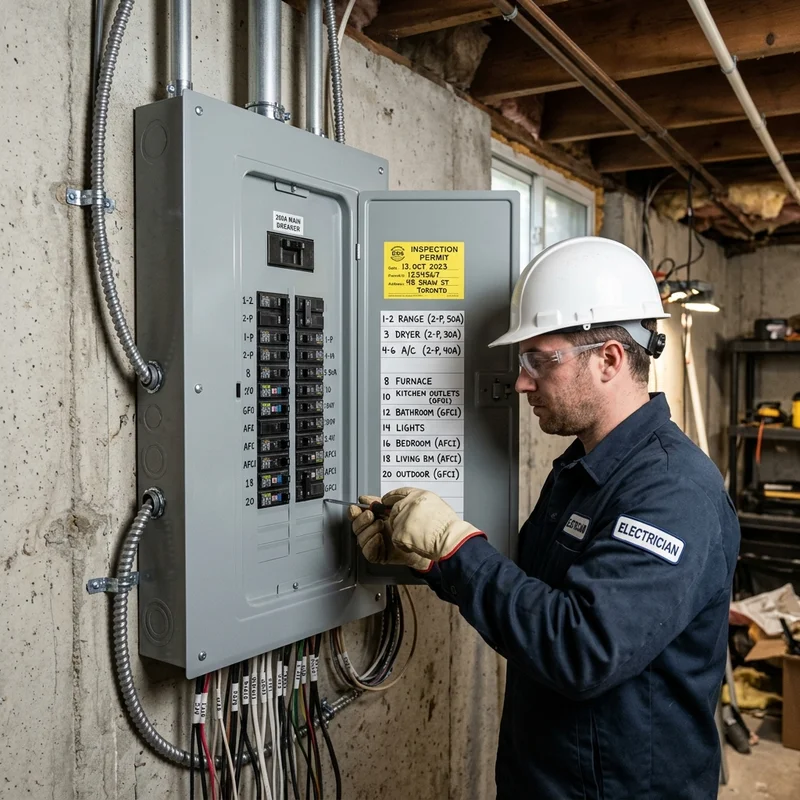
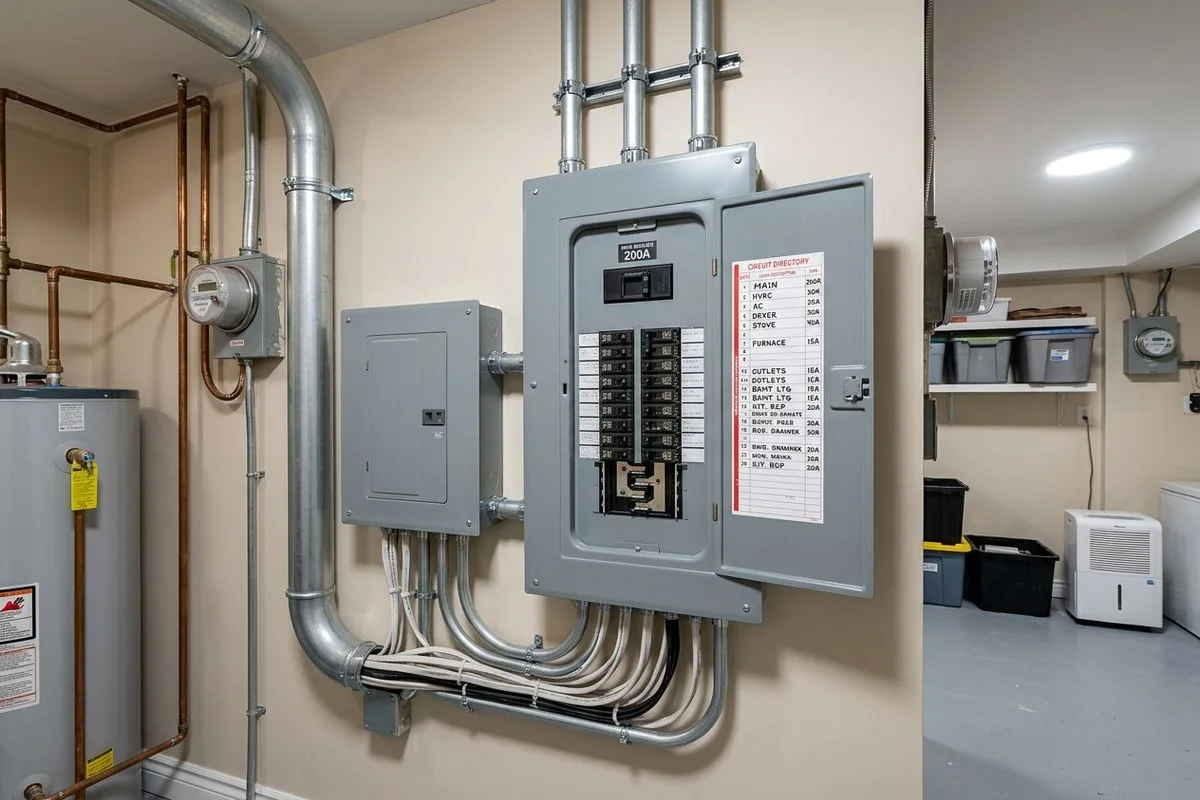
- A newly labelled and verified circuit directory
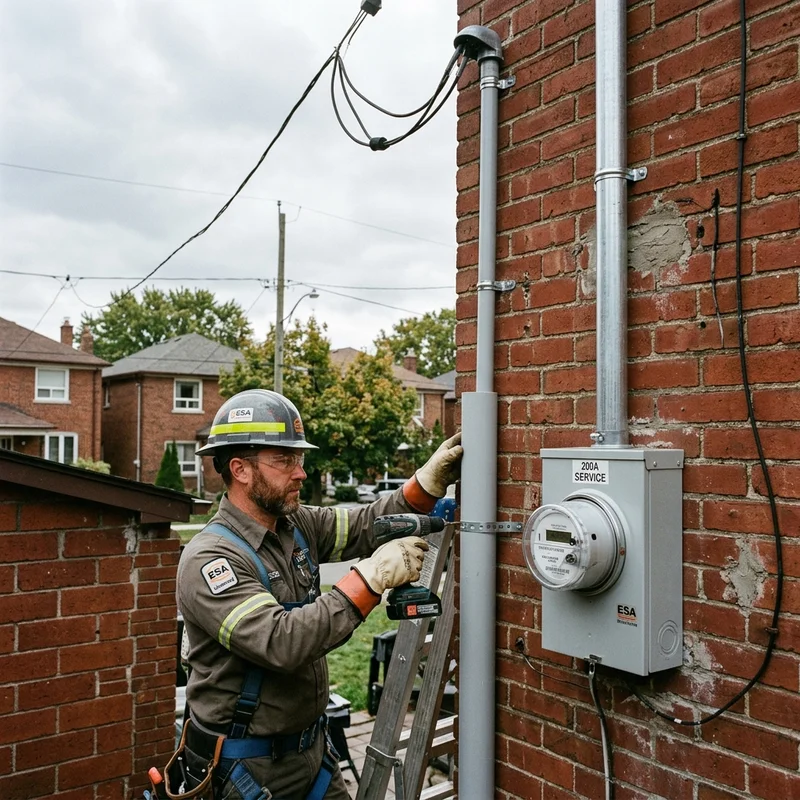
Certain situations push the final total higher. Upgrading a corroded meter base or relocating a service mast on heritage properties in neighbourhoods like Cabbagetown or Leaside adds to the bill.
Our pricing also adjusts when upgrading service entrance wires from 2/0 aluminum to 3/0 copper, or when installing sub-panels for legal basement apartments. A sub-panel adds breaker space without adding service capacity, so it only replaces a full upgrade when the load calculation shows your existing 100A service has room to spare.
Federal Pacific and Zinsco Breaker Panel Replacement
Federal Pacific Stab-Lok was the dominant residential choice in North York and Scarborough post-war housing through the late 1980s, from Don Mills and Willowdale bungalows to Wexford split-levels. The internal connection uses a flawed design that physically wears out over decades.
We see the contact pressure decrease to dangerous levels, meaning the breaker stops responding to fault currents. The wire downstream just keeps heating up without safely cutting the power.
How Often Do Stab-Lok Breakers Fail?
Independent engineering testing from experts like Jesse Aronstein shows that up to 80% of Stab-Lok breakers fail to trip under overloaded conditions. Modern equipment, by contrast, has a failure rate of less than one percent.
| Feature Comparison | Federal Pacific Stab-Lok | Modern Safety Breakers |
|---|---|---|
| Failure to Trip Rate | Up to 80% under load | Less than 1% |
| Internal Connection | Prone to loosening | Secure, spring-loaded |
| ESA Status | Defect requiring replacement | Fully code-compliant |
| Insurance Impact | Frequent coverage denial | Qualifies for standard rates |
Zinsco equipment, which is also branded as GTE-Sylvania or Magnetrip, features a different design with a very similar failure mode. Bus bar corrosion causes loose connections and dangerous arc faults inside the metal box itself.
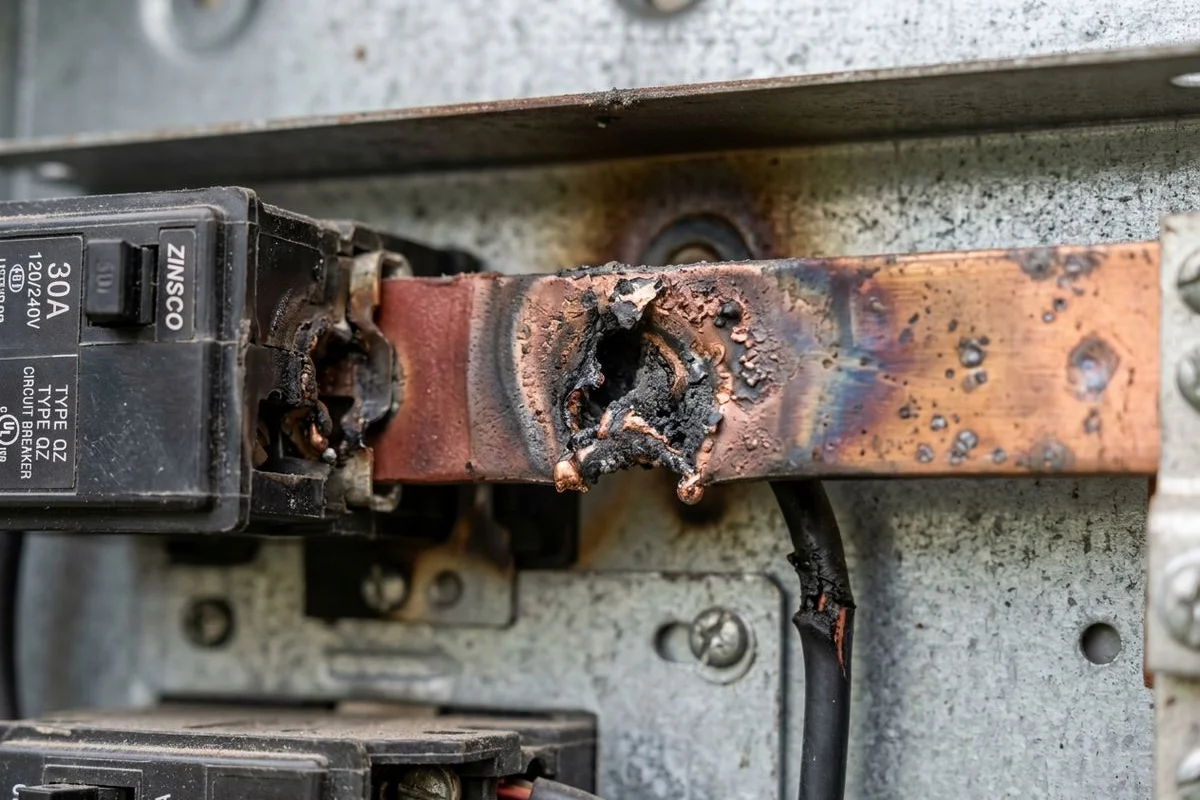
We advise against adding new circuits to either of these brands. Both models will fail a standard pre-purchase electrical inspection every single time.
Replacing the entire unit is the only approved remediation method. Our trucks carry replacement units in stock for both, and the typical replacement is a single-day job.
We Book the Hydro Disconnect for You
Dealing with utility providers can feel frustrating if you do not know the correct procedures. Toronto Electrical Contractor maintains a contractor account in good standing with Toronto Hydro for residential service-disconnect coordination.
This direct access means our team can book your disconnect seven to ten business days ahead of time. Peak season wait times for homeowners booking their own Toronto Hydro disconnects can drag on for two to four weeks.
Standard Utility Disconnect Process
We handle all of those administrative details on your behalf so you never have to waste hours on hold. A standard utility coordination timeline looks like this:
- Advance Booking: We submit the official isolation request 7-10 days prior.
- Morning Disconnect: Hydro arrives early morning to pull the meter.
- Mid-Day Upgrade: Our crew completes the internal panel swap.
- Afternoon Reconnect: Utility crews return to restore full power once ESA authorizes the connection.
For Mississauga, Vaughan, and Markham, we coordinate directly with Alectra Utilities. This process is nearly identical but requires slightly different paperwork and a 10-day to 14-day lead time.
Save on ESA Fees by Bundling Your Upgrade
The best reason to bundle extra electrical work into this main project is permit efficiency. Pulling separate ESA permits for an EV charger, a basement suite, and a main service upgrade triples your inspection visits.
Combining these tasks saves hundreds of dollars in redundant ESA fees, which currently range from $250 to $500 per visit. Bundling everything together means one permit, one inspection, and one final Certificate of Acceptance.
Smart Service Bundles
Property owners often maximize their ESA permit value by completing multiple upgrades at once. Here are the most common project combinations we handle:
- The Modernization Bundle: Service upgrade paired with an EV charger setup and dedicated circuits for a basement renovation.
- The Insurance Compliance Bundle: Service upgrade combined with aluminum wiring pigtailing to satisfy strict underwriting requirements.
- The Heritage Restoration Bundle: Main upgrade integrated with a complete knob-and-tube replacement for historic homes in the Annex or High Park.
How Our Panel Upgrades Compare
| Feature | Typical Provider | Toronto Electrical Contractor |
|---|---|---|
| ESA permit | Often quoted separately or left to the homeowner | Pulled in-house and included in the flat rate |
| Pricing | Hourly estimate that can change on the day | Written flat-rate quote within 24 hours ($1,800-$3,500 for 100A to 200A) |
| Toronto Hydro booking | Homeowner books, 2-4 week peak-season wait | Booked 7-10 business days ahead through our contractor account |
| AFCI/GFCI breakers | Added as extra line items | Included in the quote |
| Install time | Varies | Single day for typical residential service, 4-6 hours without power |
Looking for a panel upgrade electrician near you? Our crews work across Toronto, North York, Scarborough, Etobicoke, and the wider GTA every week. Call (416) 900-2963 or request a free estimate to get a flat-rate quote within 24 hours.