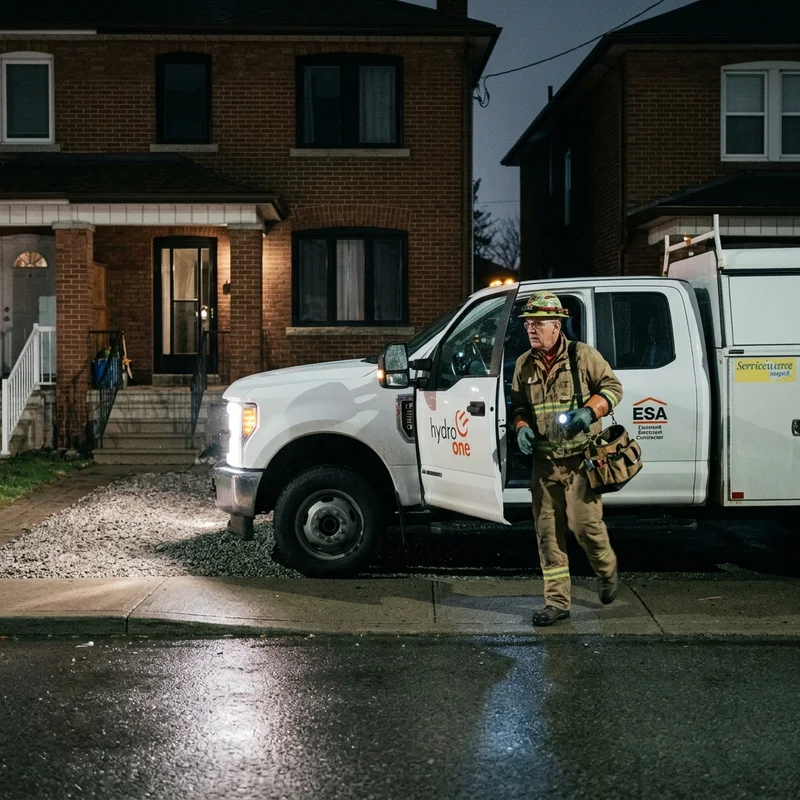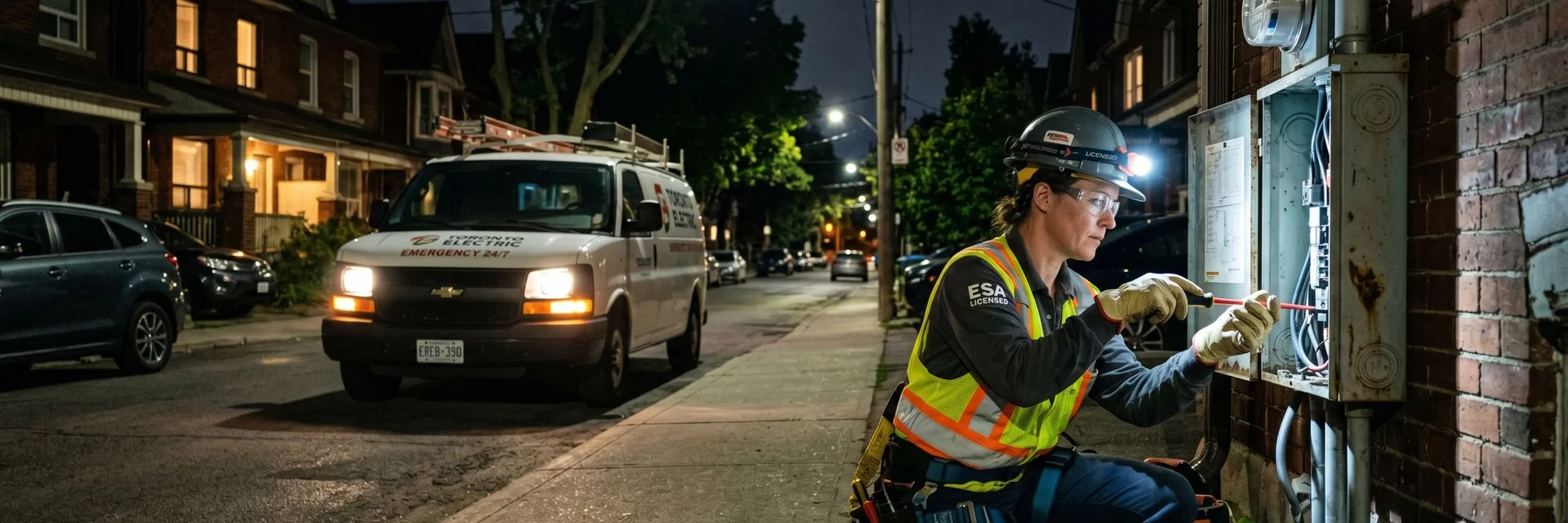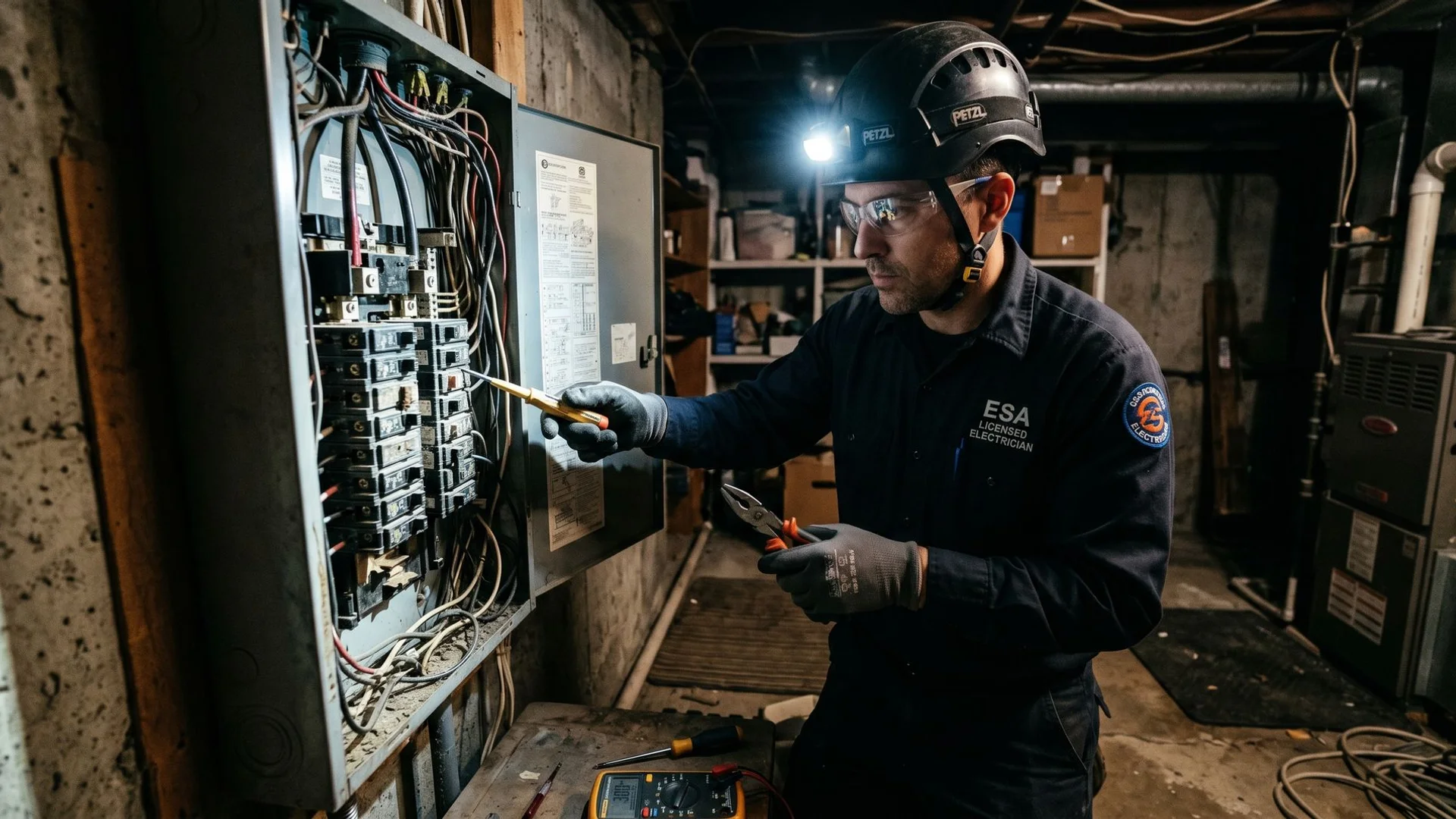
Toronto Electrical Contractor is an ESA-licensed electrical contractor based in Toronto, Ontario, running a 24/7 emergency electrician service for homes and small commercial properties across the Greater Toronto Area (GTA). Our licensed electricians reach most calls in Toronto, North York, Scarborough, and Etobicoke in under 60 minutes, with 15+ years in the trade and 1,500+ completed projects behind the team.
Caught a faint whiff of burning plastic near an outlet? Calling an emergency electrician in Toronto comes down to spotting a small number of distinct symptoms. Knowing what you are dealing with helps us bring the right diagnostic gear and isolate the hazard faster.
Every emergency repair is done to the Ontario Electrical Safety Code (OESC) and carried out under our Licensed Electrical Contractor (LEC) licence, registered through ECRA/ESA. Below are the exact signs to look for and what happens once you call.
Is It an Electrical Emergency? Warning Signs to Act On
The most urgent symptoms are anything you can smell or see actively failing. Major red flags include:
- A burning-plastic scent from a panel.
- Visible sparks at a receptacle.
- A warm or discoloured outlet.
- Breakers that trip and refuse to reset.
- Partial power loss in a section of the house.
These clues point to a failed connection inside a wall or a lost neutral on the service entrance. On Toronto Electrical Contractor emergency calls, an aging breaker that no longer trips properly is a frequent culprit, and the Federal Pacific Stab-Lok panel is the usual suspect. A short in original knob-and-tube wiring creates a similar active fire risk. You need a licensed electrician on site within the hour for all of these conditions.
Recent statistics highlight exactly why speed matters. The 2025 Ontario Electrical Safety Report recorded a 40 percent increase in electrical fatalities at home over the past decade. Never take a chance with a warm outlet. Turn off your main breaker immediately if you smell melting plastic, but do not open the panel or touch damaged wiring yourself: electrocution from contact with live parts is the leading cause of electrical deaths, even among trained electricians.
Some issues feel slightly less urgent but still require a same-day call. Flickering lights tied to specific appliances point to an undersized or aging panel feed, a common finding in semi-detached homes and bungalows still running 60A or 100A service. Outlets that work intermittently or GFCIs that will not reset after heavy rain are equally concerning. Smoke alarms wired directly to the panel often start chirping in unison during these minor faults.
What Happens When Our Licensed Electrician Arrives
Our first move is always to make the situation safe. Whether the call is a Victorian row house in Cabbagetown, a condo townhouse in Liberty Village, or a corner store in the Junction, the technician will pull the affected circuit at the panel. If the panel itself is the problem, the main breaker gets shut off completely.
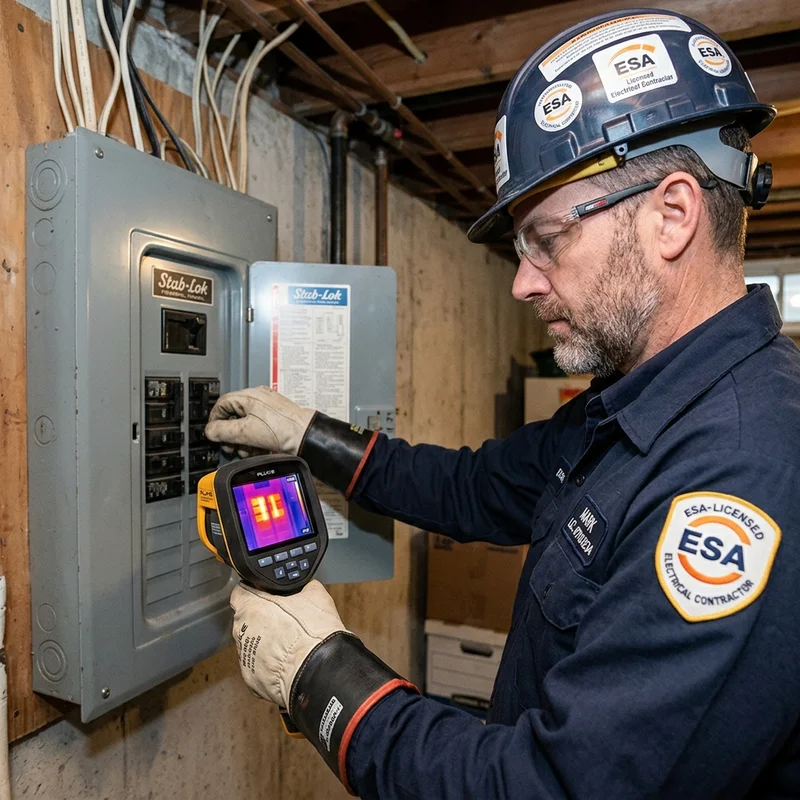
We then verify the system status using a professional Fluke true-RMS multimeter to check for stray voltage. A FLIR thermal-imaging scan follows immediately to ensure nothing else in the panel is running hot. Any Federal Pacific Stab-Lok or Zinsco panel is treated as highly suspect on emergency calls, so the entire unit is isolated.
Once the immediate hazard is neutralized, the real diagnosis begins. The panel cover comes off for a detailed thermal scan and a mechanical torque check. We pull a sample of receptacles or switches on the affected circuit to trace back to the failure point.
Common hidden issues we uncover during this diagnosis include:
- Cracked cloth-covered insulation.
- Active knob-and-tube arcs.
- Loose mechanical torque connections.
Older Toronto homes in the Annex, High Park, and Cabbagetown frequently face these exact issues. About a third of after-hours emergency calls in these specific areas trace back to aging wiring systems.
You get a flat-rate quote for the permanent repair on the spot. Across the Toronto market, emergency calls carry an initial callout fee averaging $300 for the first hour, compared to standard daytime rates closer to $200. Toronto Electrical Contractor charges a $150 flat after-hours dispatch fee plus labour, and no call-out fee at all during business hours.
| Service Type | Toronto Industry Average (2026) | Typical Response Time |
|---|---|---|
| Standard Service Call | $150 - $200 (first hour) | Scheduled in advance |
| Emergency After-Hours | $300 (first hour minimum) | Within 1-2 hours |
We file an emergency ESA permit for any permit-required repair, like panel or service-entrance work. The repair is then completed that night or the next day depending on local parts availability.
Common Electrical Emergencies in Toronto Homes and Businesses
The same five scenarios account for most of our after-hours calls, from detached houses in Leaside and Riverdale to rental units in Mississauga and Vaughan and commercial kitchens downtown.
Burning Smell from the Panel
A melting plastic smell means a failed breaker or a loose lug on a heavy load circuit. Electric ranges, older clothes dryers, and new EV chargers draw massive continuous current. We replace the entire panel if it is a Federal Pacific model. Other brands such as Square D, Siemens, and Eaton panels normally need only the affected breaker swapped and the bus bar re-torqued.
Sparking Outlets and Switches
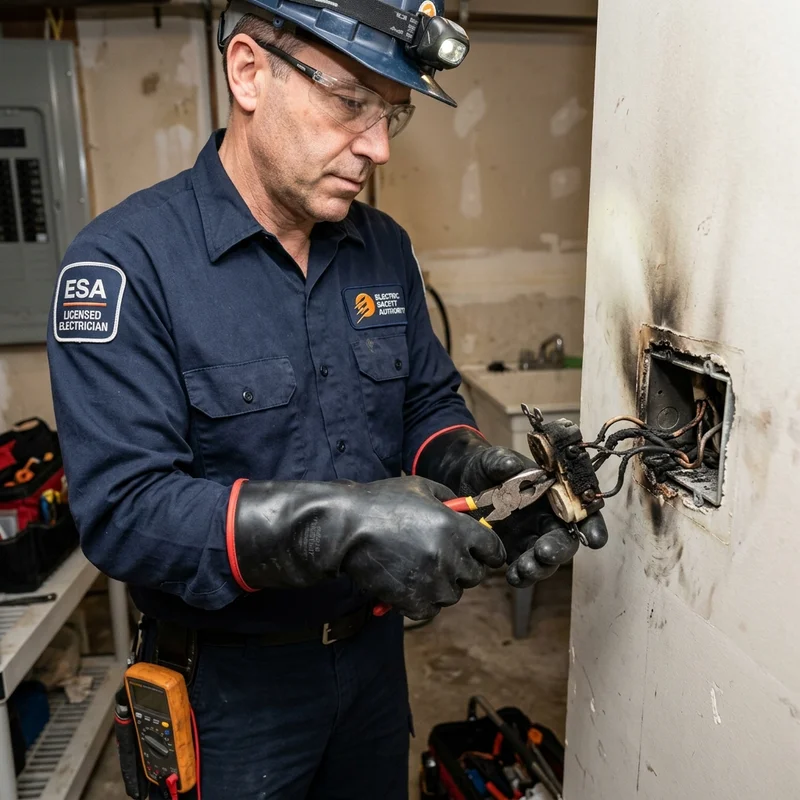
Sparks happen when a backstabbed connection fails. Older aluminum branch-circuit wiring without a proper CO/ALR-rated device is another frequent cause, common in 1960s and 1970s Scarborough and North York bungalows. We replace the faulty device with a rated CO/ALR outlet. Using a specialized AlumiConn lug to pigtail the connection is an alternative fix. Testing all connected receptacles on that specific circuit confirms the rest of the line is secure.
Breakers That Will Not Reset
A stubborn breaker means there is still a fault on the circuit, or the switch itself has welded internally. We test the circuit first to isolate the problem. The breaker gets replaced immediately if the switch itself is ruined. A downstream short requires tracing the entire circuit to replace whichever specific device or junction failed.
Total Power Loss to Half the House
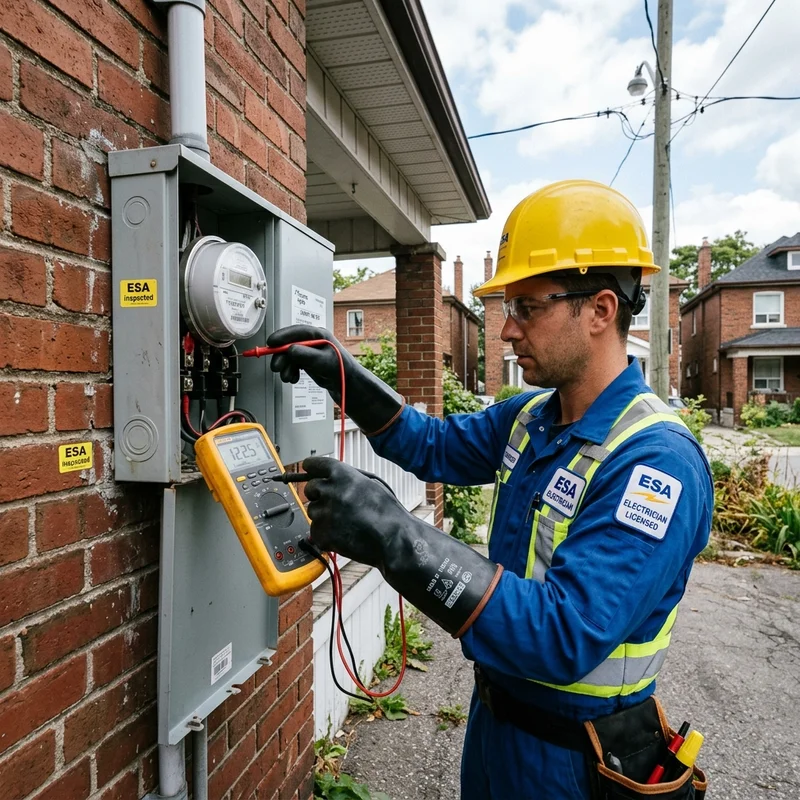
Losing power to exactly half your home points to a lost neutral on the service entrance. This fault occurs right at the meter base or the exterior service mast. We isolate your panel and immediately call the Toronto Hydro emergency line at 416-542-8000 for a local disconnect. The affected lugs or the whole meter base get replaced right away. This fix involves coordinating an emergency service-entrance permit directly with Toronto Hydro and the ESA.
Knob-and-Tube Short Circuits
Older Toronto homes occasionally short out at a knob-and-tube junction buried deep inside a wall cavity. Roof leaks or nesting rodent activity easily damage these brittle, century-old wires. We isolate the affected room and kill the circuit straight at the main panel. You will then receive a quote for either targeted removal or a full property upgrade. Review our guide on knob and tube replacement for the complete scope of that process.
Do Emergency Repairs Still Need an ESA Permit?
Most homeowners assume an urgent middle-of-the-night repair skips the usual municipal paperwork. They do not. Any panel work, service-entrance swap, or brand new circuit needs an Electrical Safety Authority (ESA) permit. We file these emergency permits under our official Licensed Electrical Contractor (LEC) name, even at 2 am.
The 2026 base fee for a residential ESA notification is $88, which is a tiny price for guaranteed safety. The official inspection happens within 48 hours. You will hold a final Certificate of Acceptance for your property insurer before the project file is closed.
Why this specific document matters so much: Emergency electrical failures often cause secondary property damage. A homeowner’s insurance claim is typically required for:
- Extinguisher water cleanup.
- Severe smoke remediation.
- Scorched drywall repair.
Major insurers like Intact or Aviva will immediately ask whether the repair was legally permitted. An official ESA Certificate of Acceptance is the only document that closes that uncomfortable question. Claims frequently get delayed or flat-out denied without this certified proof.
Insurance companies hate unverified risks. Expect your provider to flag the account on the next renewal if your home has older aluminum wiring, active knob-and-tube, or a Zinsco panel. We will give you a clear, written remediation quote at the exact same time as the emergency repair. This allows you to budget properly for the permanent upgrade.
How Our 24/7 Response Compares
| Feature | Typical Provider | Toronto Electrical Contractor |
|---|---|---|
| Arrival time | Within 1-2 hours | Under 60 minutes across Toronto, 24/7 |
| After-hours callout | Around $300 for the first hour | $150 flat dispatch plus labour; no call-out fee during business hours |
| Who shows up | Varies, sometimes an unlicensed handyman | ESA-licensed electrician on every truck |
| Permits | Often skipped on urgent repairs | Emergency ESA permit filed same day, pulled in-house |
| Paperwork for your insurer | Invoice only | Written incident report plus ESA Certificate of Acceptance |
Need an Emergency Electrician in Toronto Right Now?
Electrical faults require fast and precise action to prevent fires. Toronto Electrical Contractor keeps licensed electricians on call 24/7 across Toronto, North York, Scarborough, Etobicoke, and the wider GTA, with every repair built to the Ontario Electrical Safety Code.
Call the dispatch line at (416) 900-2963 right now if you spot any of these warning signs.