Toronto Electrical Contractor is an ESA-licensed electrical contractor in Toronto, Ontario that installs ceiling fans on plaster, drywall, and concrete ceilings, including fan-rated brace boxes and new switch wiring. Typical installs cost $150 to $300 (2026 pricing), backed by 15+ years of experience and 1,500+ completed projects across the GTA.
Have you ever tried to enjoy a quiet evening at home, only to be distracted by a wobbling, noisy ceiling fixture? That repetitive clicking sound is usually a sign of an outdated electrical setup or a box that was never rated for a fan.
Most ceiling fan installs are quick, taking half a day on a typical residential property in Toronto, North York, Scarborough, or Mississauga, whether it’s a detached house, a semi-detached Victorian, or a condo.
Every install is handled by a licensed electrician, with ESA permits pulled in-house when the job calls for one. Below, we walk you through the exact steps for a proper upgrade.
Why Does a Ceiling Fan Need a Fan-Rated Box?
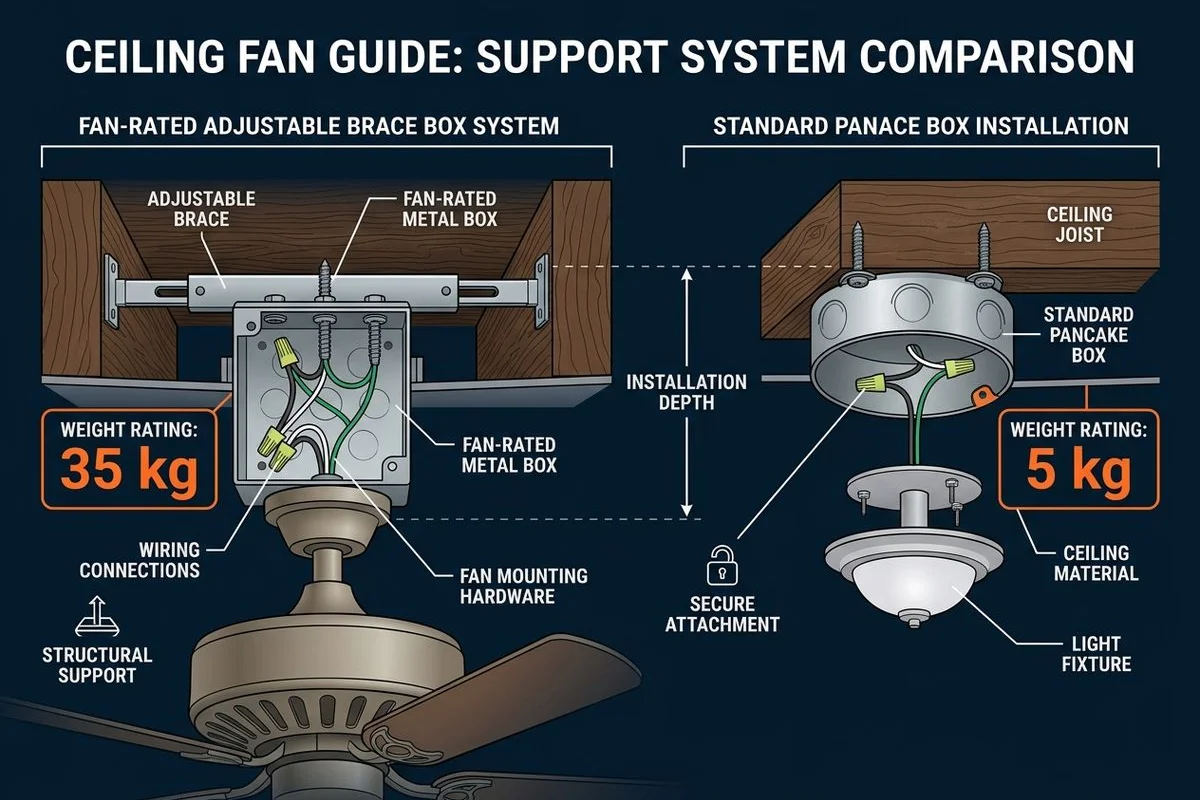
The complications are almost always the ceiling itself. Plaster instead of drywall, concrete instead of joists, no existing junction box, or wiring without a separate switch leg can slow things down. A standard ceiling fan adds about 15 to 25 kg of static weight plus dynamic load from the rotating blades. The Ontario Electrical Safety Code requires that fans be supported by a fan-rated junction box instead of a standard light-fixture box.
Standard outlet boxes are only rated to hold a maximum of 15.6 kg, which isn’t safe for a spinning motor. A CSA-certified fan-rated brace box, like the Iberville CI54171-LF, is designed to support up to 32 kg safely. About 70% of homes built before 2000 don’t have a fan-rated box where the fan is going, so installing one is a standard part of the job.
Fan installs that add a box or new wiring fall under ESA rules, and Toronto Electrical Contractor permits and inspects every job that requires it. Hiring a licensed professional keeps your home protected, code-compliant, and in good standing with your insurer.
- Missing fan-rated boxes: Standard light boxes cannot hold the dynamic weight of a fan.
- Plaster and lath barriers: Older homes require careful cutting to avoid major cosmetic damage.
- Concrete slabs: Condominiums require specialized masonry anchors for a secure hold.
- Outdated wiring: A lack of a neutral wire or separate switch leg complicates the modern setup.
Fan Installs in Plaster-and-Lath Heritage Homes
Heritage Toronto homes in neighbourhoods like The Annex, High Park, Cabbagetown, Riverdale, and Leslieville typically feature plaster-and-lath ceilings. These Victorian and Edwardian semis and detached homes were mostly built before the 1940s, meaning the ceiling structure is fundamentally different from modern drywall. Cutting through plaster requires a sharp tool, a drop sheet, and plenty of patience.
Toronto Electrical Contractor’s electricians score the plaster cleanly before lifting out the cutout. This careful technique prevents the plaster from separating from the wooden lath behind it. We install a fan-rated Saf-T-Brace box that spans the joists securely, working from the attic where there’s access.
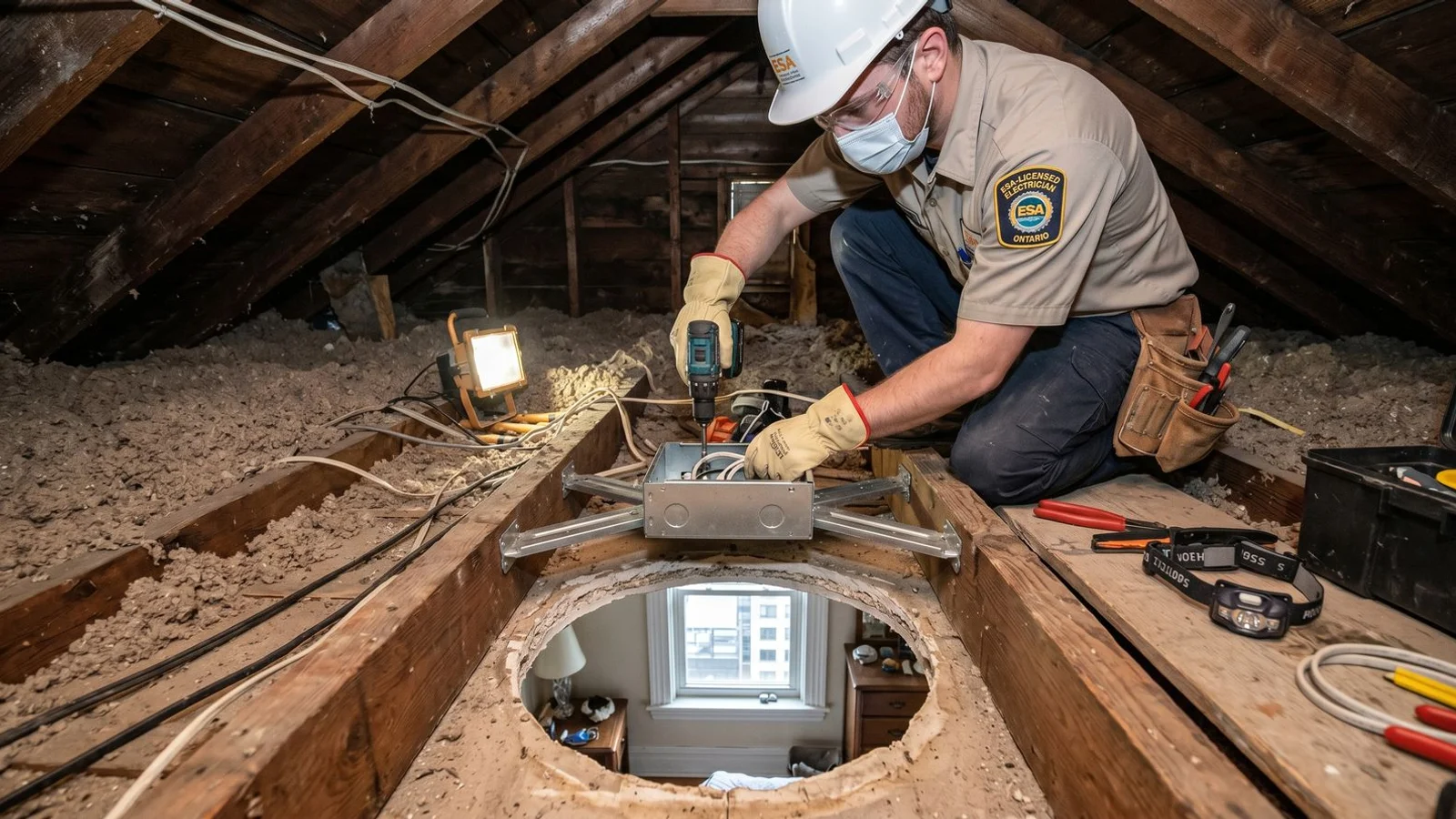
The new fan canopy then covers the access cut completely. Patching is rarely needed because the canopy diameter is larger than the access cut. If the canopy is small or you want a flush-mount install, patching with traditional plaster is required on heritage homes.
Materials like Fibafuse tape create the strongest seams for these older materials. A standard small ceiling drywall or plaster repair in the Greater Toronto Area usually costs around $300. Doing the job right the first time saves you from these unexpected cosmetic repair bills.
“Working with older lath-and-plaster requires a gentle touch. A heavy hand can crack the ceiling all the way across the room, turning a simple installation into a massive repair project.”
Mounting a Fan on a Toronto Condo Concrete Ceiling
Concrete ceilings show up frequently in Toronto condos in neighbourhoods like CityPlace, Liberty Village, and the Yonge and Sheppard corridor in North York, as well as mid-century townhouse construction and basement-level rec rooms. You will also see them in slab-on-grade construction.
We use a concrete anchor system rated for the fan’s static plus dynamic load. A heavy-duty Tapcon concrete screw or a Powers Fasteners wedge anchor provides the pull-out strength required for safety. These anchors pair with a fan-rated surface-mount box like a Saf-T-Pan. Concrete installs add $50 to $100 to the quote for the additional drilling and anchoring time. For condo units, we coordinate with your property management office on access and any building rules before drilling.
| Anchor Type | Best Application | Key Benefit |
|---|---|---|
| Tapcon Concrete Screws | Standard condo ceiling installations | Threads directly into concrete for a secure, vibration-resistant hold. |
| Wedge Anchors | Heavy-duty fans or commercial spaces | Expands as it is tightened to provide maximum pull-out strength. |
| Surface-Mount Box | Any solid concrete ceiling | Eliminates the need to recess the electrical box into the slab. |
No permits are required for a like-for-like fixture replacement. Our team pulls the required ESA permits when running new wiring or adding a switch loop.
Does Your Wiring Support a New Fan?
Older Toronto homes occasionally feature wiring that will not support a modern ceiling fan. You might find no neutral conductor at the switch, which is very common in pre-1965 construction. An undersized conductor for the fan motor or a single-pole switch can also cause headaches when the fan has a light kit and you want separate fan and light control. That setup needs a three-wire switch leg, a dual wall control, or a remote receiver mounted in the canopy.
Identifying Legacy Wiring Systems
We assess the existing infrastructure before starting any installation. Homes built between 1965 and 1978, including many post-war bungalows and split-levels in Etobicoke and Scarborough, often contain aluminum wiring instead of standard copper. The Ontario Electrical Safety Code prohibits using aluminum for new branch circuits under 40 amps.
Our technicians use CO/ALR-rated devices or AlumiConn connectors when connecting to existing aluminum lines.
- Knob-and-Tube: Found in pre-1950s properties, this system lacks a ground wire and is incompatible with metal fan fixtures.
- Aluminum Wiring: Prone to oxidation and overheating if not connected with code-compliant specialized marrettes.
- Missing Neutral Wires: Prevents the installation of modern smart switches such as Lutron Caseta fan controls.
Upgrading Your Electrical Setup
If your existing wiring will not support the fan, running new copper NMD90 cable from the panel or a nearby junction box is the best solution. This upgrade typically costs $200 to $400 depending on access through finished walls and ceilings.
We check this during the quote so there are no surprises on install day. Smart fans and remote-controlled models from brands like Hunter and Minka-Aire bypass the need for a separate wall switch leg entirely by using a wireless remote and an LED light kit controlled from the same handset.
Outdoor Fans for Porches, Patios, and Gazebos
Covered patios, gazebos, and covered porches need damp-rated ceiling fans. Open-exposure installs where rain can directly hit the fan require wet-rated models. The moisture rating affects both the fan itself and the ceiling junction box.
We stock damp-rated brace boxes and can supply Energy Star damp or wet-rated fans on request. Energy Star certified fans use up to 20% less energy than standard models, which helps trim your summer hydro bill. Outdoor installations also demand weatherproof electrical boxes to prevent short circuits. A NEMA 3R compliant PVC fan box, like those made by Bell, seals out moisture while supporting up to 32 kg.
- Damp-Rated Fans: Suited to covered porches, bathrooms, and garages where moisture is present but direct rain is blocked.
- Wet-Rated Fans: Engineered with sealed motors and rust-resistant hardware for open pergolas and exposed decks.
- Weatherproof Boxes: Essential for outdoor safety to keep all wire connections completely dry.
- Energy Star Models: Provide strong outdoor airflow while reducing electricity usage.
Every outdoor connection is sealed and rated for the location, from backyard decks in Etobicoke to covered porches in Vaughan and Markham.
How Our Fan Installs Compare
| Feature | Typical Provider | Toronto Electrical Contractor |
|---|---|---|
| Who does the work | Handyman or general installer | ESA-licensed electrician on every install |
| Ceiling types | Drywall only, plaster and concrete often declined | Plaster, drywall, and concrete ceilings |
| No junction box | Ceiling opened up or job declined | Fan-rated brace box added through existing access, no ceiling demolition |
| ESA permit | Left to the homeowner | Filed in-house when new wiring or a new box is required |
| Pricing | Hourly, extras added on the day | Flat-rate quote from $150-$300, free estimate |
Book Your Ceiling Fan Installation in Toronto
Getting your ceiling fan installation right the first time brings immediate comfort and peace of mind. You want to be completely confident that the fixture spinning above your head is secure and electrically sound.
If you’ve been searching for a licensed electrician near you to hang a new fan, Toronto Electrical Contractor covers Toronto, North York, Scarborough, Etobicoke, and the wider GTA with upfront flat-rate pricing and a satisfaction guarantee on every job. Call (416) 900-2963 or request a free estimate to schedule your code-compliant installation.