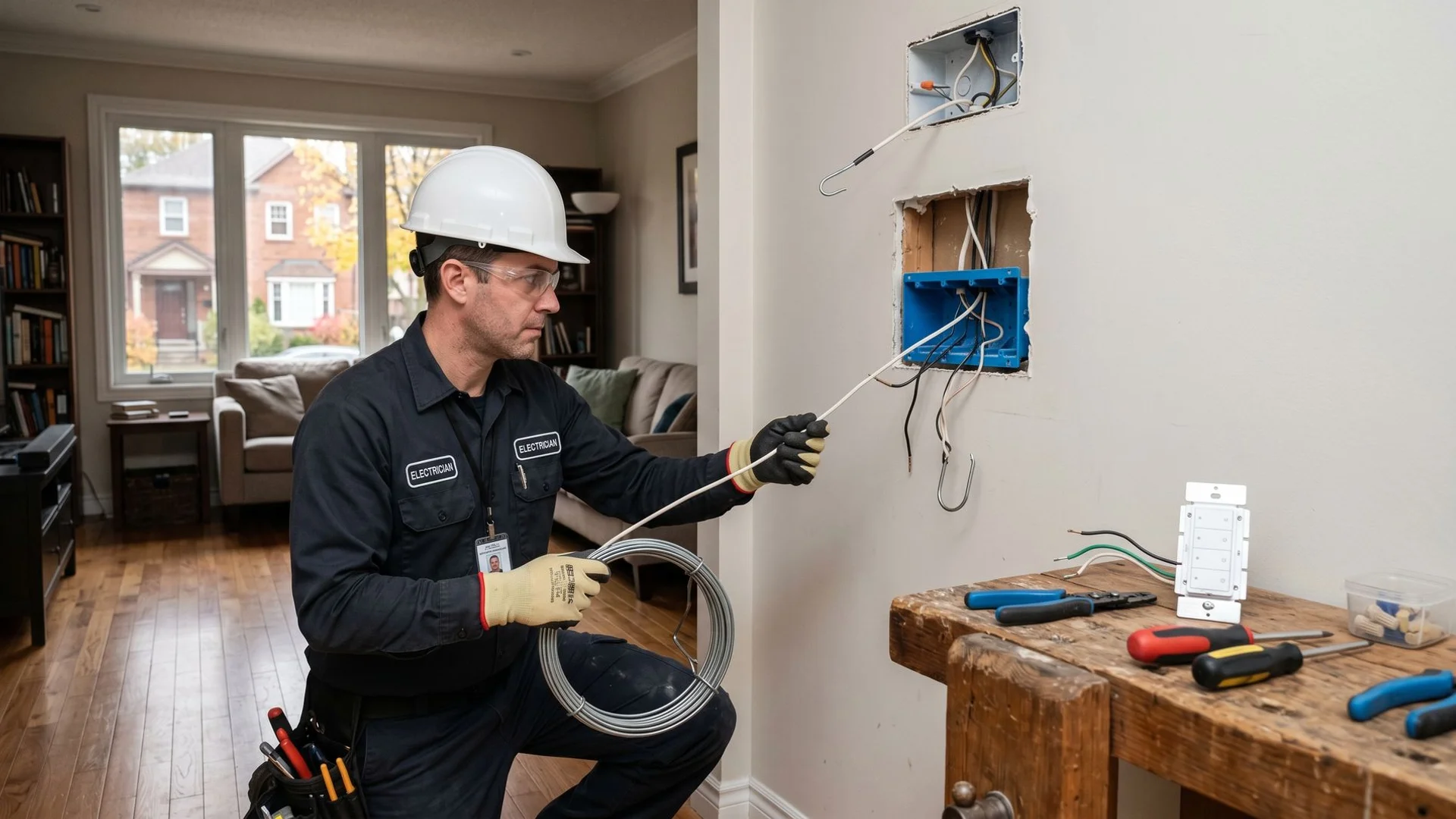
Toronto Electrical Contractor is an ESA-licensed electrical contractor in Toronto, Ontario that installs complete smart home systems for residential properties across the GTA. That covers smart switches and lighting control, Nest and Ecobee thermostats, security camera and video doorbell wiring, Cat6 networking, and smart-panel integration with Level 2 EV chargers.
With 15+ years of experience and 1,500+ completed projects, our electricians pull every ESA permit in-house and give you a flat-rate quote before any work starts. Device installs run $150 to $400 each (2026 pricing), and estimates are free on all residential projects.
Home automation demand keeps climbing, with a 2026 industry report putting the Canadian smart home market at $4.59 billion. Most of that gear still depends on the wiring behind your walls. Below is exactly which devices need an electrician, what each install involves, and what it costs.
Which Smart Home Devices Need an Electrician?
Most smart-home gear is plug-and-play. Smart bulbs, smart plugs, and battery video doorbells are DIY-friendly, need no permit, and fall outside our scope.
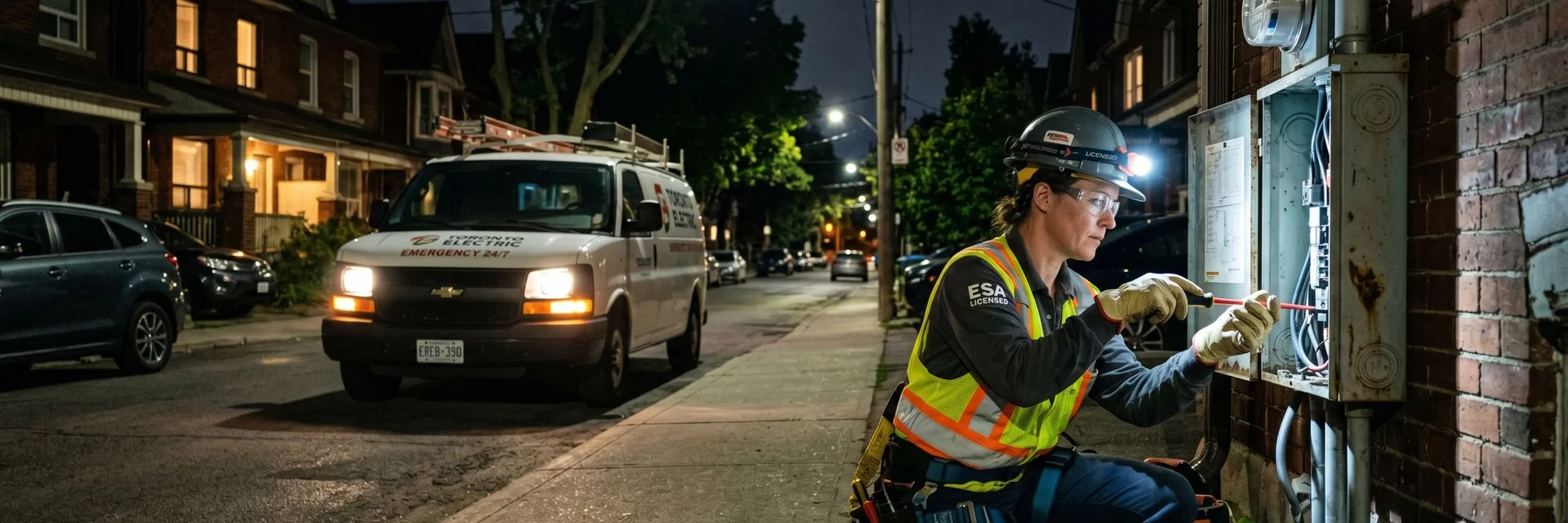
The Electrical Safety Authority (ESA) in Ontario requires a notification of work for hardwired modifications. Smart switches and dimmers need professional installation because most require a neutral conductor. Toronto Electrical Contractor handles anything that needs a permanent wiring change, whether that is a semi-detached in Leslieville, a post-war bungalow in Etobicoke, or a new-build detached in Vaughan.
Smart thermostats need a dedicated C-wire to function properly. Smart panels and EV charger integrations demand 240V circuits and load monitoring. Hardwired security cameras and Wi-Fi access points need Cat6 runs, and whole-home automation rough-ins require new home runs back to a central hub location.
Smart Switches, Dimmers and Lighting Control
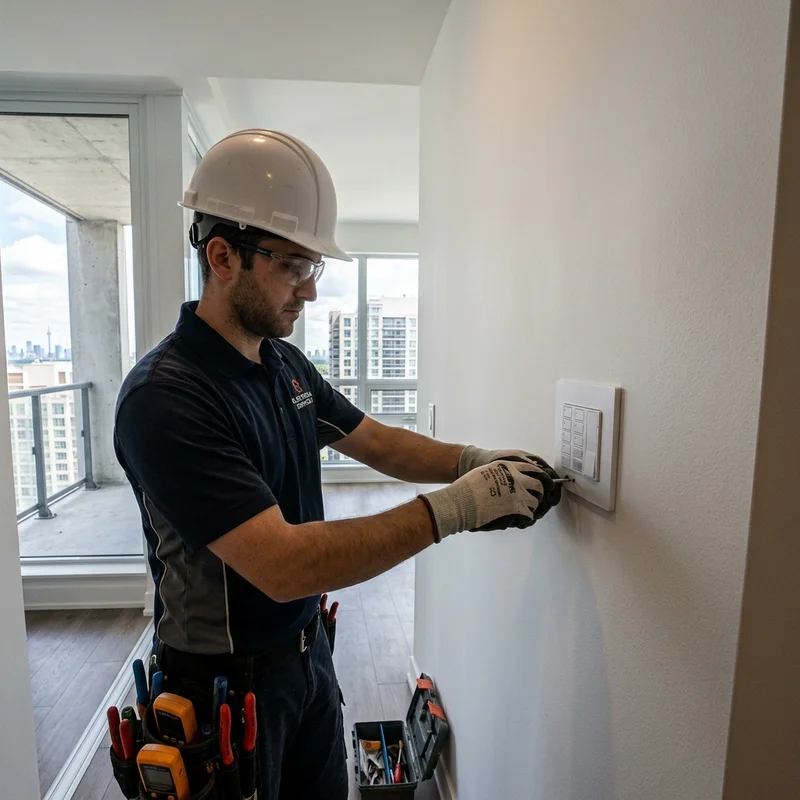
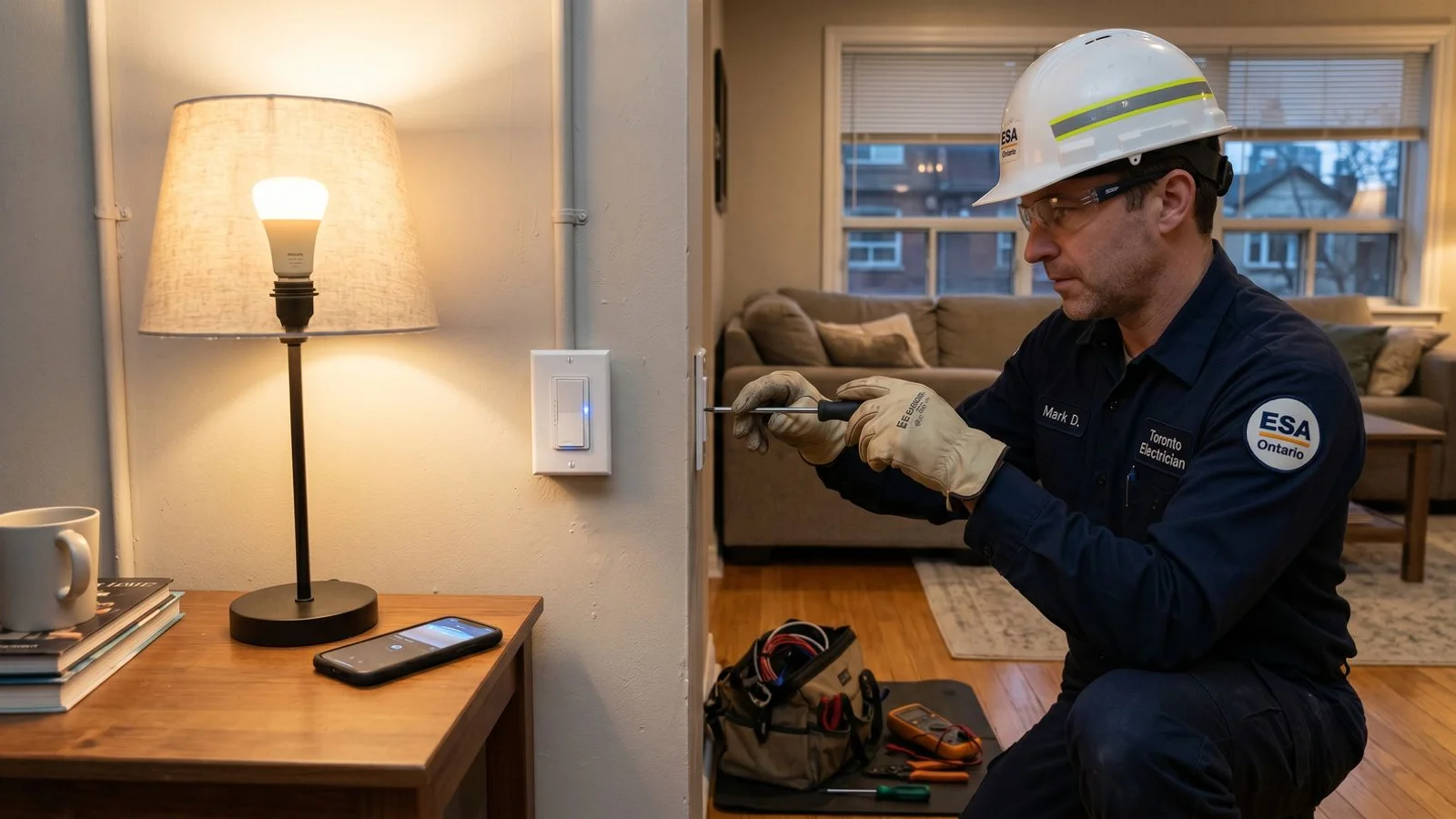
Smart switches are the foundation of reliable lighting control. They control whatever is on the circuit, survive bulb replacements, and look like normal wall switches. They also do not depend on Wi-Fi reaching every individual bulb.
Once installed, you can set scenes, schedules, and voice control through Alexa, Google Home, or Apple HomeKit. With the Matter connectivity standard now widely supported in the 2026 Canadian market, cross-compatibility between brands is better than ever.
Top Smart Switch Options
- Lutron Caseta: The most reliable option available today. It uses a proprietary RF link to the Caseta Smart Bridge, which talks to your network. Caseta dimmers such as the PD-6WCL work without a neutral, while Caseta on/off switches need one. The newer Claro-style smart switches blend with traditional decor.
- Leviton Decora Smart: These connect via direct Wi-Fi with no hub needed and integrate with Apple HomeKit, Google Home, and Alexa. They cost slightly less per switch than Caseta. The Wi-Fi models require a neutral conductor.
- Kasa Smart (TP-Link): The budget pick. It is Wi-Fi only, needs no hub, and handles basic on/off and dimming well, though the app is less polished than Caseta. It requires a neutral conductor.
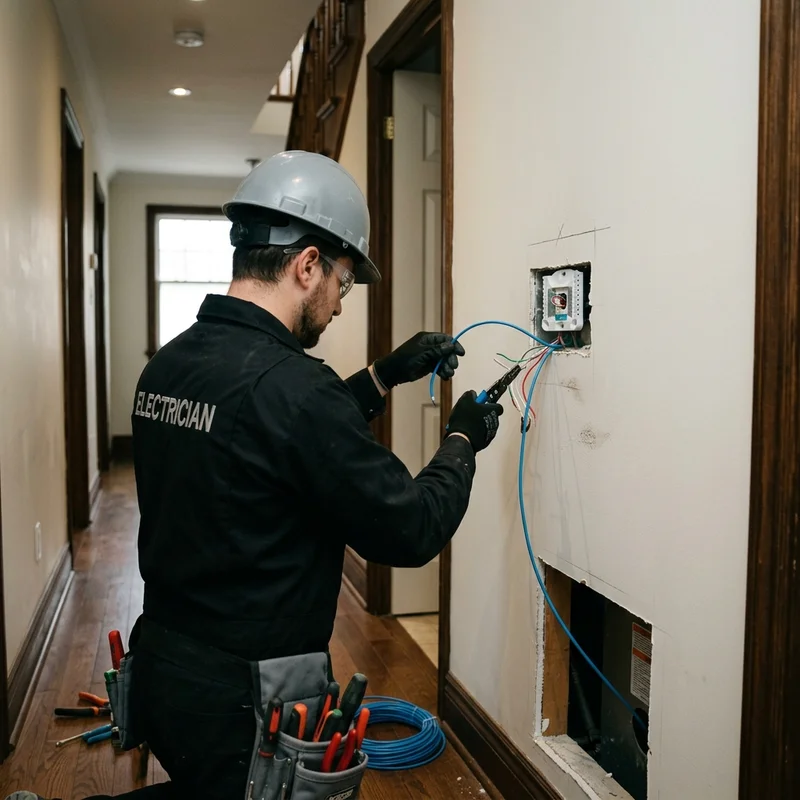
The neutral-wire question is the biggest installation catch. Pre-1990 Toronto homes, especially older semi-detached and Victorian houses in The Annex and High Park, often lack a neutral at the switch box. The original wiring sent only the switched leg through the wall.
Running new wiring from the fixture down the existing wall path is the best fix. It costs $100 to $200 per switch location, in addition to the device cost.
Why Nest and Ecobee Thermostats Need a C-Wire
Nest, Ecobee, and Honeywell T-series thermostats need constant power to run their screens, Wi-Fi, and learning algorithms. That power comes from the C-wire, or common wire, at the thermostat location. A 2026 survey found 54% of Canadian owners interact with their smart thermostats every day, so a stable, hardwired power connection matters.
Most thermostat cabling in Toronto homes is 18-gauge 4-conductor: red for 24V power, white for a heating call, green for the fan, and yellow for a cooling call. Our electricians pull a new 5-conductor or 6-conductor cable from the furnace control board up the existing wall path to add the missing C-wire. The upgrade takes one to two hours.
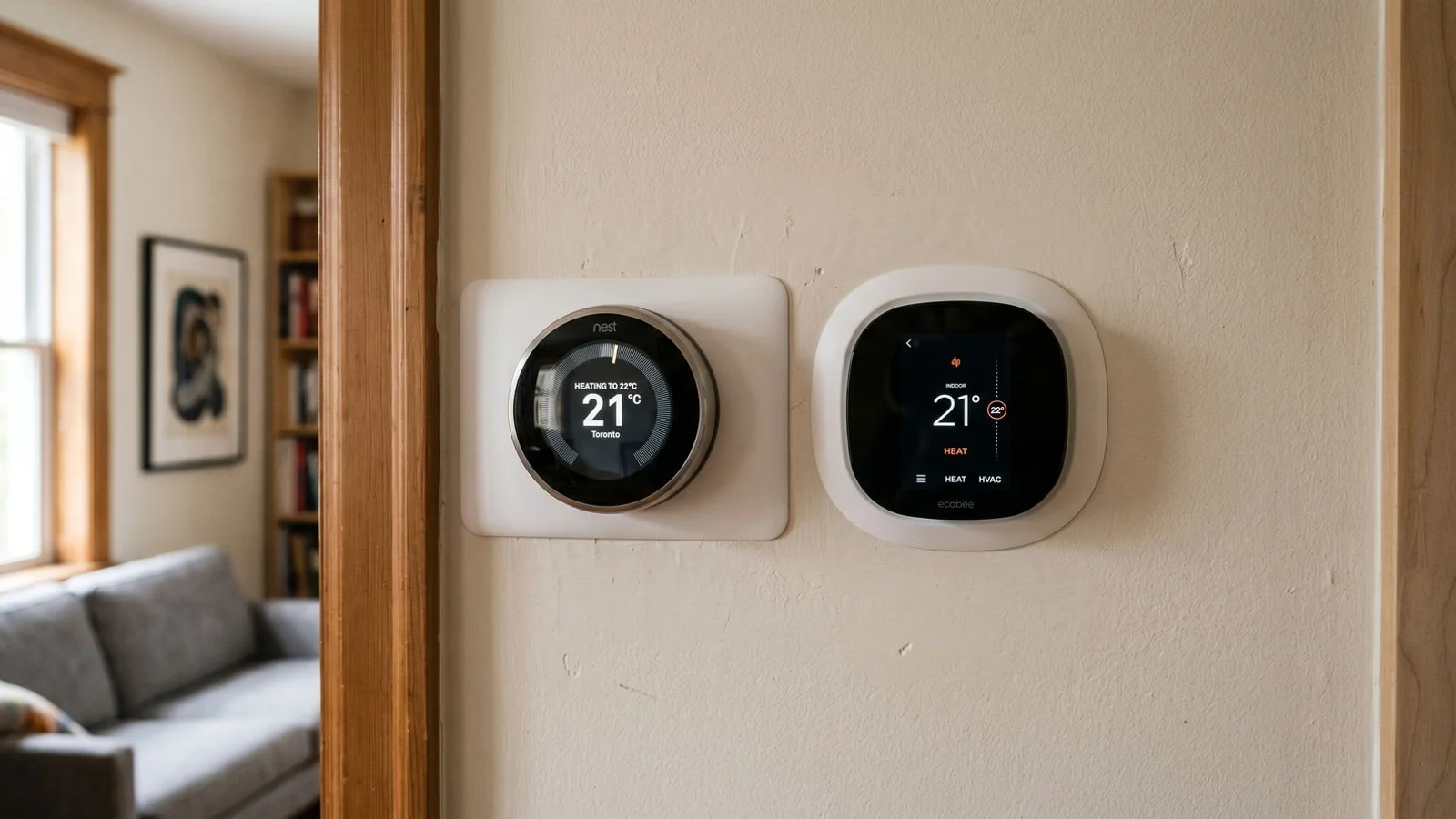
Some Ecobee models ship with a Power Extender Kit (PEK), which skips the C-wire by multiplexing signals over the existing conductors. It works with many systems but causes fan-cycling issues with certain HVAC equipment. A real C-wire is the more dependable fix.
Maximize Your Energy Savings
The Enbridge Gas Home Renovation Savings (HRS) program offers a $75 rebate for eligible smart thermostats in Ontario for 2025 and 2026. Take advantage of it to offset your upgrade cost.
Upgrading to a model like the Ecobee Smart Thermostat Premium helps you qualify while optimizing your heating and cooling.
Whole-Home Automation Wiring During a Toronto Renovation
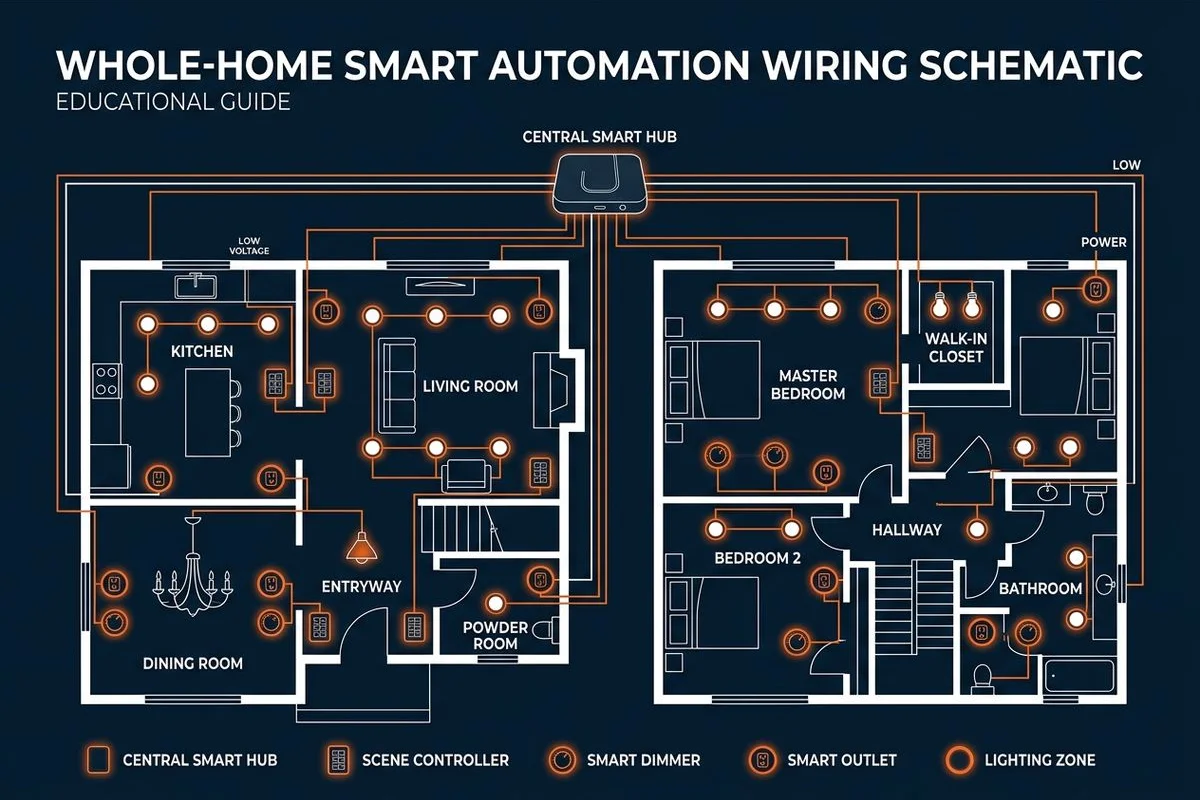
The best time to wire a complete smart home system is during a major renovation when walls are open. Planning ahead saves thousands of dollars and gives every room solid connectivity, so set up the infrastructure before the drywall goes up.
Security devices hold a 16.4% share of the Canadian smart home market in 2026, which makes dedicated camera and doorbell wiring a top priority. Hardwired Cat6 also feeds ceiling-mounted Wi-Fi access points and in-wall speaker locations for audio/video systems.
Standard Rough-In Scope
- A neutral conductor at every switch box to future-proof for any smart switch.
- Cat6 or Cat6a home runs to media-room, home-office, Wi-Fi access point, and hub-controller locations for speeds up to 10Gbps.
- Conduit installed between the media room and AV closet for a future fibre or HDMI extender, plus speaker wire to in-wall speaker locations.
- Scene-controller wiring located at primary entry points, like the front door, garage entry, and primary bedroom.
- Dedicated doorbell and front-door camera wiring, with Cat6 to exterior camera locations for PoE security cameras.
- A hub-controller location wired with two outlets (one regular, one switched), Cat6, and pre-bonded for surge protection.
Full whole-home rough-in jobs are quoted project by project. A typical 4-bedroom detached home in North York or Markham lands in the $3,500 to $7,000 range during a renovation. Retrofitting the same scope after the walls are closed easily exceeds $10,000.
Smart Panels That Manage Your EV Charger Load
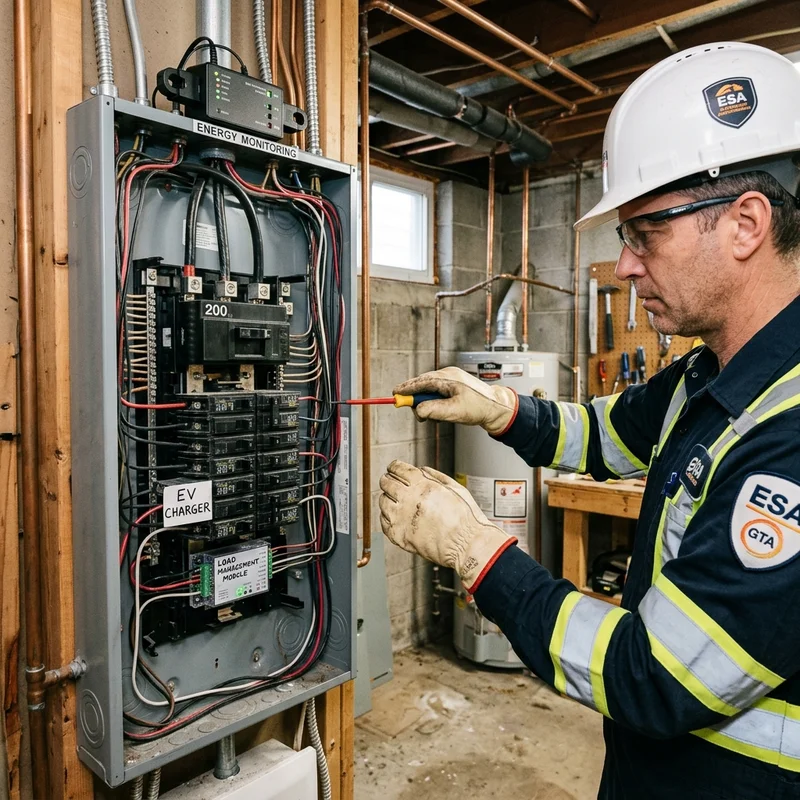
If you have installed an EV charger and use a smart panel like SPAN or Lumin, smart breaker integration allows automated load management between the panel and the charger. The panel watches your whole-home draw in real time.
The system throttles the EV charger automatically when other heavy loads, like an oven, dryer, or AC compressor, are running.
This setup is useful when a 100A panel feeds a Level 2 EV charger and the load math is tight. The smart panel manages peak usage instead of you paying for a full service upgrade. The current Ontario Electrical Safety Code (OESC) recognizes energy management systems like these when sizing a service, and the install is still covered by a standard ESA permit.
Accurate load math is crucial for a safe installation. Toronto Electrical Contractor performs a full load calculation as part of your initial quote.
The calculation shows whether smart-panel management is a viable alternative to a physical panel upgrade, which runs $1,800 to $3,500 for a 100A to 200A service upgrade.
How Our Smart Home Installs Compare
| Feature | Typical Provider | Toronto Electrical Contractor |
|---|---|---|
| ESA permits | Often skipped on smart switch and thermostat installs | Pulled in-house and included in the quote |
| Missing neutral or C-wire | Install refused or a workaround kit used | New neutral or C-wire run as part of the install |
| Pricing | Hourly billing with extras added later | Flat-rate quote before work starts, from $150 per device |
| EV charger and panel work | Separate trades and separate quotes | Smart panel, EV charger, and load calculation in one visit |
Book Smart Home Installation in Toronto
Toronto Electrical Contractor serves Toronto, North York, Scarborough, Etobicoke, and the wider GTA, including Mississauga, Richmond Hill, and Oakville. Every residential install comes with an ESA permit, a flat-rate quote, and a satisfaction guarantee.
Call (416) 900-2963 or request a free estimate to plan your smart home system.