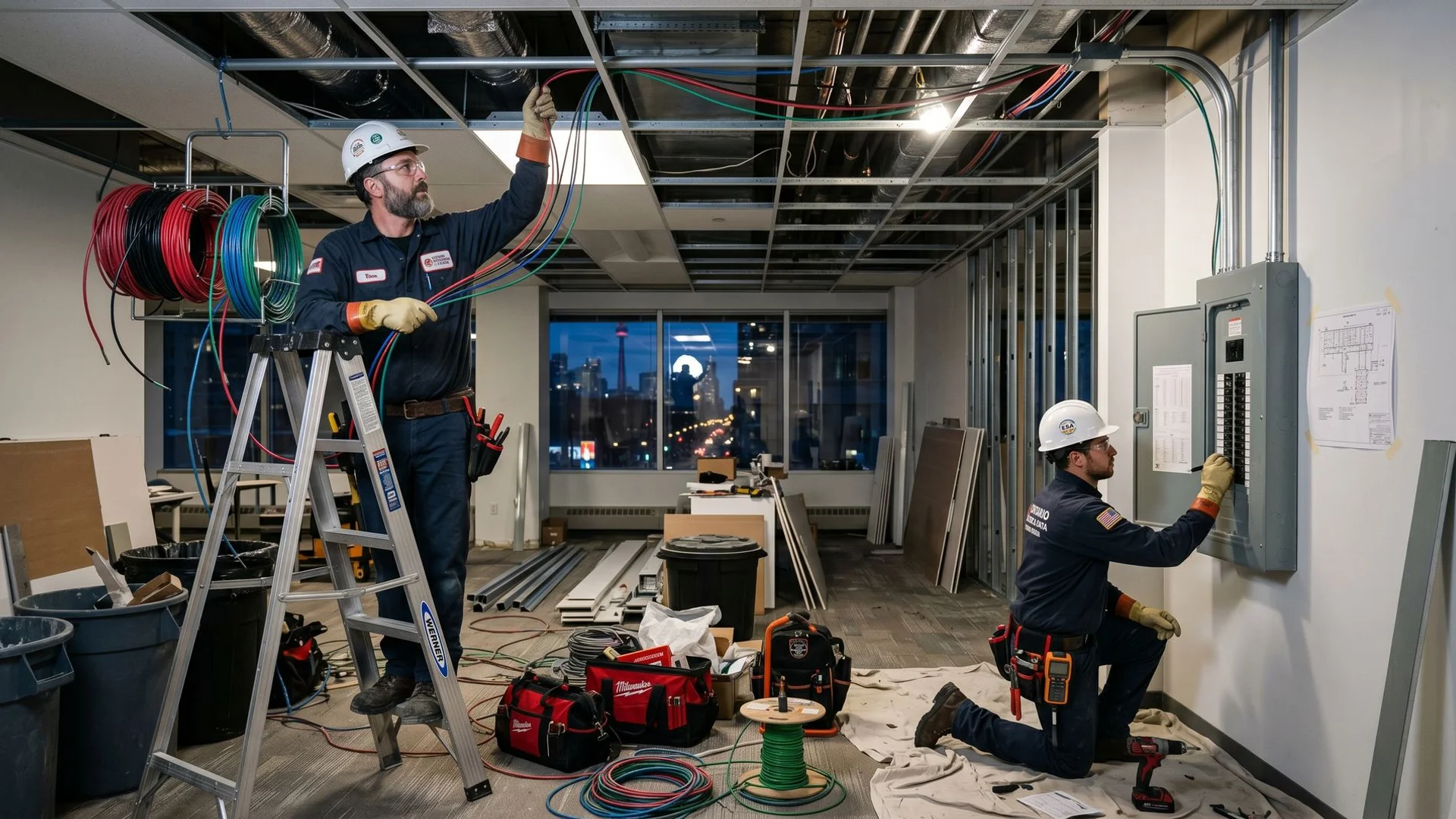
Toronto Electrical Contractor is an ESA-licensed electrical company based in Toronto, handling commercial work for retail units, offices, restaurants, warehouses, and light industrial spaces across the GTA. Our core commercial services are tenant improvement wiring, LED lighting retrofits, sub-panel installations, and preventative maintenance contracts, backed by 15+ years in the trade and 1,500+ completed projects.
Every commercial job is permitted and inspected. We file the Electrical Safety Authority (ESA) permit in-house under our ECRA/ESA licence, so property managers and business owners get a Certificate of Acceptance without chasing paperwork.
Most of our commercial work is scheduled after hours so your tenants and customers are never disrupted. Pricing is quoted by scope before work starts, and typical TI quotes are delivered within 3 business days of the site walk.
Tenant Improvement Electrical for Offices and Retail
Tenant improvement happens when a commercial space turns over or changes use. A new tenant moves in, and suddenly the existing sub-panel lacks enough breaker space. Older retail units in Toronto frequently only have 60-amp service available.
This single limitation immediately eliminates about a third of potential restaurant and retail tenants who require 200 to 400 amps.
We step in to upgrade those panels and configure dedicated circuits for your specific equipment. Finding out your electrical layout does not fit the new floor plan is a common headache. Our licensed electricians rearrange the lighting and install the necessary junction boxes to make the space functional, whether the fit-out is a design-build project led by a general contractor or built to an architect’s stamped drawings.
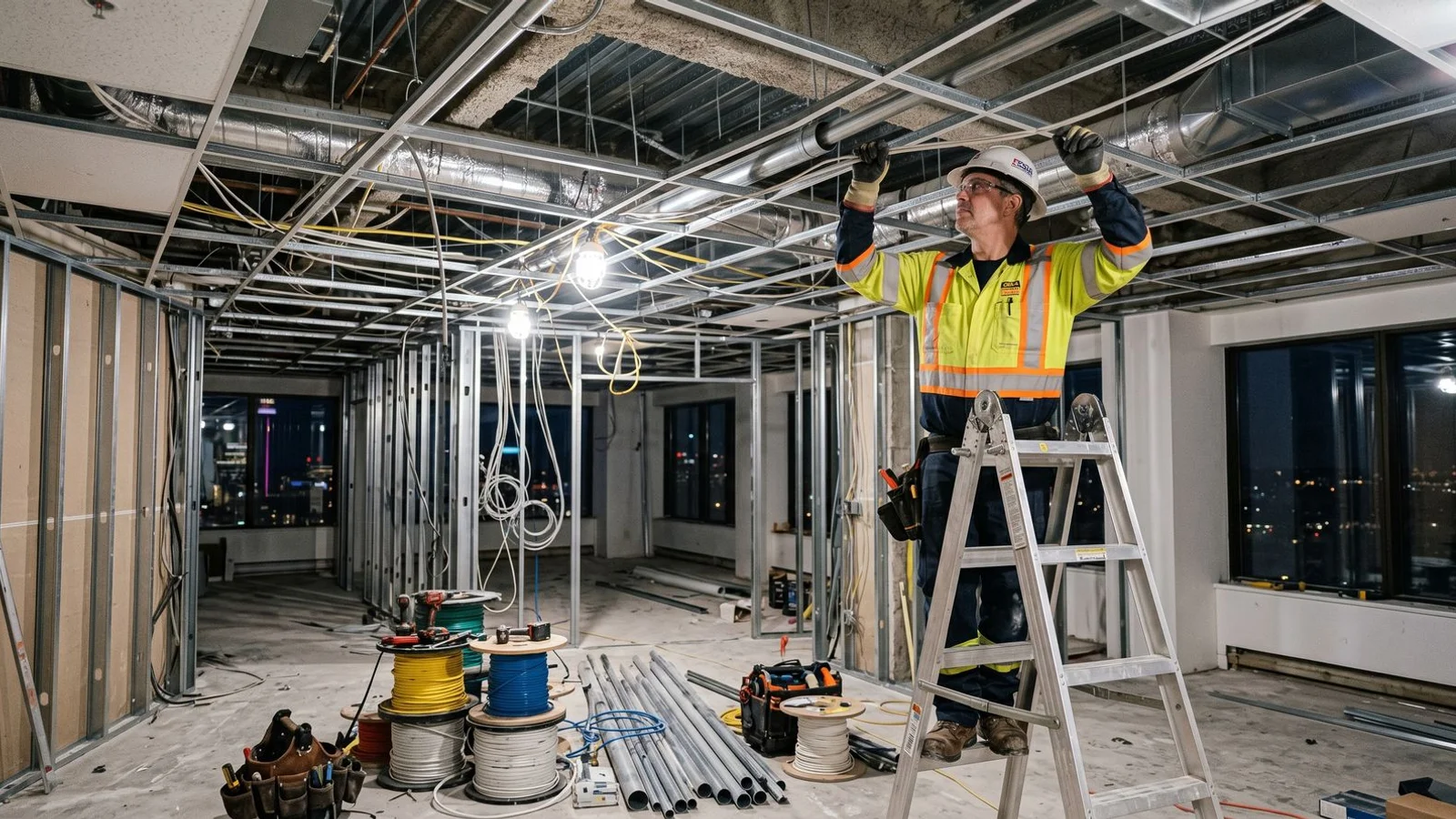
Office Fit-Outs and Upgrades
A typical small-office project in a Toronto plaza or mid-rise office building involves several essential updates.
- New demising wall electrical separation (junction boxes, conduit, sub-panel feed)
- Lighting layout reconfiguration (often happening alongside an LED retrofit)
- Dedicated 20A circuits for office equipment, server racks, and kitchenettes
- New egress lighting where partition changes affect emergency paths
- Updated exit signs to meet the current Ontario Building Code
Retail Space Electrical Needs
Retail environments, from Queen Street West storefronts to strip-plaza units in Scarborough and Etobicoke, demand a completely different approach to power distribution.
- New point-of-sale (POS) and display lighting circuits
- Dedicated power feeds for exterior and window tenant signage
- Integration with heating, ventilation, and air conditioning controls
- Sub-panel installation if the existing main panel is shared with other units
Inspection and Permitting
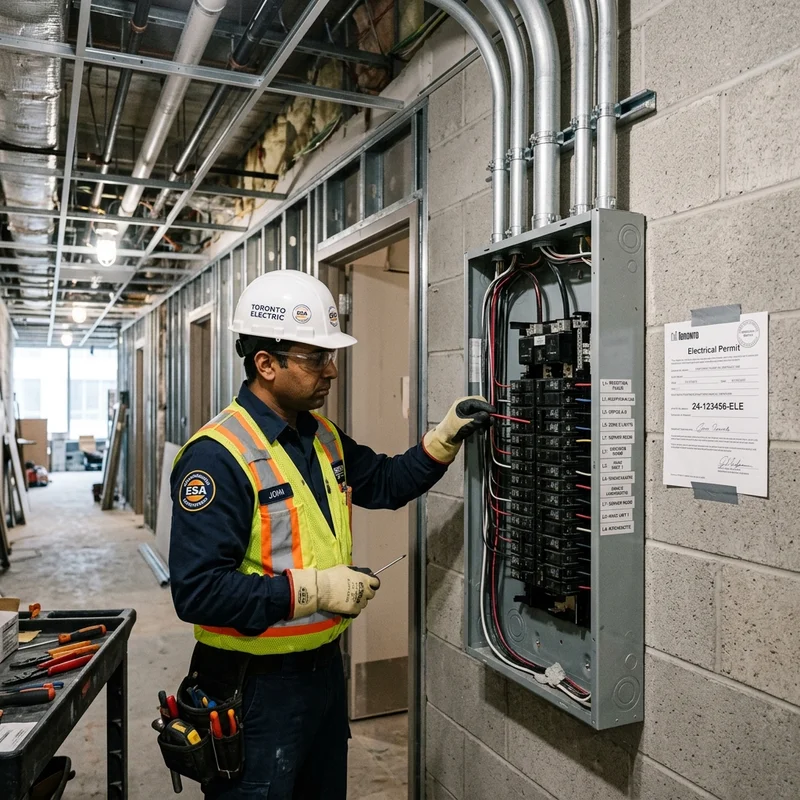
Getting the right permits is mandatory for any commercial project. The Electrical Safety Authority requires proper documentation for all structural wiring changes, and only an ECRA/ESA Licensed Electrical Contractor can pull the permit.
We file the paperwork under our Licensed Electrical Contractor number to keep your project moving. The ESA updated their fee schedule in April 2026 with a slight 1.9 percent increase for wiring. Accurate budgeting means factoring these exact costs into your initial estimate.
Our team schedules the rough-in and final inspections on your behalf. You simply receive the final Certificate of Acceptance for your property manager.
“A proactive approach to permitting eliminates costly delays before grand openings.”
This hands-off approach saves you hours of administrative work.
After-Hours Work That Keeps Tenants Open
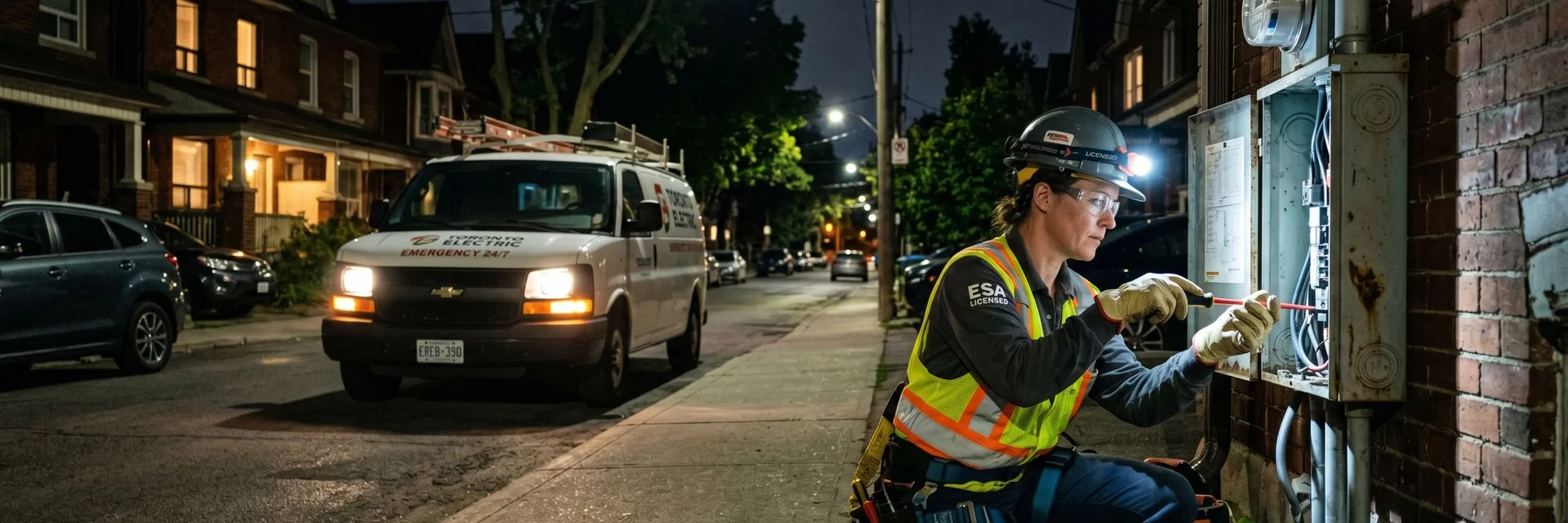
Property managers rarely want noisy trades disrupting paying tenants during normal business hours. About 80 percent of commercial tenant improvement work actually happens from 6 pm to 6 am or on weekends. This schedule keeps your neighbouring businesses open and productive, whether that is a condo podium retail strip or a multi-tenant office tower.
We coordinate directly with building security to ensure fire alarms stay quiet during panel tie-ins. Toronto noise bylaws generally restrict heavy construction after 11 PM in mixed-use areas.
Managing the Night Shift
Quiet interior electrical work can continue through the night.
Our crew arrives fully equipped with proper portable lighting and quiet-work protocols for shared-wall scenarios. Collaboration with other evening trades makes the whole timeline run smoother.
- Coordination with HVAC specialists for control wiring
- Scheduling alongside plumbing and drywall teams
- Managing building access and security sign-ins
- Containing dust and debris before morning business hours
The night-work premium is small because this crew is already built for it. That minor investment pays back many times over by preserving crucial tenant relationships.
Commercial LED Lighting Retrofits With Save on Energy Rebates
Energy-efficient upgrades are the most common standalone commercial projects requested by local property owners. These updates are especially popular in Vaughan Concord light-industrial spaces and Mississauga Erin Mills office parks. Frequent Toronto small-office retrofits also make up a large portion of this daily schedule.
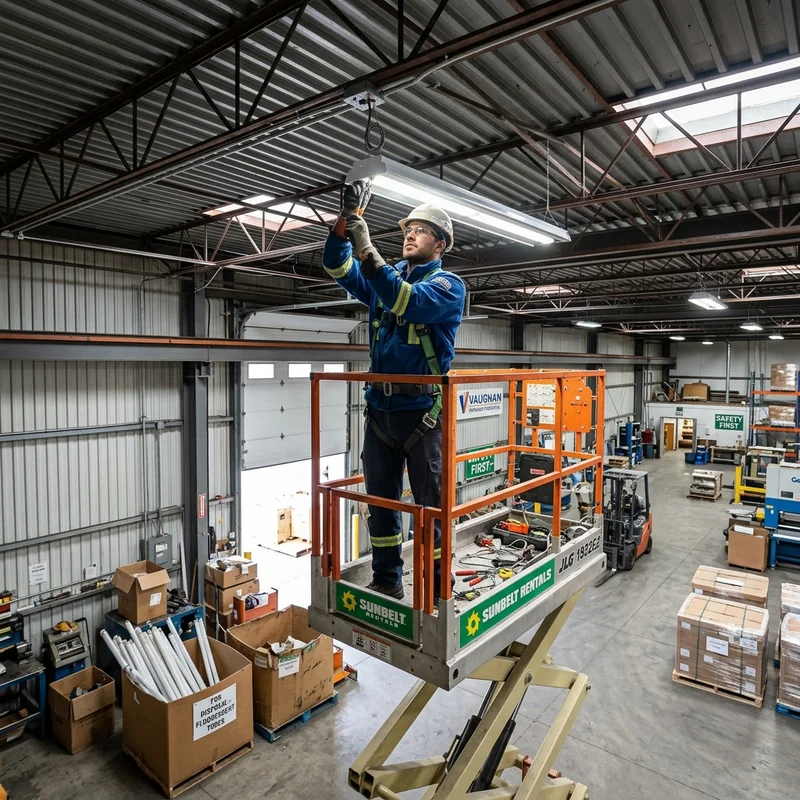
Our technicians replace old, buzzing fluorescent T8 or T12 fixtures with bright LED alternatives. LEDs are significantly brighter per watt, which often means you need fewer total fixtures to properly illuminate a room. A rebalanced lighting layout instantly modernizes the feel of your entire facility.
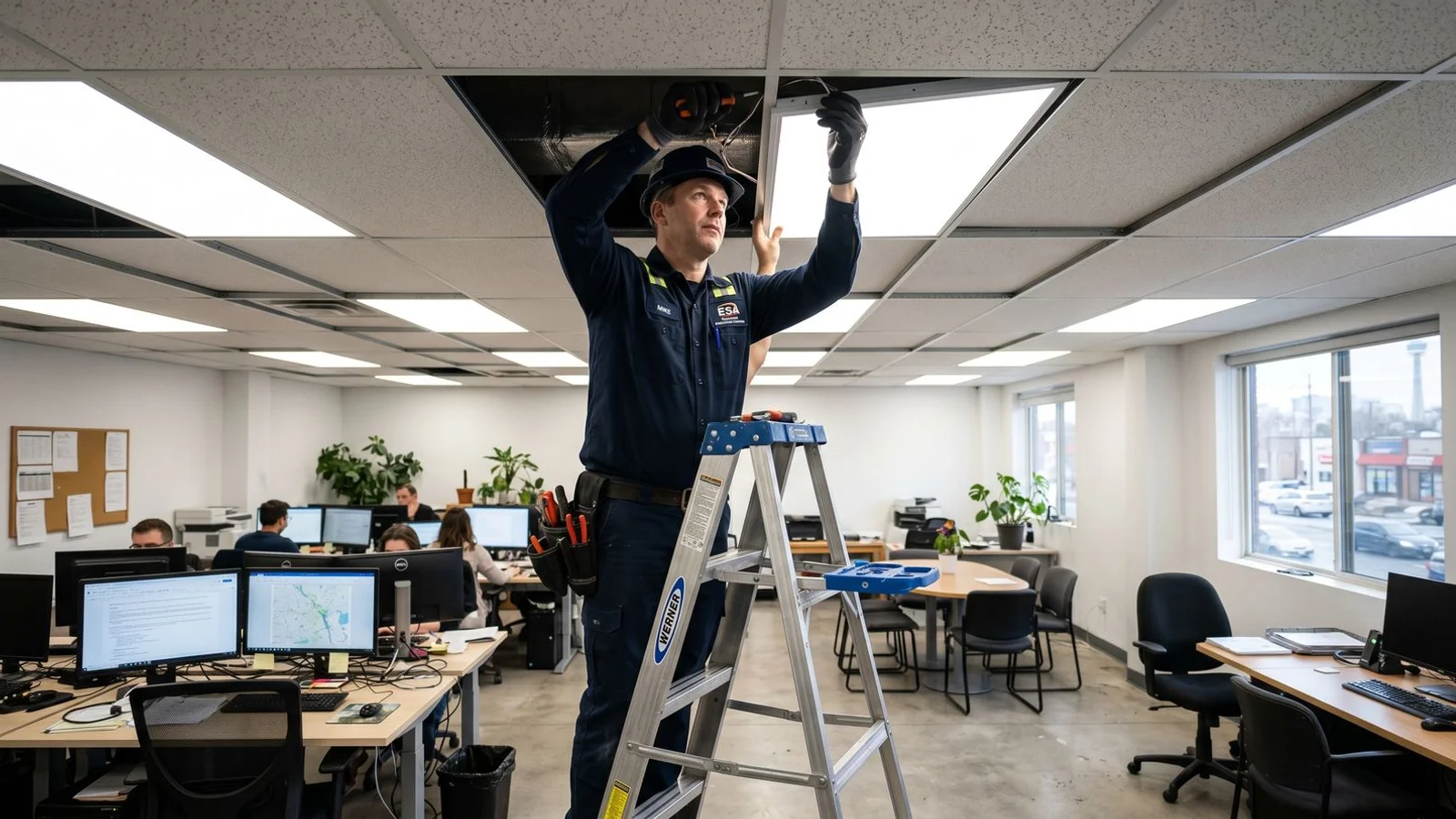
Typical LED Retrofit Upgrades
Every building has unique needs, but a standard scope of work includes several core improvements.
- Existing fluorescent fixtures swapped for LED linear or tube retrofits
- Occupancy sensors added to private offices, washrooms, and storage areas
- Photocell controls installed for perimeter and parking-area illumination
- Official documentation submitted for provincial energy rebates
Understanding Energy Rebates in 2026
The Save on Energy commercial rebate program, run by the IESO and delivered through local utilities such as Toronto Hydro and Alectra, changes its rules annually.
We keep current with these guidelines and submit the paperwork on your behalf. The 2026 Instant Discounts Program applies savings directly at the distributor invoice, offering up to $140 off certain high-bay fixtures.
Companies with fifty or fewer employees can also utilize the Small Business Program. This specific initiative provides up to $3,000 in direct incentives for lighting equipment upgrades.
“Properly documented rebate applications can slash thousands of dollars off your final invoice.”
Our clients typically see a complete return on investment within 18 to 36 months when factoring in these rebates. Reduced monthly hydro bills continue to generate savings long after the project finishes.
Preventative Maintenance Contracts That Prevent Outages
Preventative maintenance is a service that most commercial property managers wish they had started earlier. Failing electrical connections never announce themselves loudly before causing a major disruption. They slowly heat up over months until the breaker trips or the connection fails into a dangerous arc fault.
The average facility experiences about 25 unplanned downtime incidents a month, according to the 2026 State of Industrial Maintenance report. Mean time to repair has stretched to 81 minutes on average, largely due to supply chain delays for replacement parts.
We catch failing connections early to prevent these expensive and stressful operational pauses.
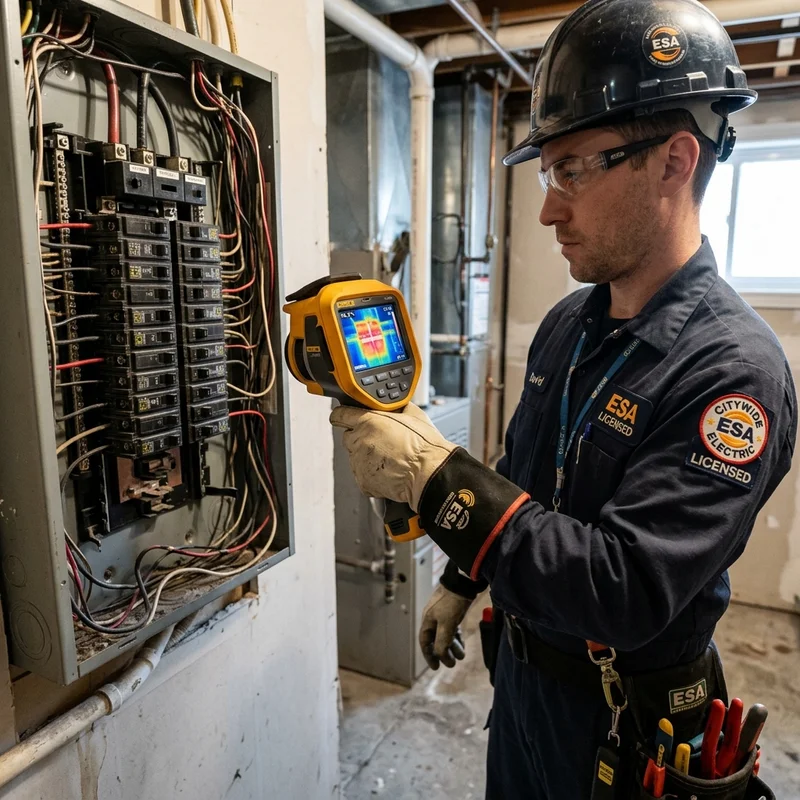
What is Included in Scheduled Visits
Quarterly visits are standard for properties with significant load, while semi-annual checks suit smaller buildings.
- Panel torque inspection: Every breaker and lug is torqued to specific factory requirements. Loose connections get re-torqued immediately, and any strange anomalies are carefully documented.
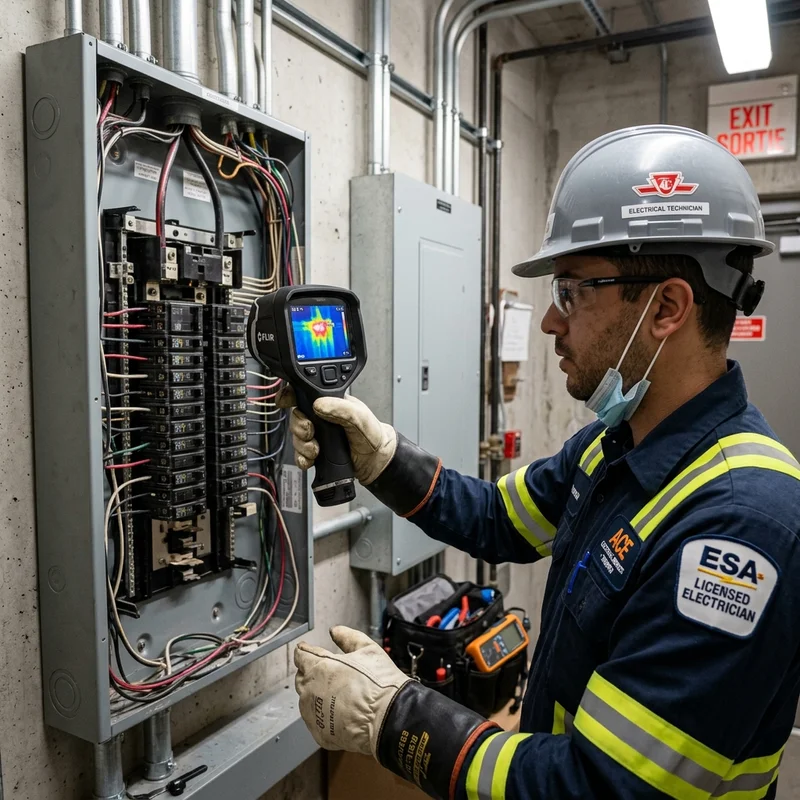
- Infrared thermography: Panel covers come off during live operation so an IR camera can scan the bus and breakers. Hot spots are flagged for immediate follow-up to stop failures before they happen.
- GFCI/AFCI testing: The self-test feature is exercised on every protected breaker. Trip-curve verification happens on a selected sample, and any failing breaker is instantly replaced.
- Emergency lighting testing: The Ontario Building Code requires monthly visual checks and an annual full-discharge test.
- Comprehensive written report: Each visit produces a detailed written report complete with diagnostic photos. Failures receive same-week remediation quotes, while routine items get filed for the next inspection cycle.
We cover both of these critical safety requirements during routine maintenance visits.
How Much Does a Commercial Maintenance Contract Cost in Toronto?
Pricing depends on the total number of panels and the frequency of the visits. A typical small-commercial property lands around $1,200 to $1,800 per year for quarterly service (2026 pricing). This standard baseline includes a single 200A service panel and five to eight sub-panels.
Larger industrial-corridor properties in Vaughan Concord and Brampton scale up from that starting point.
Commercial Coverage Across Toronto, Vaughan and Mississauga
Focusing on specific regional needs allows for faster response times and better local expertise.
Our commercial work is concentrated in Toronto for small office and retail environments, including North York office plazas along Yonge Street. Vaughan Concord and Highway 7 are prime locations for light industrial facilities and tenant improvements.
“A local contractor who understands the specific grid demands of the GTA makes every tenant transition a breeze.”
We also spend a significant amount of time in Mississauga servicing Erin Mills and Meadowvale office parks and mixed-use commercial spaces, and in Brampton warehouses and industrial condos. Retailers operating in Markham along the Highway 7 condo retail strip rely on the same crews. Large industrial and institutional scopes, such as hospitals, schools, and heavy-manufacturing plants, are referred to dedicated industrial contractors.
How Our Commercial Service Compares
| Feature | Typical Provider | Toronto Electrical Contractor |
|---|---|---|
| ESA permits and inspections | Sometimes left to the owner or general contractor | Filed in-house under our ECRA/ESA licence, inspections booked for you |
| Work hours | Daytime only, tenants work around the noise | After-hours 6 pm to 6 am and weekends |
| Pricing | Hourly time-and-materials | Quoted by scope before work starts, TI quotes within 3 business days |
| LED rebate paperwork | Owner files the application | Save on Energy paperwork submitted on your behalf |
| Emergency response | Next business day | 24/7, under 60 minutes across the GTA |
Hire an ESA-Licensed Commercial Electrical Contractor in Toronto
Creating a safe and efficient workspace starts with a solid power foundation. Commercial projects are much easier when an experienced crew handles the details.
You do not have to guess about panel capacities, noise bylaws, or rebate paperwork.
Our licensed electricians will assess your facility and recommend the most cost-effective upgrades. Call (416) 900-2963 or request a site visit to get a scoped quote and keep your business running smoothly.