Outdoor Landscape & Security Lighting Layout
Low-voltage vs line-voltage, transformer sizing, motion sensor placement, photocell strategy, and conduit weatherproofing.
By Michael Chen, Licensed Master Electrician ·
Toronto homeowner planning outdoor lighting, wants the design and code basics.
Outdoor Landscape & Security Lighting Layout
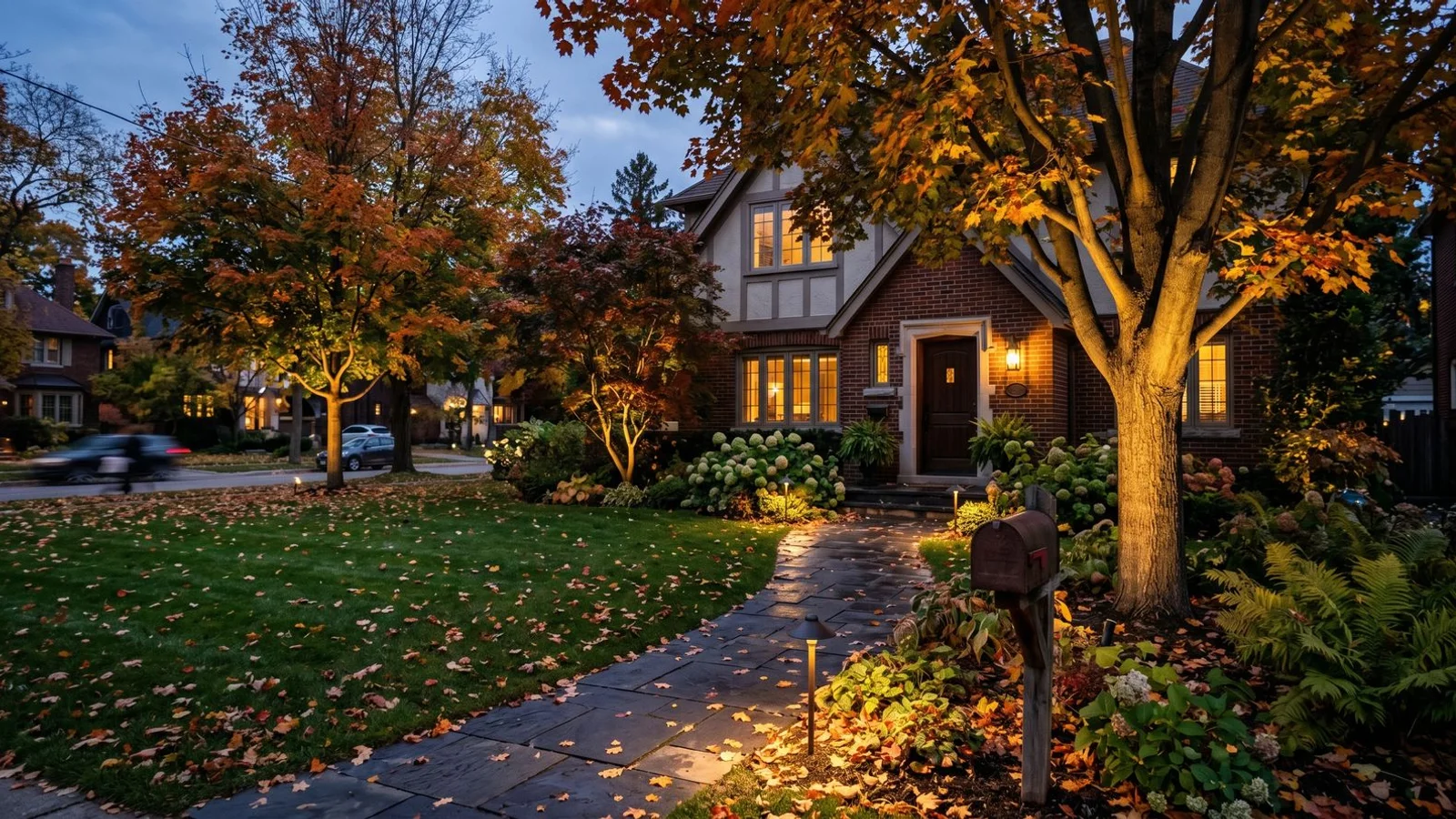
We often see local property owners struggle with balancing aesthetics and strict electrical codes during an outdoor lighting installation. Toronto weather and local safety laws dictate very specific methods for running power outside.
Getting this balance right separates a brilliant backyard from a costly code violation.
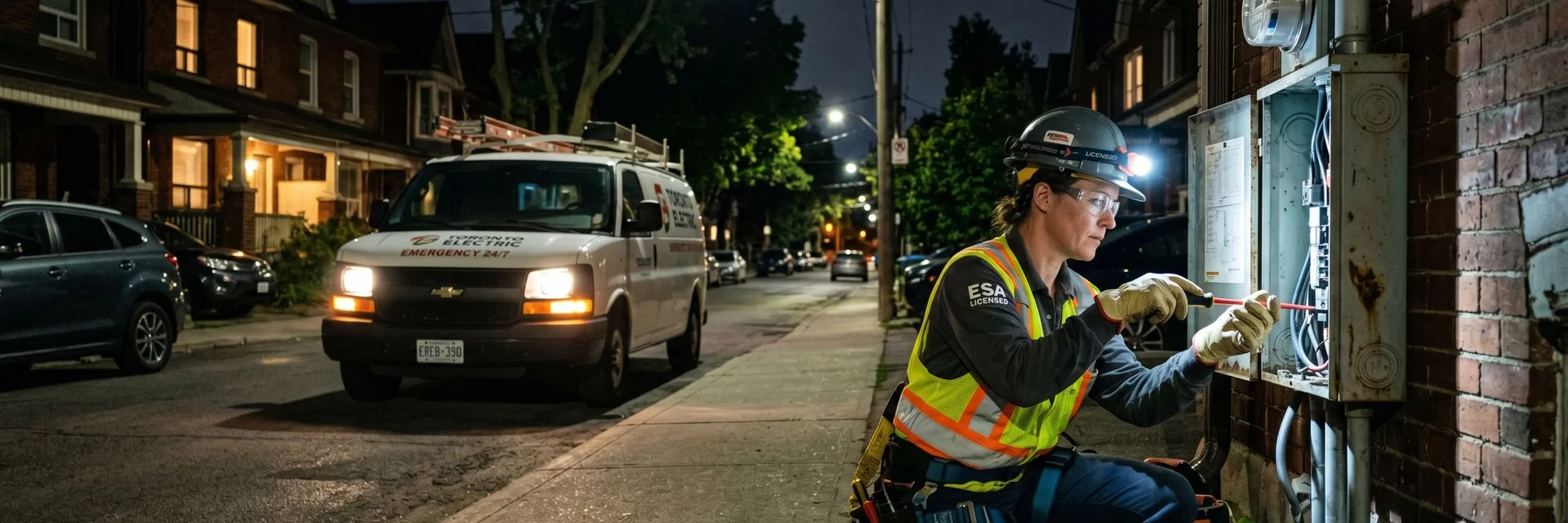
Our licensed electricians handle these exact challenges every day across the Greater Toronto Area, including Toronto, North York, Scarborough, Etobicoke, Mississauga, Vaughan, and Markham.
This guide breaks down the essential design principles and safety regulations you need to know before breaking ground.
What This Guide Covers
A quick overview of the points worth knowing before you book any work:
1. Low-voltage vs line-voltage tradeoffs
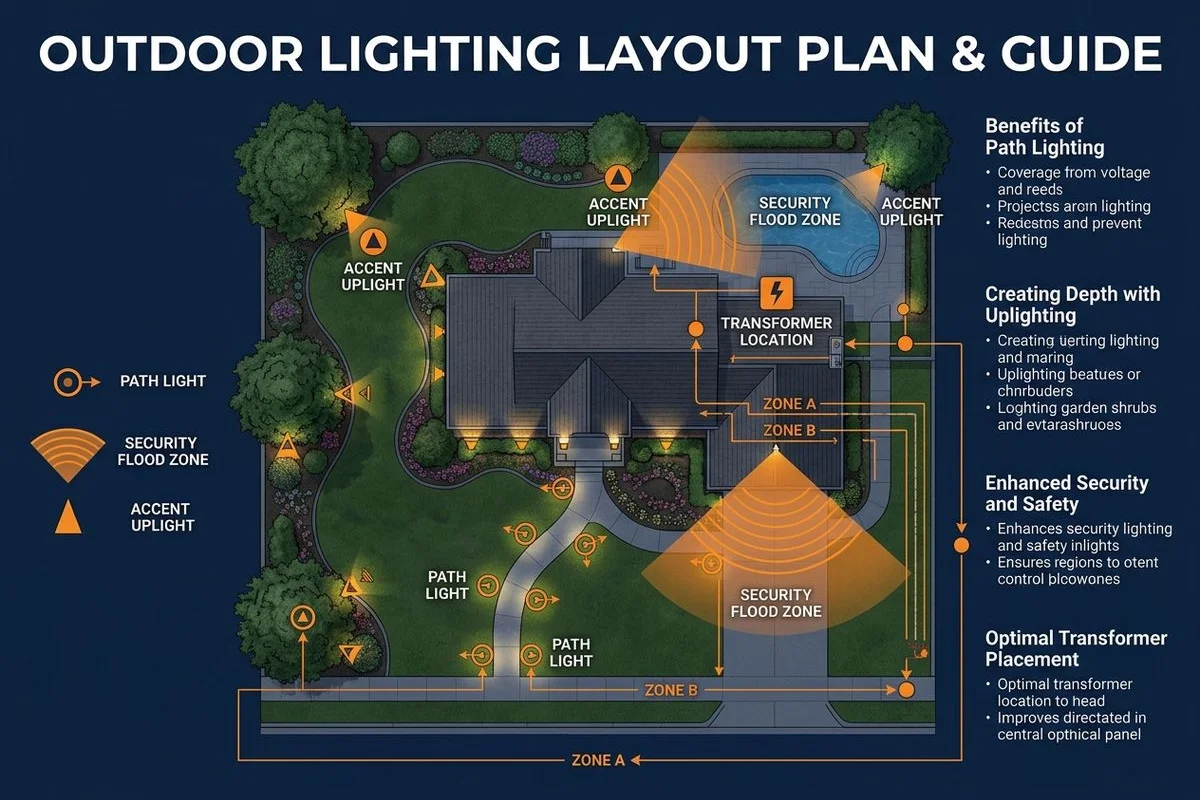
Low-voltage systems run on 12V or 15V and are typically cheaper and safer for garden beds, while 120V line-voltage systems power heavy-duty security lighting installation. We recommend using a mix of both depending on your specific landscape lighting toronto goals.
Line-voltage installations fall under strict Ontario Electrical Safety Code (OESC) rules. All 120V direct-burial cables must sit at least 18 inches underground. If you run the wires through rigid conduit, that depth requirement drops to 6 inches.
Our team secures a Yard and Garden Electrical Permit from the Electrical Safety Authority (ESA) for all projects, even for low-voltage setups that plug into a 120V outlet. This step guarantees your GFCI-protected outlets are compliant and safe from moisture.
Key differences for local properties:
- Safety limits: 12V is harmless if a shovel accidentally nicks a wire.
- Permit rules: Both systems require ESA notifications, but line-voltage mandates a licensed master electrician.
- Fixture options: Line-voltage supports brighter, wider beams for commercial security.
2. Transformer sizing
Your transformer should never carry a load greater than 80% of its maximum rated wattage. We strictly follow this 80% rule to prevent system overloads and accommodate extreme temperature drops.
A 150-watt transformer can safely handle 120 watts of total fixture load. Pushing past this limit causes flickering lights and dramatically shortens the lifespan of the unit.
Our preferred setups involve multi-tap transformers offering 12V to 15V outputs. Higher voltage taps compensate for voltage drop across long wire runs, ensuring a fixture 100 feet away shines just as brightly as one right next to the power source.
Standard Transformer Capacity Guide:
| Transformer Rating | Maximum Safe Load (80%) | Typical Fixture Count (5W LEDs) |
|---|---|---|
| 150W | 120W | 15 to 20 |
| 300W | 240W | 40 to 45 |
| 600W | 480W | 85 to 90 |
3. Motion sensor placement strategy
Security lighting sensors perform best when mounted between 8 and 15 feet above the ground. Placing fixtures higher than 15 feet severely reduces the Passive Infrared (PIR) detection range and limits their effectiveness.
We always angle the sensor heads downward and away from heat sources like HVAC units or exhaust vents to prevent false triggers. Most modern security floodlights offer a 240-degree detection zone that reaches up to 50 feet.
Our installation process includes testing the coverage area physically by walking the perimeter. You should overlap the detection zones of multiple fixtures slightly to eliminate blind spots near entry doors or dark walkways.
“Proper sensor height maximizes the 50-foot detection range while preventing nuisance tripping from street traffic or small animals.”
4. Photocell vs timer control
Photocells trigger lights based on ambient darkness, whereas astronomical timers calculate exact sunset and sunrise times using your specific GPS location. We find that combining a photocell with a digital timer offers the most reliable energy savings.
A basic photocell will keep low voltage outdoor lighting on all night long. This wastes electricity and can cause light pollution in dense urban neighbourhoods.
Our go-to solution involves wiring the photocell to turn the system on at dusk, while a digital timer shuts everything off at a designated time, like midnight. Astronomical timers also automatically adjust for Daylight Saving Time without needing a visible sky line.
Popular control setups:
- Standard Photocell: Simple and cheap, but runs fixtures all night.
- Astronomical Timer: Highly accurate, ignores bad weather, and adjusts for seasons.
- Hybrid System (Photocell + Timer): Turns on at dusk, forces off at a specific hour.
5. Conduit weatherproofing for Toronto winters
Protecting underground wiring from freezing, thawing, and frost heave requires Schedule 40 PVC conduit and specialized waterproof junction boxes. We install all above-ground connections in weatherproof enclosures to combat melting snow and heavy spring rains.
The Ontario Electrical Safety Code mandates that all buried line-voltage conduit must be rated for wet locations. Junction boxes must never be buried underground.
Our standard practice places all junction points securely above grade. Leaving a junction box underground guarantees water intrusion, leading to tripped breakers and corroded copper wiring within a single winter.
Wiring Protection Requirements:
| Wiring Method | Minimum Burial Depth | Required Protection |
|---|---|---|
| 120V Direct Burial | 18 inches | Sand bed and warning tape |
| 120V Rigid Conduit | 6 inches | Schedule 40 PVC minimum |
| 12V Low-Voltage | Shallow trenching | Protection from garden tools |
Ready for a Quote?
If you are ready to scope this work, we would be happy to talk. This ensures your outdoor lighting installation, Toronto or elsewhere in the GTA, is handled safely and professionally.
We do free estimates on residential projects across the Greater Toronto Area, flat-rate quoted, ESA permits in our LEC name, and your Certificate of Acceptance is always included.
Visit lighting installation for the full scope of what we do, or contact us directly.
For more context on related decisions, read our guide on lED Pot Light Installation in Plaster Ceilings.
Frequently Asked Questions
Low-voltage or line-voltage outdoor?
+
Low-voltage for landscape and decorative; line-voltage for high-output security floods. For Toronto homes specifically, we handle this through our LEC with the ESA permit included in the flat-rate quote. Free estimates on residential projects.
Do I need a permit?
+
Low-voltage typically no; line-voltage outdoor circuits yes. We pull it. For Toronto homes specifically, we handle this through our LEC with the ESA permit included in the flat-rate quote. Free estimates on residential projects.
How weatherproof are outdoor fixtures?
+
Look for IP65+ rating for fully weather-exposed; IP44+ for sheltered installs. For Toronto homes specifically, we handle this through our LEC with the ESA permit included in the flat-rate quote. Free estimates on residential projects.