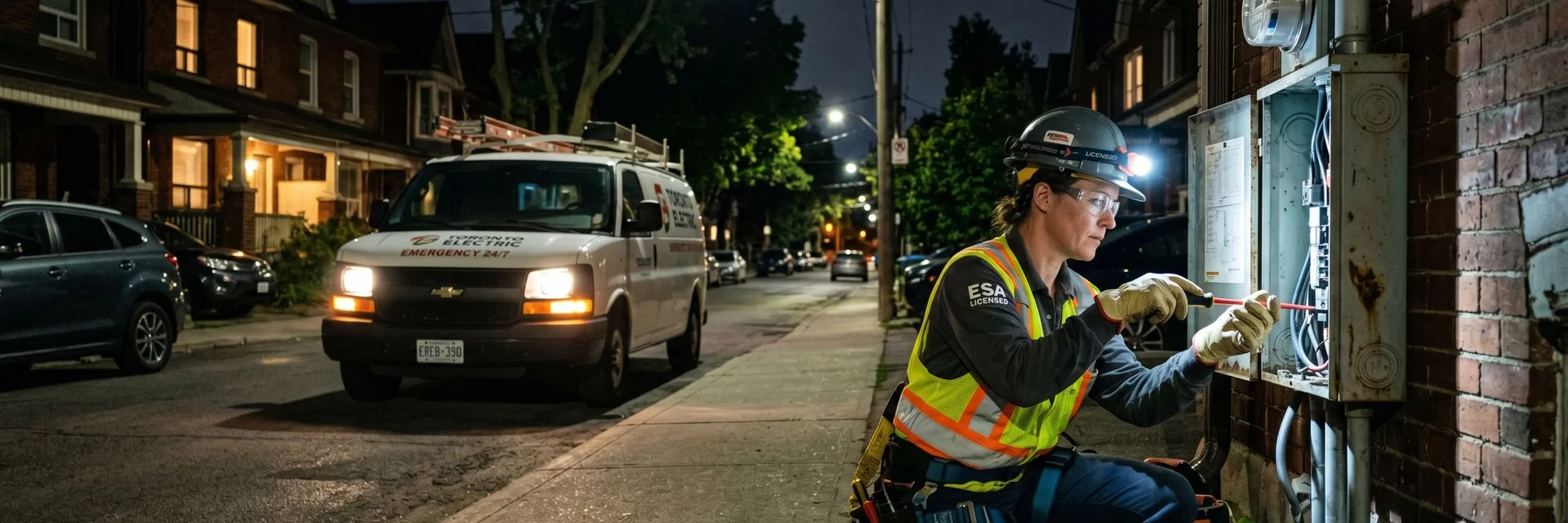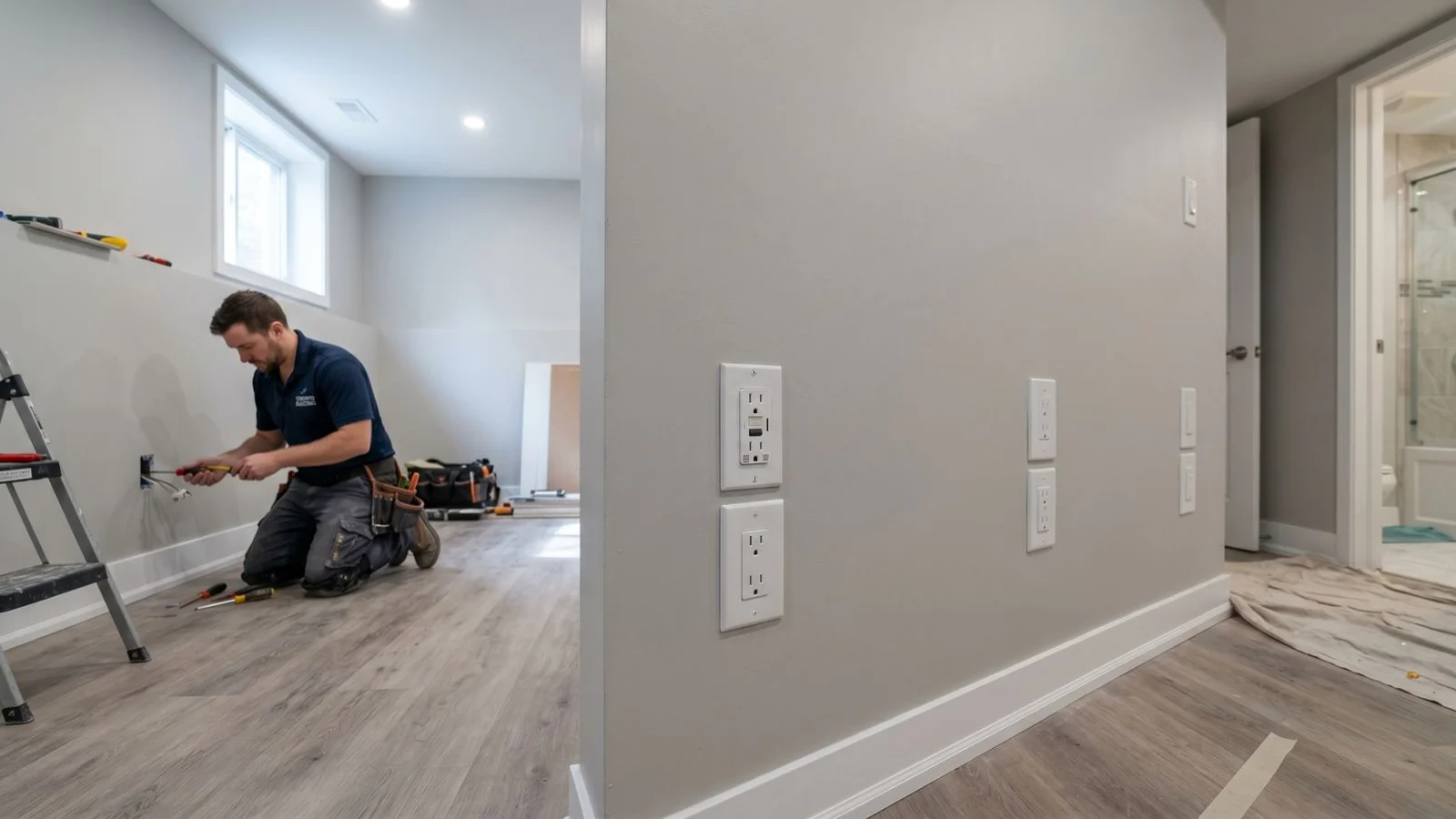
Dedicated Circuits & Outlet Planning (Basements)
OESC outlet spacing, dedicated circuits for laundry/HVAC/sump/freezer, lighting circuits, AFCI requirements, and EV/heat-pump future-proofing.
By Michael Chen, Licensed Master Electrician ·
Many homeowners and business owners approach a basement renovation wondering exactly how many circuits they will actually need.
We see this confusion constantly when looking at early project plans. Proper basement outlet planning is your best opportunity to get the electrical layout right before the drywall goes up.
Dedicated Circuits & Outlet Planning (Basements)
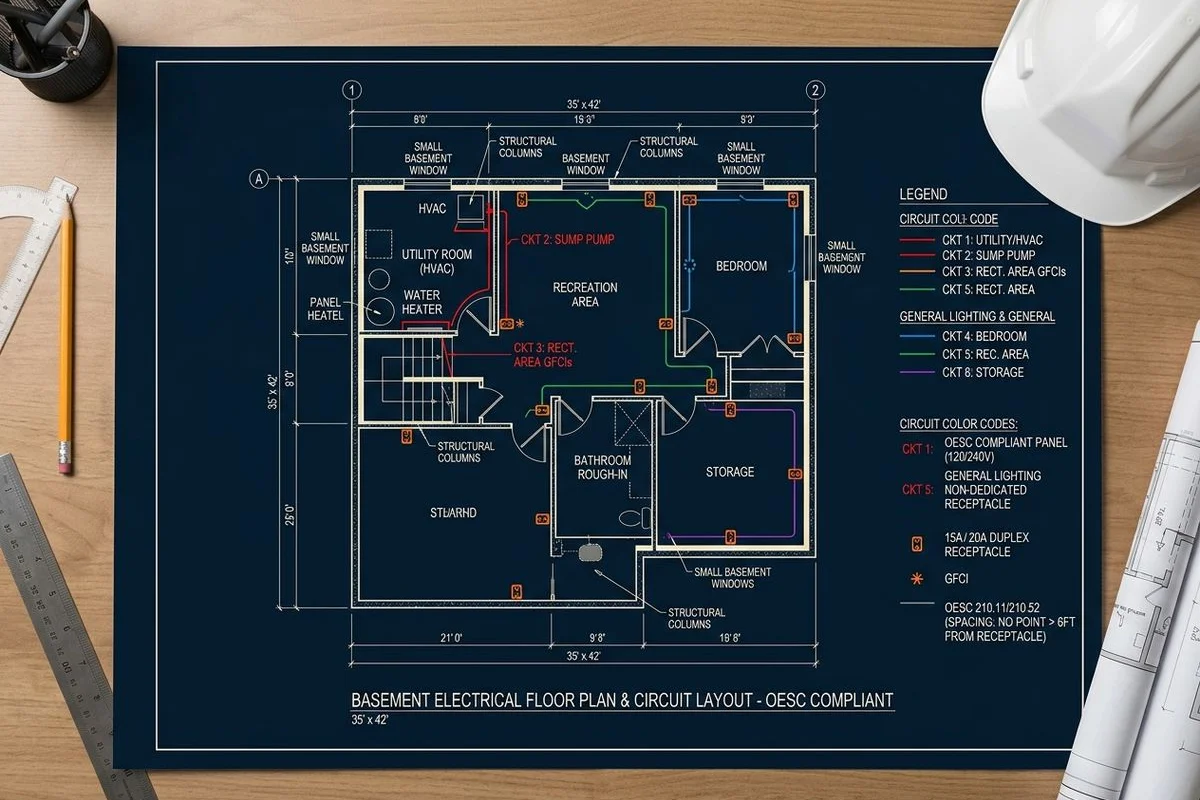
Getting the circuit layout finalized early saves thousands of dollars in rework.
Our team knows a solid, code-compliant plan ensures you avoid costly delays during the Electrical Safety Authority inspection. Let’s break down the specific code minimums, the latest AFCI rules, and the panel upgrades you must understand before booking any trades.
What This Guide Covers
This quick overview highlights the exact electrical points worth knowing before you book any renovation work.
We find that a proactive approach here prevents major headaches later.
1. OESC Code Minimums for Outlet Spacing
The Ontario Electrical Safety Code outlines very specific requirements for basement code outlet spacing under Rule 26-720. Our licensed electricians handle this scope daily across Toronto, North York, Scarborough, Etobicoke, Mississauga, Vaughan, and Markham.
Any wall three feet or wider absolutely requires its own receptacle.
You cannot place an outlet more than six feet from any point along a usable wall. We always map these distances precisely using laser tools to guarantee compliance before the ESA inspector arrives. An initial ESA inspection fee starts at $88, but failing it due to improper spacing triggers a re-inspection fee and massive project delays.
Hallways longer than ten feet also require at least one dedicated receptacle to meet the 2025 code updates. Our technicians rely on specialized diagnostic gear to confirm the existing service capacity can handle the added load. Here are the critical spacing rules you must follow:
- Usable Walls: Any wall segment 3 feet (900mm) or wider needs an outlet.
- Maximum Distance: No point along a floor line can be more than 6 feet (1.8m) from a plug.
- Hallway Requirements: Corridors exceeding 10 feet must feature at least one receptacle.
- Clearances: Receptacles must remain accessible and cannot be blocked by permanent cabinetry.
2. Dedicated Circuits: Laundry, HVAC, Sump, Freezer
The updated code mandates dedicated electrical lines for major appliances to prevent nuisance tripping and potential fire hazards. Our installation process follows a consistent pattern for separating heavy loads from general lighting circuits.
A basement dedicated circuit is specifically required for the lower-level laundry area.
Permanent sump pumps require their own isolated connection, often paired with a battery backup system. We run individual circuits for large freezers, HVAC equipment, and any electric baseboard heaters to ensure total system stability. The specifics depend heavily on the home’s vintage, existing wall finish, and the remaining amperage in the main panel.
Modern high-efficiency heat pumps pull significant power and require a 240V dedicated run directly from your main electrical room. Our crew highly recommends installing a 20-amp GFCI-protected circuit if you plan on adding a basement bathroom or wet bar. This simple addition future-proofs the space for potential plumbing upgrades.
| Appliance Type | Circuit Requirement | Code Context |
|---|---|---|
| Basement Laundry | 20-Amp Dedicated | Mandatory under Rule 26-722. |
| Sump Pump | 15-Amp Dedicated | Prevents outages during major storms. |
| Electric Baseboard Heater | 240V Dedicated | Sized directly to the heating unit load. |
3. Lighting Circuits Planning
Plaster ceilings found in heritage Annex, High Park, or Forest Hill homes will add a small patching premium to the final cost. Our standard LED pot light retrofits in Toronto run $100 to $250 per fixture when installing into existing ceilings.
Sealing the vapour barrier correctly during attic or cold-space installs is a critical step that do-it-yourself projects frequently miss.
You must separate your general lighting load from heavy appliance usage to maintain a balanced electrical panel. We exclusively use IC-rated LED cans that can safely touch insulation without creating a fire risk. Every single fixture is checked for dimmer compatibility to prevent that annoying flickering effect.
Smart home systems and basement theaters perform best when hardwired with Cat6A data cables while the ceiling joists are still exposed. Our installers see a massive shift to pre-wiring for low-voltage needs alongside the main lighting circuits. Proper planning keeps your entertainment centre looking perfectly clean.
Pro Tip: Always group your basement lighting into distinct zones. Putting the TV area, the bar, and the main walkway on separate dimmer switches gives you total control over the room’s atmosphere.
4. AFCI Requirements per Current OESC
The 2024 OESC, which took full effect in May 2025, requires AFCI protection on almost all 15-amp and 20-amp, 120-volt circuits in dwelling units. Our electrical upgrades always factor in these latest safety mandates regarding Arc-Fault Circuit Interrupters.
Older Toronto panels from the 1970s and 1980s almost always pre-date these modern safety requirements.
A major basement renovation instantly triggers the need to retrofit these protections across the newly finished living spaces. We integrate the required $40 to $80 AFCI breakers directly into your panel as part of the total project scope. These specialized breakers detect dangerous electrical arcing before a fire can ever start.
Any unfinished basement area or space within 1.5 meters of a sink still requires Ground Fault Circuit Interrupter protection. Our compliance checks ensure every single receptacle meets either the AFCI or GFCI standard based on its exact location. Here is a quick breakdown of where basement AFCI and GFCI protection types are legally required:
- AFCI Protection: Bedrooms, living rooms, rec rooms, and finished hallways.
- GFCI Protection: Unfinished basement sections, utility rooms, and near wet bar sinks.
- Combination Breakers: Available for circuits that need both arc-fault and ground-fault monitoring.
5. Future-Proofing for EV/Heat Pump on the Same Panel
Toronto homes built before the 1990s typically run on an undersized 60A or 100A service connection. Our team frequently encounters major capacity issues when adding EV chargers or modern heat pumps to older properties.
Outdated Federal Pacific Stab-Lok and Zinsco panels act as severe fire risks flagged by the ESA and major home insurers.
A standard upgrade from 100A to a 200A service in the GTA now ranges from $2,000 to $4,500 based on 2026 pricing. We calculate your exact load requirements to ensure the new panel can easily handle a Level 2 EV charger alongside the basement circuits. This investment covers the new panel, the ESA permit, Toronto Hydro disconnect coordination, and the final safety inspection.
Many home insurers will actually reduce your premium by $100 to $300 a year once this electrical upgrade is complete. Our goal is to set your property up for the next two decades of electrical demand. Properly sizing your service panel from the start is the smartest financial decision you can make.
| Upgrade Type | Average 2026 GTA Cost | Best For |
|---|---|---|
| 100A to 200A Panel | $2,000 to $4,500 | Basement renos, adding an EV charger, or a heat pump. |
| Federal Pacific Replacement | $1,800 to $3,000 | Removing known fire hazards and lowering insurance premiums. |
| Subpanel Addition | $800 to $1,500 | Expanding circuit space without upgrading the main hydro service. |
Ready for a Quote?
If you want to discuss your floor plan, free and flat-rate quoted estimates are available for residential projects across the GTA. We secure all mandatory ESA permits under our Licensed Electrical Contractor name to keep everything fully legitimate. The final Certificate of Acceptance is always included to protect your home insurance policy.
Your safety and compliance are simply too important to leave to chance.
Our firm is always ready to scope out the basement outlet planning for your upcoming renovation. Visit basement electrical for the full scope of what we do on these lower-level projects, or contact us directly to book a site visit.
For more context on related decisions, read our guide on permits and ESA Inspection for Basement Renovations.
Frequently Asked Questions
How far apart should outlets be?
+
OESC requires receptacles within reach of any 1.8 m point along habitable walls. Typically 3.6 m max spacing. For Toronto homes specifically, we handle this through our LEC with the ESA permit included in the flat-rate quote. Free estimates on residential projects.
Do basements need AFCI?
+
Yes for habitable spaces under current OESC; some utility-only areas have exceptions. For Toronto homes specifically, we handle this through our LEC with the ESA permit included in the flat-rate quote. Free estimates on residential projects.
Can my existing panel handle a finished basement?
+
Sometimes. If you're adding sump, laundry, or HVAC, a load calculation may indicate panel upgrade. For Toronto homes specifically, we handle this through our LEC with the ESA permit included in the flat-rate quote. Free estimates on residential projects.