Permits & ESA Inspection for Basement Renovations
When permits are required, ESA rough-in inspection step, final inspection, City of Toronto building permit interaction, and our in-house handling.
By Michael Chen, Licensed Master Electrician ·
A Toronto homeowner planning a basement reno wants to understand the permit chain.
Permits & ESA Inspection for Basement Renovations
We see it every week across the GTA. A local homeowner wants an ESA inspection for a basement renovation in Toronto, but the permit paperwork stops the project cold.
Our team knows that getting the proper approvals feels difficult, especially with recent 2026 changes to local building codes. This confusing process separates a smooth build from a stressful, delayed mess.
Let’s look at the specific requirements, what inspectors actually verify, and explore practical ways to respond to the paperwork.
What This Guide Covers
Here is a quick overview of the essential points worth knowing before you book any trade.
1. When a permit is required (most basement reno triggers one)
A basement permit in Toronto is legally required for almost any project that goes beyond cosmetic painting. The City of Toronto’s 2026 fee schedule charges $11.09 per square metre for interior renovation permits, meaning a standard 1,000-square-foot lower level will cost about $1,000 to $1,500 in fees alone.
Our team operates as a Toronto electrical contractor dedicated to safe, code-compliant work, meaning we always pull the Electrical Safety Authority (ESA) permits in our name. Homeowner-pulled permits transfer all the liability to you, making the work hard to defend to your insurance company.
You should know that unpermitted electrical work can void your home insurance policy entirely.
Here are the most common triggers for a mandatory basement permit:
- Adding a new secondary suite or legal apartment.
- Installing new electrical circuits or upgrading the main panel.
- Modifying structural elements like load-bearing walls.
- Adding or relocating plumbing fixtures.
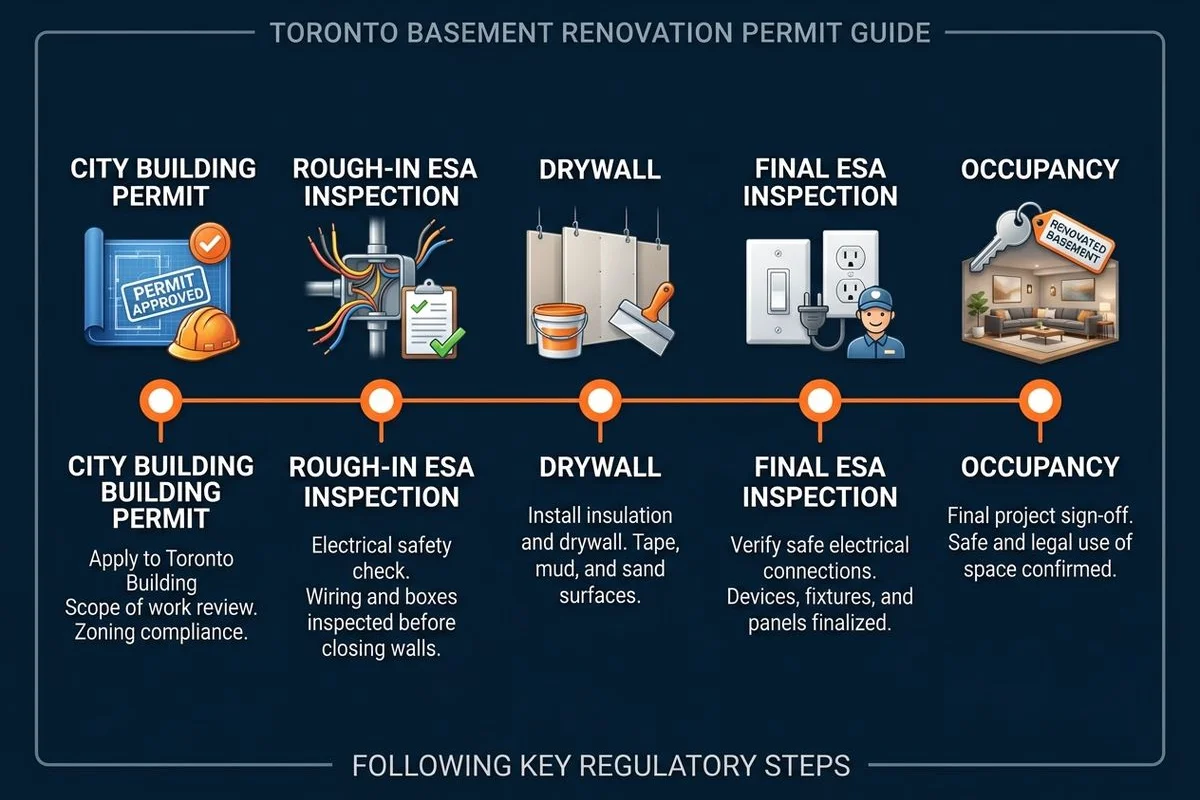
2. ESA rough-in inspection step (before insulation/drywall)
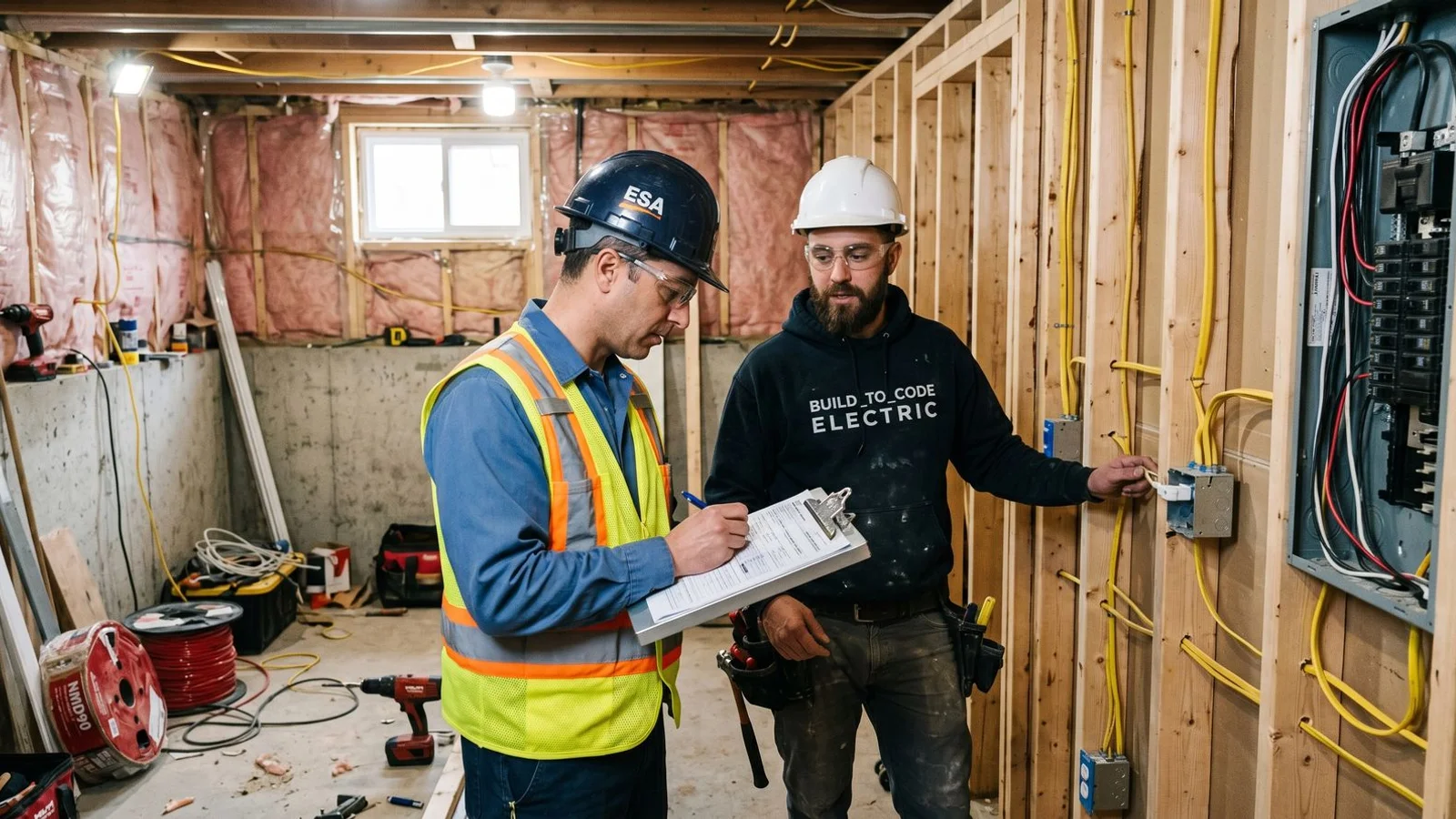
The ESA requires a rough-in inspection when all branch circuit wiring and outlet boxes are installed, but before the walls are closed. Inspectors confirm that cables are strapped correctly and that outer jackets are properly removed inside the boxes.
We coordinate this vital step to happen before any framing is covered by drywall, 6-mil vapour barrier, or insulation. Covering the walls before the inspector signs off is a costly mistake.
An inspector will force a contractor to tear down brand new drywall to check the wiring behind it.
To keep things simple, a professional Toronto electrical company bakes the permit and inspection fees right into the initial flat-rate quote. This prevents surprise bills, so you never see a separate line item or have to pay the ESA directly.
3. Final inspection step (after fixtures installed)
Electrical safety inspections in Toronto run $250 to $450 with a written report, providing complete peace of mind. A final inspection verifies safe operation after all devices, fixtures, and equipment are in place.
Our team conducts comprehensive checks, covering panel age and condition, thermal scans, sample circuit testing, and GFCI/AFCI verification. The ESA announced a 1.9% fee increase in April 2026, but the value of a documented safety history remains unmatched.
Older properties often hide dangerous electrical surprises behind the walls.
Common deficiencies flagged during our final reviews include:
- Outdated knob-and-tube wiring.
- Hazardous aluminum wiring from the 1970s.
- Recalled Federal Pacific Stab-Lok panels.
- Ungrounded three-prong outlets.
- Illegal DIY wiring that lacks an ESA permit history.
4. City of Toronto building permit interaction
The City of Toronto building inspector and the ESA electrical inspector are two separate entities checking different codes. As of February 2026, the Toronto Building Online Services portal requires all basement build permit applications to be submitted digitally.
We work alongside the general contractor to align our electrical timeline with the city’s structural and plumbing checks. Building inspectors focus heavily on life safety standards, which affect the room layout.
For example, the Ontario Building Code mandates a minimum continuous ceiling height of 1.95 metres (6 feet 5 inches) for at least 75% of the lower level.
These essential building code rules run parallel to the wiring work:
| Inspection Type | Controlling Authority | Core Focus Areas |
|---|---|---|
| Building Code | City of Toronto | Ceiling height, fire separation, HVAC |
| Structural | City of Toronto | Underpinning, load-bearing walls, egress windows |
| Electrical Safety | ESA | Panel capacity, circuit safety, grounding |
5. Our in-house handling (homeowner doesn’t deal with paperwork)
A typical Toronto residential project becomes straightforward when handled by an ESA-licensed electrician equipped with proper diagnostic gear. Specific requirements always depend on the home’s vintage, wall finishes, and existing electrical service capacity.
Our company handles this entire scope across the GTA, including Toronto, North York, Scarborough, Etobicoke, Mississauga, Vaughan, and Markham. The steps follow a consistent, predictable pattern that keeps the project on schedule, so you never have to fill out complex municipal forms or wait on hold with the permit office.
A professional contractor takes on the liability, files the notifications, schedules the inspector visits, and secures the final Certificate of Acceptance. This in-house approach saves hours of frustration and guarantees full legal compliance.
Ready for a Quote?
Planning a new living space requires a solid understanding of the exact costs upfront. We offer free estimates on residential projects across the entire GTA.
A clear, flat-rate quote prevents surprise charges midway through the job. Your project will always include the ESA permits filed under the correct LEC name, and every finished job comes with a final Certificate of Acceptance.
Visit basement electrical to see the full scope of a safe installation. If you want to skip the research, just contact us directly to discuss your specific property.
For more context on related decisions, read our guide on dedicated Circuits and Outlet Planning for Finished Basements.
Frequently Asked Questions
Do I need a building permit too?
+
Yes for most basement renos involving framing, plumbing, or finishing; we coordinate with your contractor. For Toronto homes specifically, we handle this through our LEC with the ESA permit included in the flat-rate quote. Free estimates on residential projects.
What does ESA rough-in mean?
+
Inspection of all wiring before walls close. Must pass before insulation or drywall. For Toronto homes specifically, we handle this through our LEC with the ESA permit included in the flat-rate quote. Free estimates on residential projects.
Who handles the paperwork?
+
We pull the ESA permit and book inspections; building permit is typically the GC or homeowner. For Toronto homes specifically, we handle this through our LEC with the ESA permit included in the flat-rate quote. Free estimates on residential projects.