Electrical Requirements for Legal Basement Apartments
Toronto secondary-suite bylaw context, separate-service vs sub-panel options, smoke/CO interconnection, fire-rated penetrations, ESA sign-off.
By Michael Chen, Licensed Master Electrician ·
We field countless questions about legal basement apartment electrical in Toronto.
The financial math of a secondary suite looks great, but the strict code requirements often catch people off guard.
Our team has found that mapping out your power grid before framing starts is the best way to avoid inspection failures.
This guide breaks down exactly what the city expects and how to tackle it safely.
We will look at the hard data and explore a few practical ways to respond.
Electrical Requirements for Legal Basement Apartments
A successful legal basement apartment electrical setup requires careful planning to meet building codes.
Our crew knows that a 145-square-foot bachelor unit has very different power demands than a three-bedroom layout.
What This Guide Covers
Here is a quick overview of the points worth knowing before you book any work.
1. Toronto secondary-suite bylaw context
Our electricians handle dozens of basement apartment legalization projects across the Greater Toronto Area each year.
The 2025 Ontario Electrical Safety Code strictly requires dedicated circuits for kitchens, laundry, and interconnected fire alarms.
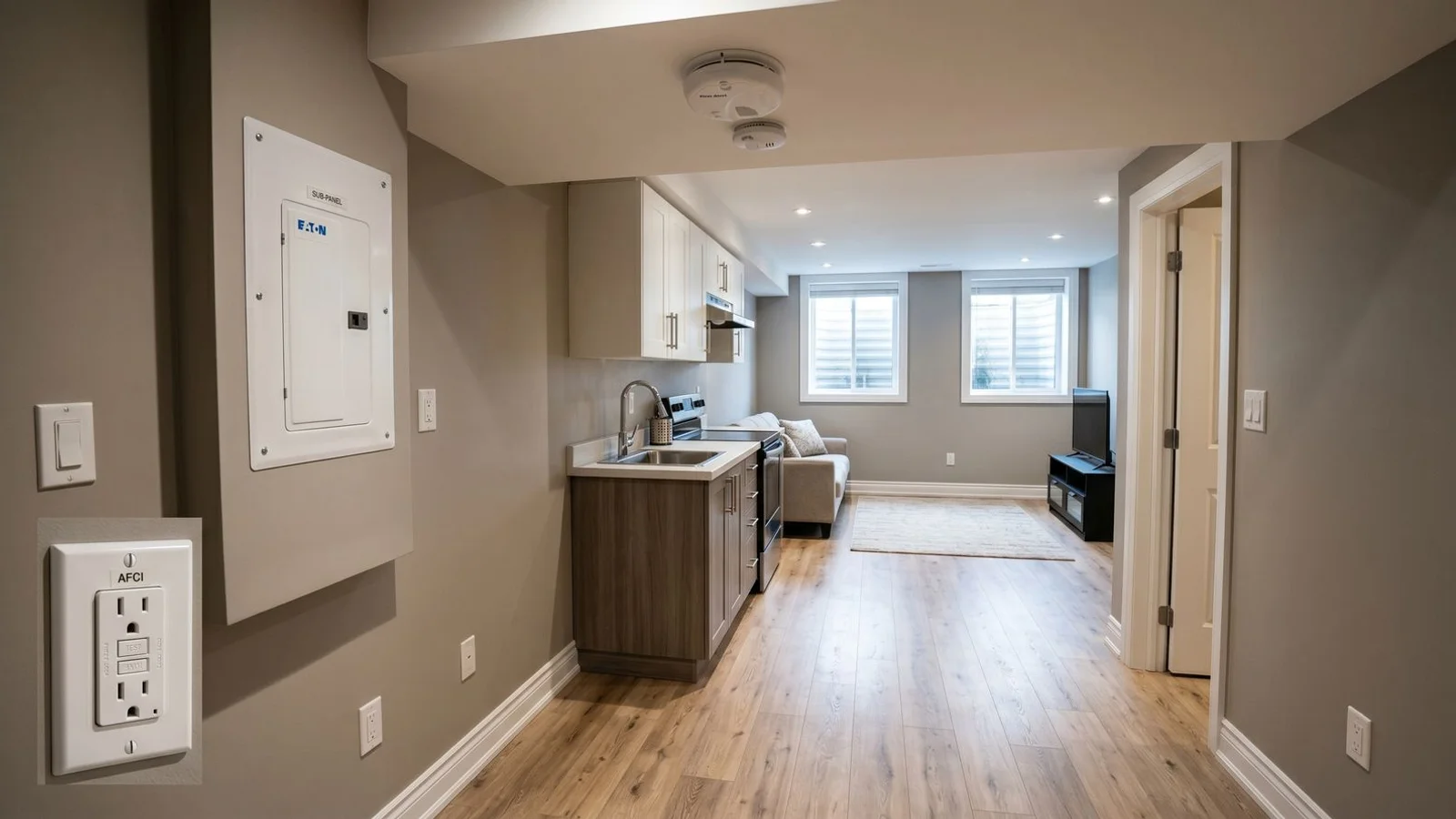
Our team always emphasizes that AFCI protection is now mandatory across almost all living spaces, not just bedrooms.
Ignoring these Toronto secondary suite bylaw requirements will quickly derail your building permit.
We ensure these specific safety breakers are factored into your initial layout.
A legal suite must also meet the minimum 145 square foot size requirement to pass zoning.
2. Separate-service vs sub-panel options
Our initial site visits frequently reveal older Toronto homes running on outdated 60A or 100A services.
Properties built between the 1960s and 1980s often feature Federal Pacific Stab-Lok or Zinsco panels.
We strongly advise replacing these models because the ESA and home insurers flag them as major fire risks.
Upgrading from 100A to 200A in Toronto currently costs between $2,500 and $4,500 in 2026.
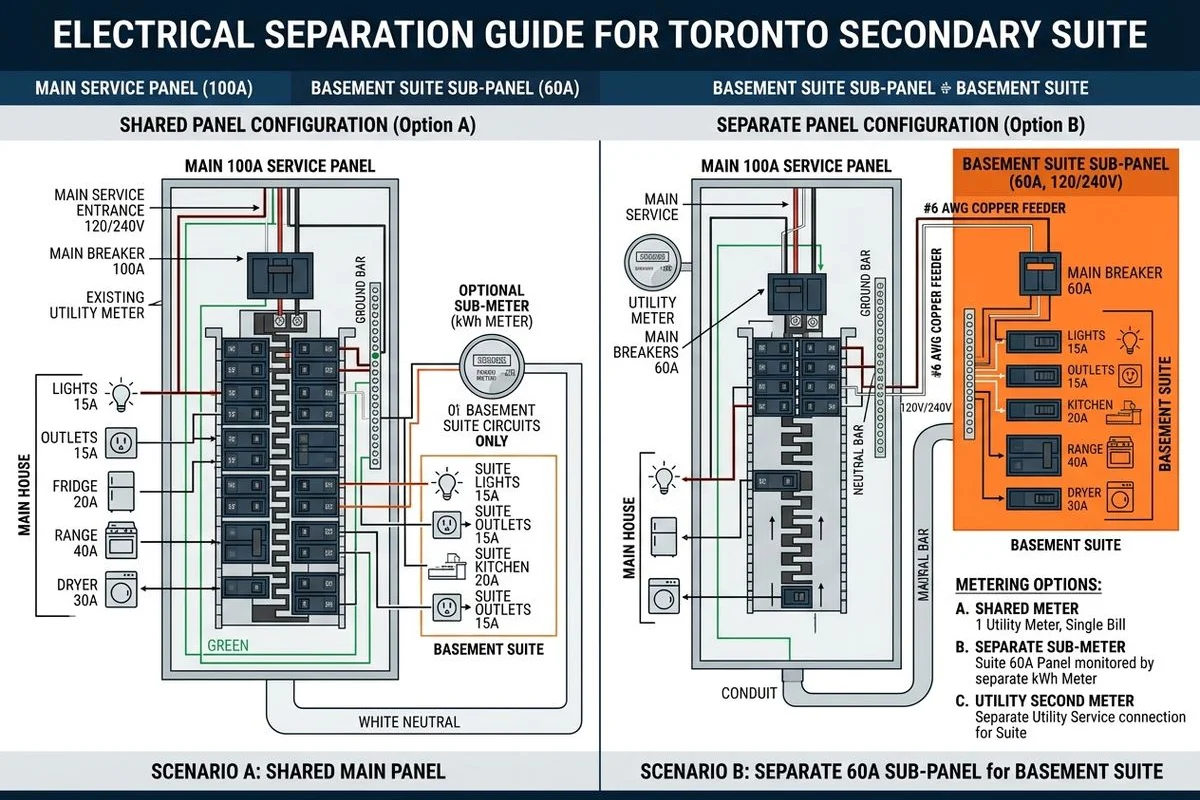
Our typical setup includes a dedicated 100-amp sub-panel installed specifically for the basement tenant.
This configuration gives the renter safe access to their own breakers without entering your main living space.
We compiled a quick comparison of the two most common electrical upgrade paths.
The right choice depends entirely on your existing main service capacity.
| Upgrade Option | Estimated 2026 Cost (CAD) | Best Fit For |
|---|---|---|
| 100A Sub-Panel Only | $800 to $1,500 | Homes that already have an upgraded 200A main service. |
| Full 100A to 200A Upgrade | $2,500 to $4,500 | Older homes powering dual HVAC systems and dedicated kitchens. |
3. Smoke/CO interconnection across both units
Our licensed experts know that fire safety is the most heavily scrutinized part of any basement inspection.
The Ontario Building Code requires interconnected smoke alarms on every level and inside every bedroom.
We used to spend days cutting open main-floor ceilings to run physical communication wires between the units.
The recent 2024 Ontario Building Code updates now officially permit wireless interconnection between compatible alarms.
Our team highly recommends this wireless route because it saves thousands of dollars in drywall patching.
Carbon monoxide detectors must also be installed near sleeping areas if the home has any fuel-burning appliances.
4. Fire-rated penetration requirements
We see many DIY renovations fail their final inspections due to improper fire separation.
A legal basement apartment requires a minimum 30-minute fire-resistance rating between the separate units.
Our standard practice involves using 5/8-inch Type X drywall to create a continuous smoke-tight barrier.
Every single electrical box, pipe, and duct penetration must be carefully sealed with approved fire-stop materials.
We always check the most common vulnerability points before the inspector arrives.
These critical penetration zones include the following areas:
- Ceiling junction boxes for light fixtures.
- Main panel feeder cables passing through the floor.
- HVAC ductwork sharing space between units.
- Plumbing stacks intersecting the fire barrier.
Our framing partners coordinate closely with us to ensure these gaps are filled early.
A single unsealed wire run can cause your entire project to fail the safety review.
5. ESA sign-off for occupancy
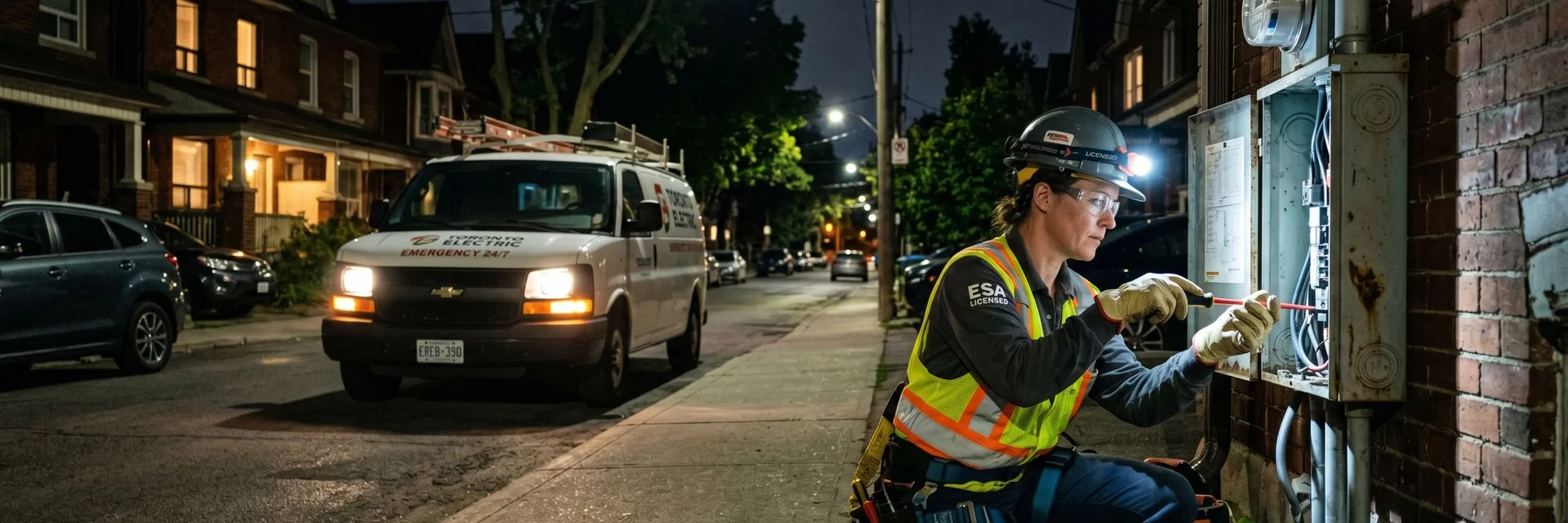
Our status as a Licensed Electrical Contractor means we pull the ESA permits directly under our company name.
Homeowner-pulled permits transfer all the liability onto your shoulders and are rarely defensible for insurance claims.
We bake the permit and inspection costs directly into our flat-rate quote so there are no hidden fees.
The Electrical Safety Authority will issue a Certificate of Acceptance once the final inspection passes.
Our final step is handing this official certificate over to you.
The City of Toronto requires this exact document to register your secondary suite legally.
Ready for a Quote?
We would be happy to talk if you are ready to scope this legal basement apartment electrical in Toronto.
Free estimates are available on residential projects across the Greater Toronto Area.
Our quotes are flat-rate, include ESA permits in our LEC name, and guarantee a Certificate of Acceptance.
Visit basement electrical for the full scope of what is offered, or contact us directly.
For more context on related decisions, read our guide on dedicated Circuits and Outlet Planning for Finished Basements.
Frequently Asked Questions
Does my basement apartment need its own panel?
+
Not always. A properly sized sub-panel is sufficient; separate service is for larger or fully separated suites. For Toronto homes specifically, we handle this through our LEC with the ESA permit included in the flat-rate quote. Free estimates on residential projects.
What's interconnected smoke/CO?
+
Hardwired alarms that trigger across both units when one fires. Required for legal apartments. For Toronto homes specifically, we handle this through our LEC with the ESA permit included in the flat-rate quote. Free estimates on residential projects.
How long does ESA sign-off take?
+
5–10 business days after final inspection request, typically. For Toronto homes specifically, we handle this through our LEC with the ESA permit included in the flat-rate quote. Free estimates on residential projects.