Burning Smell From an Outlet: Action Steps
Cut power at the breaker first. Don't unplug into the smell. Call immediately. Common causes and why outlet replacement isn't always enough.
By Michael Chen, Licensed Master Electrician ·
Homeowner with active burning smell, needs immediate action steps before calling.
Burning Smell From an Outlet: Action Steps
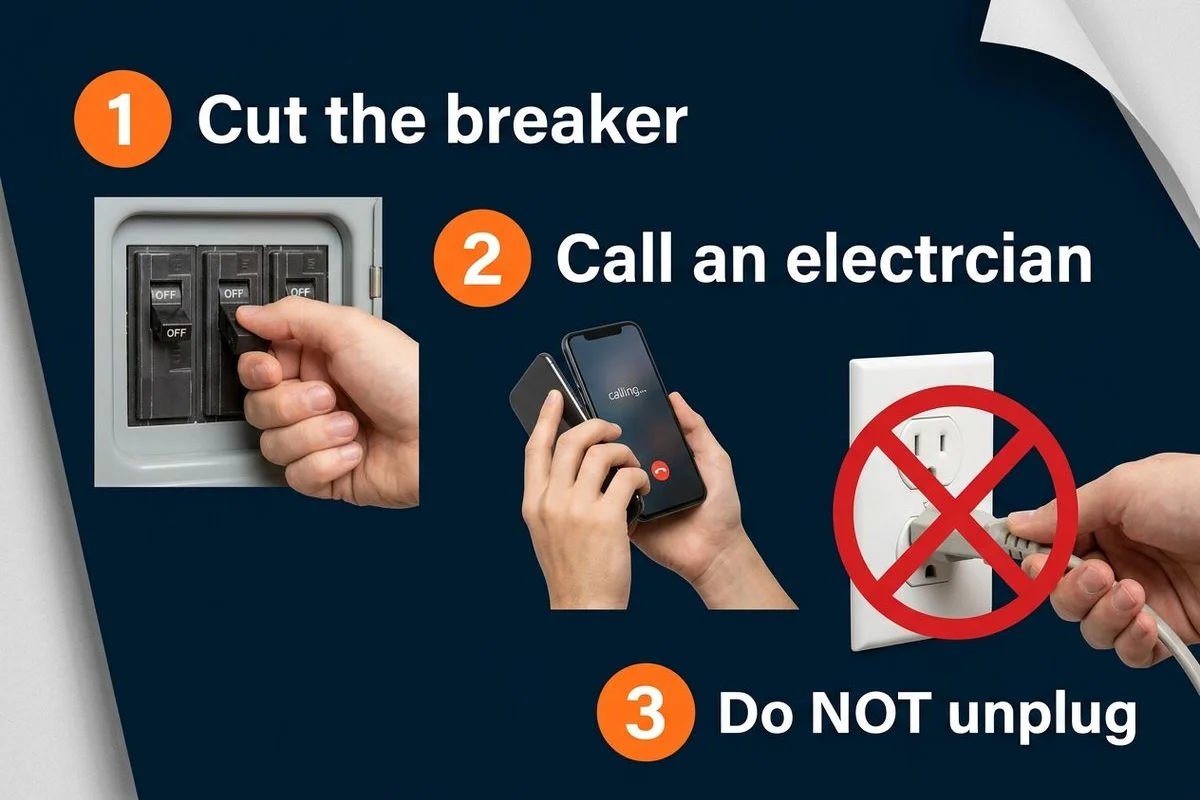
We recommend cutting power at the main breaker immediately if you notice a burning smell from an outlet.
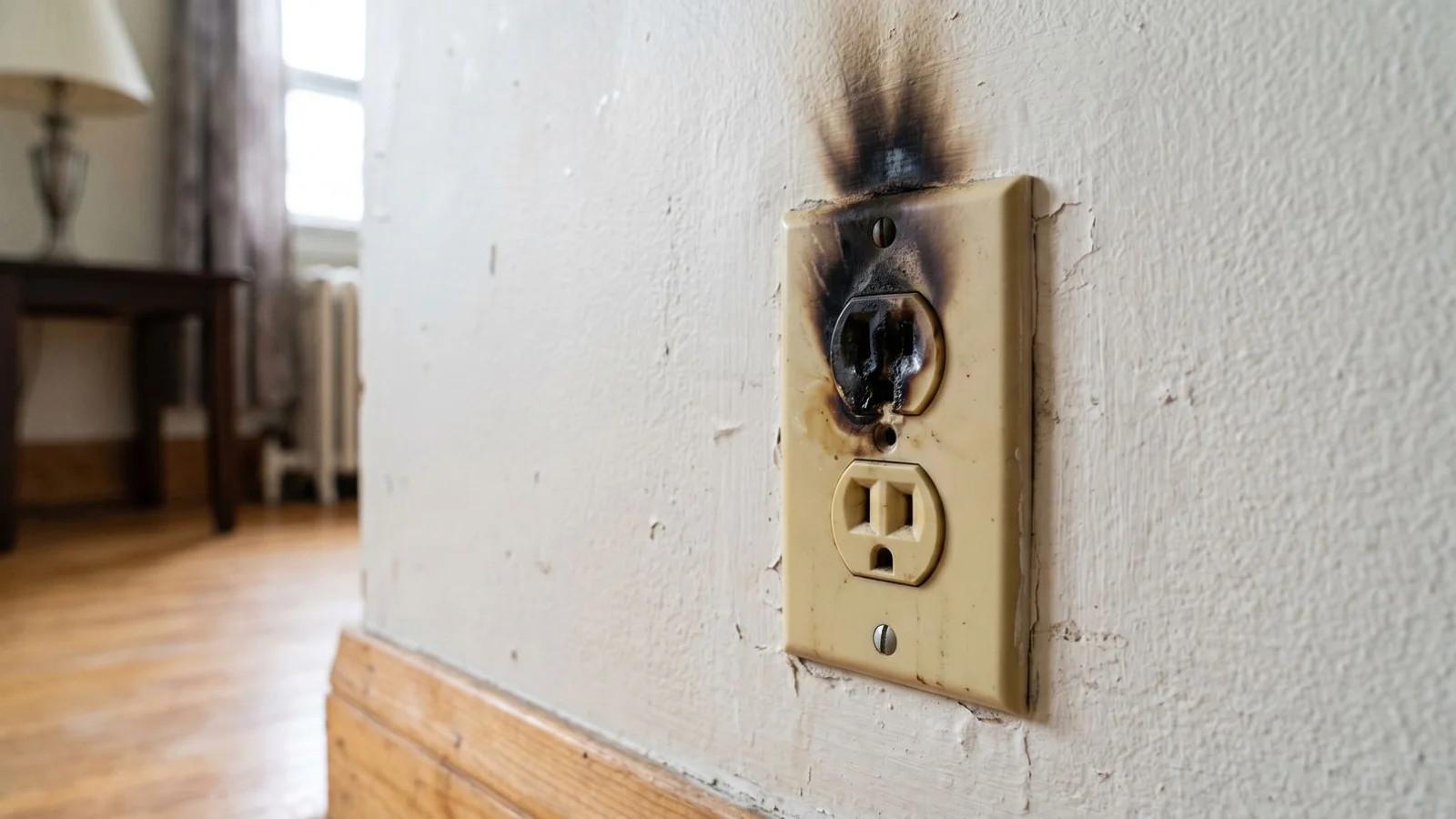
That faint, fishy, or melting plastic odor usually means wire insulation is actively melting behind your drywall. This warning sign requires fast action before it escalates into an electrical fire.
Our team sees this scenario play out weekly across Toronto homes.
Let us look at the specific risks and explore practical ways to respond safely before you call an electrician.
What This Guide Covers
We created this guide to outline the exact steps to take before booking any electrical work. A quick overview of these safety protocols can prevent serious property damage.
1. Cut Power at the Breaker FIRST (Clear Instructions)
Go straight to your electrical panel and switch off the main breaker to stop the flow of electricity. Do not wait to see if the issue resolves itself when an outlet smells like burning.
Our licensed electricians emphasize that cutting power is the only way to stop the overheating process. The 2024 Ontario Electrical Safety Report from the Electrical Safety Authority (ESA) recorded 93 electrical fire fatalities over a ten-year period. Those statistics show exactly why fast action is necessary.
We always check the panel first during an emergency service call. Flipping the main breaker, usually a large double switch at the very top of your panel, ensures the entire circuit is dead.
- Locate your main electrical panel in the basement or garage.
- Identify the main breaker switch at the top.
- Flip the switch firmly to the “OFF” position.
- Keep a flashlight nearby, as this will turn off all lights.
2. Do NOT Unplug Into the Smell (Arc Risk)
Leave all appliances plugged into the affected outlet until the power is confirmed off at the panel. Pulling a plug from a melting receptacle can trigger a dangerous electrical arc.
We regularly find melted plugs fused directly to the outlet contacts. An arc flash happens when electricity jumps through the air between separated conductive surfaces. That flash can reach thousands of degrees in a fraction of a second.
Our training strictly forbids interacting with a live, failing connection. An arc can easily ignite the degraded plastic faceplate or nearby wall materials.
| Action | Risk Level | Why It Matters |
|---|---|---|
| Leaving the cord plugged in | Lowest Risk | Prevents movement that could cause an electrical arc. |
| Pulling the cord out | High Risk | Can draw an arc flash and ignite melting plastic. |
| Spraying a fire extinguisher | High Risk (if live) | Liquid or improper extinguishers conduct electricity. |
3. Call Immediately, Even After-Hours
Contact an emergency electrical service the moment the power is shut off. Wires do not stop being a fire hazard just because the immediate electrical fire smell fades.
Our dispatch centre handles after-hours calls because these problems frequently escalate at night. Many homeowners mistakenly assume a cooled outlet is safe to use again the next day. The reality is that the internal copper connections are now permanently compromised.
We provide emergency response across the GTA, including Toronto, North York, and Mississauga. An ESA-licensed contractor has the specific thermal imaging and diagnostic gear to find hidden wall damage.
When you call for emergency service, have this information ready:
- The exact location of the burning smell.
- The age of your home.
- Whether the main breaker is currently off.
4. Common Causes (Failed Connection, Melted Wire Insulation, K&T)
Loose connections, overloaded circuits, and degraded knob-and-tube wiring are the primary culprits behind a burning plastic outlet. Heat builds up rapidly when electricity forces its way through a poor connection.
Our inspections in pre-1950s Toronto neighbourhoods, like High Park and Riverdale, frequently uncover failing setups. The cloth insulation on these old wires degrades heavily over decades. Modern blown-in attic insulation often traps the heat that this original design needed to dissipate.
This safety hazard heavily impacts your home insurance policy. Many Ontario insurers simply refuse to renew coverage on homes with active knob-and-tube wiring. We see average replacement costs for a medium-sized Toronto home running between $12,000 and $18,000 in 2026.
| Cause | Typical Era | Specific Risk Factor |
|---|---|---|
| Knob-and-Tube (K&T) | Pre-1950s | Degraded cloth insulation and lack of a ground wire. |
| Aluminum Wiring | 1960s to 1970s | Connections oxidize and expand, causing loose contact points. |
| Loose Pigtails | Any Era | Poorly twisted wires create high electrical resistance and heat. |
5. Why Outlet Replacement Alone Isn’t Always Enough
Swapping a melted plastic faceplate does nothing to fix the damaged copper wires hidden inside the junction box. The heat from a failing connection travels up the wire, destroying the insulation inches behind the wall.
Our electricians often have to cut back several inches of scorched wire to find clean, safe copper. Simply attaching a new receptacle to burnt wires guarantees the problem will happen again. You need a comprehensive repair to ensure long-term safety.
The 2025 Ontario Electrical Safety Code mandates Arc Fault Circuit Interrupter (AFCI) protection for almost all living spaces during major updates. We must install these advanced breakers when extending or substantially repairing older circuits. AFCI breakers specifically detect the dangerous micro-arcs that cause these melting smells in the first place.
A proper, code-compliant repair includes:
- Removing all heat-damaged wire and insulation.
- Splicing in fresh copper using approved connectors.
- Evaluating the circuit for AFCI breaker requirements.
- Filing a Notification of Work with the ESA.
Ready for a Quote?
We offer free estimates to safely eliminate the burning smell from an outlet and provide a permanent fix. A proper diagnosis handles the entire process from the first inspection to the final repair.
Our flat-rate quotes provide clarity for residential projects across the GTA. Every job includes an ESA permit under the Licensed Electrical Contractor name, and you always receive the Certificate of Acceptance.
We encourage you to visit our emergency electrician page for the full scope of urgent services. You can also contact us directly to get an expert on site immediately.
For more context on related decisions, read our guide on why Does My Breaker Keep Tripping?.
Frequently Asked Questions
Should I call 911 instead?
+
If you see flames or smoke, yes. Fire department first, electrician after for the repair. For Toronto homes specifically, we handle this through our LEC with the ESA permit included in the flat-rate quote. Free estimates on residential projects.
Is replacing the outlet enough?
+
Sometimes. But the upstream wire often shows damage that requires more than just an outlet swap. For Toronto homes specifically, we handle this through our LEC with the ESA permit included in the flat-rate quote. Free estimates on residential projects.
What does a burning smell mean exactly?
+
Heat-degraded insulation. Failing connection or undersized wire under load. Always investigate, never ignore. For Toronto homes specifically, we handle this through our LEC with the ESA permit included in the flat-rate quote. Free estimates on residential projects.