What Counts as a Real Electrical Emergency?
True emergencies (burning smell, sparks, smoke), urgent-but-not-emergency cases, hazards to leave alone, and when to cut power at the panel.
By Michael Chen, Licensed Master Electrician ·
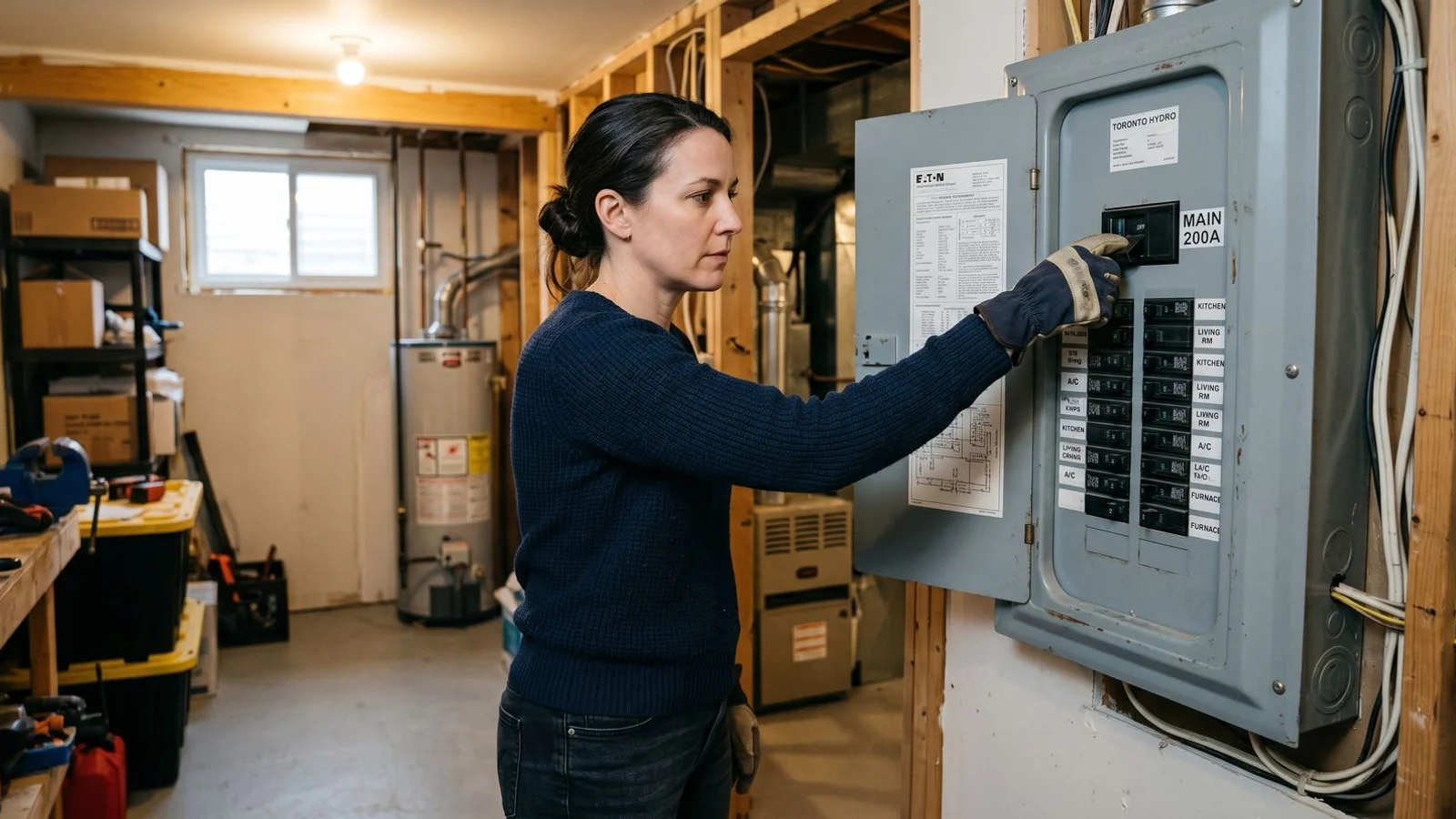
Anxious homeowner trying to decide whether to call now or wait until morning.
What Counts as a Real Electrical Emergency?
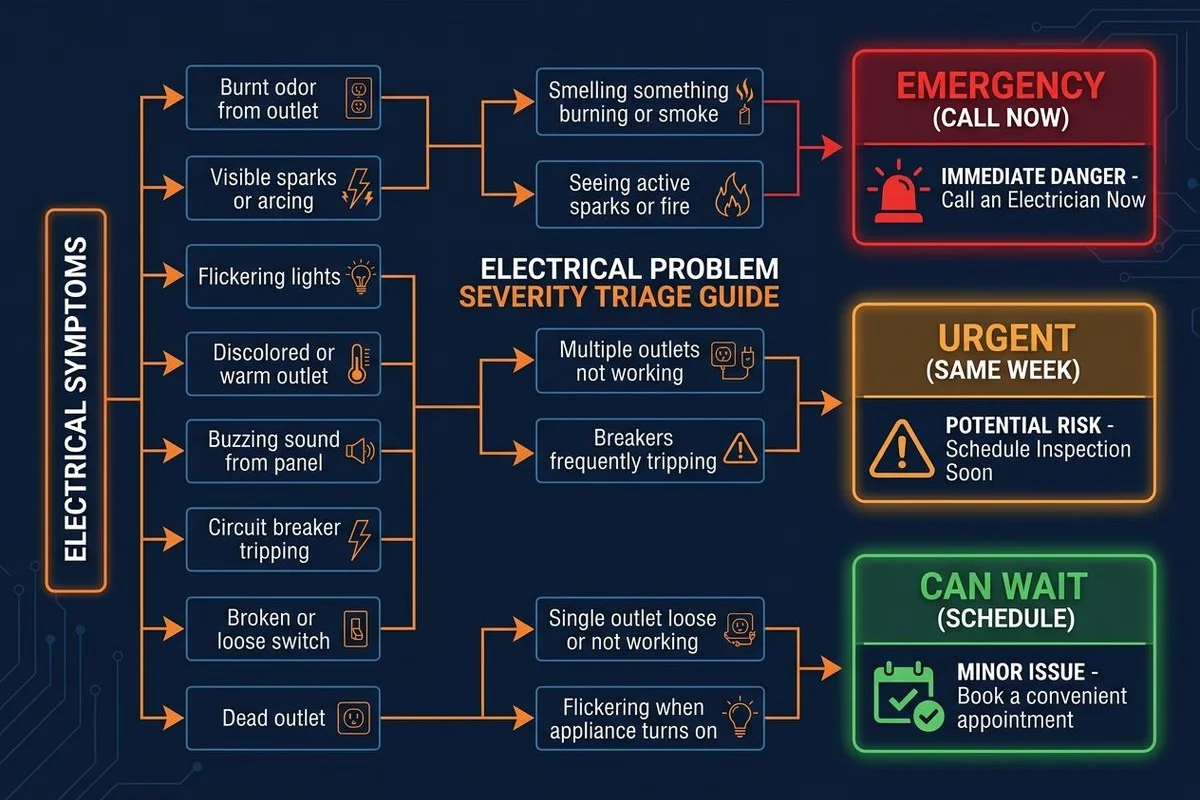
A real electrical emergency is any situation with an active risk of fire or electrocution, such as sparking outlets, a burning plastic smell, or water near your electrical panel.
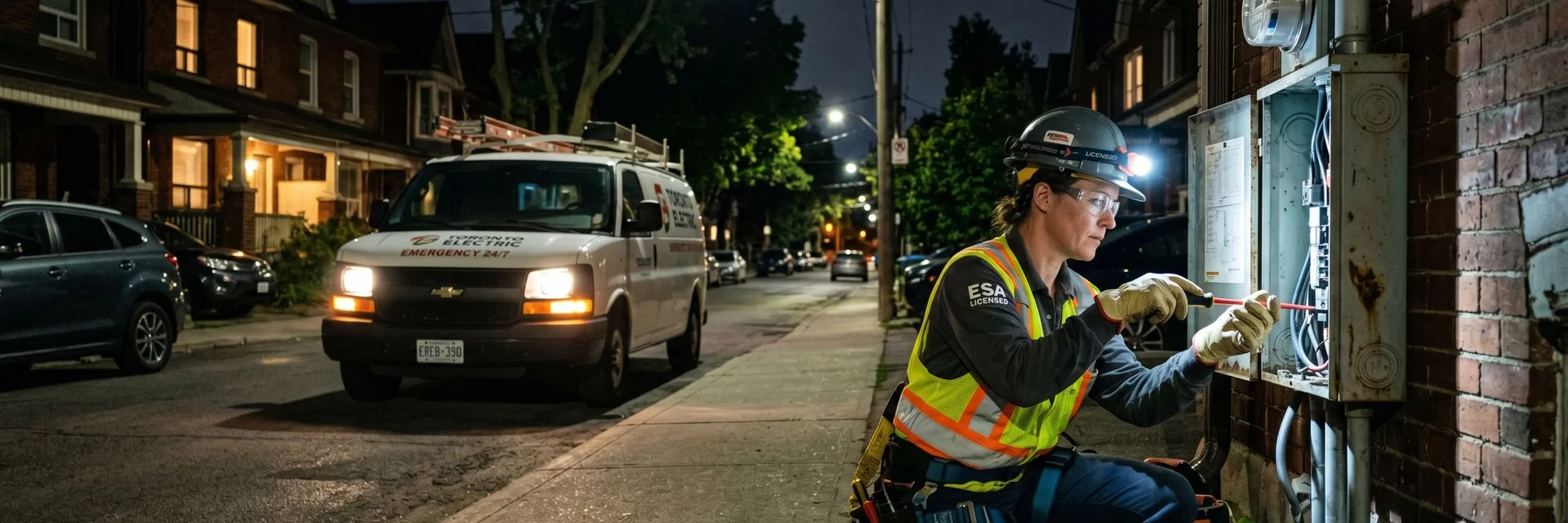
We get many late-night calls from property owners trying to decide when to call an emergency electrician or wait until morning.
Making that call can feel like a stressful gamble.
You might be looking at a sparking outlet and wondering exactly what is an electrical emergency.
Our team understands that panic.
The data highlights why these split-second decisions matter.
According to the Electrical Safety Authority (ESA) 2024 report, non-occupational electrical fatalities in Ontario increased by 40% over the last decade.
We use this guide to help you identify specific symptoms that require immediate action.
Let’s look at what you can safely ignore until business hours and exactly what to do in the meantime.
What This Guide Covers
This guide covers the critical differences between immediate electrical hazards, urgent repairs, and situations you must never touch yourself.
We have broken down the most common residential electrical problems into clear categories.
The following sections will help you determine the exact urgency of your situation before you book any work.
1. True emergencies (burning smell, sparks, smoke, flooding near panel)
A true emergency is any situation with an active risk of fire or electrocution. You must treat these symptoms as immediate hazards that require an emergency response.
We strongly advise turning off the main power as your first priority if you can do so safely.
Watch for these critical electrical emergency signs:
- Burning plastic smell: This indicates melting wire insulation behind your walls.
- Visible sparks: These are often caused by loose connections or failing contacts inside the outlet.
- Water near the panel: A severe shock hazard requiring immediate utility intervention.
Our electricians often encounter older equipment that fails to trip during a short circuit. Toronto homes built before the 1990s typically run on 60A or 100A service, and Federal Pacific Stab-Lok and Zinsco panels are common in 1960s to 1980s housing.
We recommend planning for a panel upgrade if you currently have these outdated models, as both brands are flagged as fire risks by the ESA and most home insurers. A 100A to 200A upgrade in Toronto currently runs $2,500 to $4,500 based on 2026 pricing, which includes the ESA permit, Toronto Hydro disconnect coordination, and the final inspection.
2. Urgent-but-not-emergency cases (single dead outlet)
A single dead outlet or a flickering light usually indicates a localized issue, making it an urgent repair rather than an immediate midnight emergency. You can typically wait until regular business hours to schedule a service call for these isolated problems.
We provide under-60-minute response times across the inner GTA, 24/7, for active fire-risk conditions. Those severe conditions include breakers that will not reset or partial power loss across the home.
A standard daytime appointment will save you money for minor inconveniences. Our after-hours emergency dispatch is a flat $150 plus labour, but there is no call-out fee during standard business hours.
Here are three common urgent-but-not-emergency symptoms:
- Single dead outlet: This is often resolved by resetting a tripped Ground Fault Circuit Interrupter (GFCI) button in a kitchen or bathroom.
- Flickering lights in one room: This symptom usually points to a loose connection at the switch or the lighting fixture.
- A tripped standard breaker: It was likely a temporary overload if the switch resets easily and stays on.
3. Hazards to leave alone (live wires, water near electrical)
You must never touch downed powerlines, submerged electrical panels, or exposed live wires under any circumstances. These hazards require trained utility professionals and emergency responders to secure the area.
Our diagnostic teams have handled this scope across the GTA, including Toronto, North York, Scarborough, Etobicoke, Mississauga, Vaughan, and Markham. The diagnostic steps follow a consistent pattern that prioritizes extreme caution.
”The Electrical Safety Authority advises the public to stay back at least 10 metres (33 feet) from downed powerlines, as electricity can travel through water and the ground.”
We know the dangers of interaction are severe. Between 2014 and 2023, Ontario hospitals recorded 9,672 emergency department visits related to electrical injuries, and 88 percent of those visits were classified as severe.
Our trained electricians use specialized diagnostic gear to safely assess wet or damaged systems. Specific repairs always depend on the vintage of the home, wall finish, and existing service capacity.
4. When to cut power at the main breaker
You should cut power at the main breaker if you smell burning plastic, see sparks, or hear buzzing from an outlet. You must only do this if the area around the panel is completely dry.
We instruct property owners to act quickly but cautiously when interacting with the main electrical service. A breaker that will not reset usually indicates a dead short or a severe overload.
Our technicians have seen homeowners cause secondary damage by repeatedly forcing a tripping breaker back into the “on” position. An electrical arc flash can reach temperatures up to 19,427°C (35,000°F), which is hotter than the surface of the sun.
We want you to follow these safety steps when turning off your main breaker:
- Ensure the floor is dry: Never touch the electrical panel if you are standing in water.
- Use one hand: Keep your other hand by your side to prevent a potential circuit from traveling across your chest.
- Look away: Turn your head as you flip the switch to protect your eyes from a sudden arc flash.
- Flip the main switch: Locate the largest switch, which is usually at the very top of the panel, and turn it off.
5. What to tell our dispatcher when calling
When you call an emergency electrician, clearly state your primary symptom, the age of your home, and whether you see smoke. This specific information allows the dispatcher to correctly prioritize your situation.
Our dispatch team uses these details to determine if you need an immediate emergency response or a scheduled service visit. Reporting a burning smell electrical issue is critical because it usually indicates melting wire insulation.
We also need to know if you have already turned off the power at the main breaker. In a typical Toronto residential project, the work is straightforward when handled by an ESA-licensed electrician.
Provide this information to the dispatcher to speed up your service:
- Primary symptom: Be specific about sparks, smoke, or sudden power loss.
- Odours: Describe any burning, metallic, or ozone smells near your outlets.
- Home vintage: Mention if your house was built before the 1990s, as this hints at 60A or 100A service limits.
- Actions taken: State if you have reset any breakers or unplugged major appliances.
Ready for a Quote?
The decision to hire a contractor starts with clear communication.
We provide free estimates on residential projects across the GTA.
Every job is flat-rate quoted, and our experts pull ESA permits in our Licensed Electrical Contractor (LEC) name.
We always include a Certificate of Acceptance with our finished work.
Visit emergency electrician for the full scope of what we do, or contact us directly.
For more context on related decisions, read our guide on total Power Loss vs Partial Outage: How to Troubleshoot.
Frequently Asked Questions
Is a single dead outlet an emergency?
+
Usually no. Schedule next-day unless paired with smell, heat, or other warning signs. For Toronto homes specifically, we handle this through our LEC with the ESA permit included in the flat-rate quote. Free estimates on residential projects.
Should I cut power at the main first?
+
Yes if you smell burning or see smoke; otherwise the affected breaker is enough. For Toronto homes specifically, we handle this through our LEC with the ESA permit included in the flat-rate quote. Free estimates on residential projects.
Will you charge after-hours rates if it's not really urgent?
+
If it's safely deferrable we'll tell you and book daytime. No after-hours upcharge for non-emergencies. For Toronto homes specifically, we handle this through our LEC with the ESA permit included in the flat-rate quote. Free estimates on residential projects.