Hardwired vs Plug-In EV Charger
Code differences, GFCI requirements, portability tradeoff, cost, and why hardwired wins for outdoor or permanent Toronto installs.
By Michael Chen, Licensed Master Electrician ·
Buyer choosing between a NEMA 14-50 receptacle install and hardwiring, wants a clear recommendation.
Hardwired vs Plug-In EV Charger
What This Guide Covers
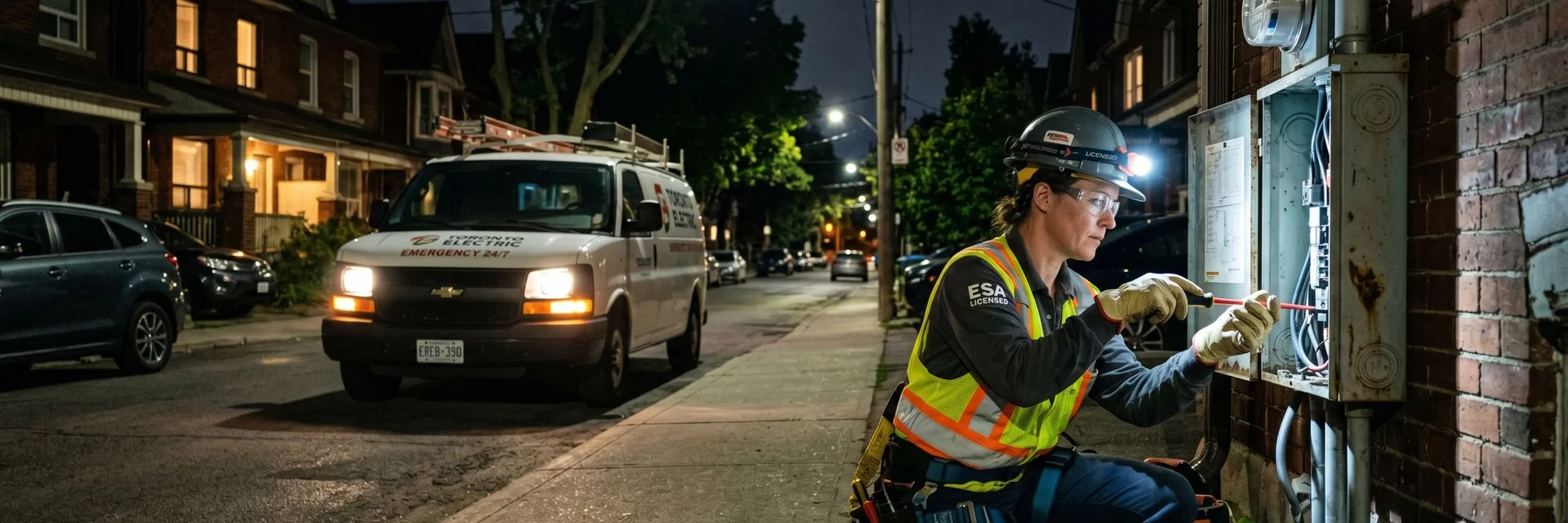
As a Toronto Electrical Contractor focused on delivering safe, code-compliant installations, our team discusses the hardwired vs plug in ev charger decision with homeowners almost every single day. Clients often assume plugging a charger into a heavy-duty wall outlet is the simplest path forward.
That assumption makes sense on the surface.
The reality is that recent code changes make hardwiring the smartest choice for almost every permanent setup. Let us look at the data to see what the rules dictate for a safe, reliable charge. We will break down the Ontario electrical code requirements, compare the real costs, and explain exactly why the plug-in method might cause unexpected headaches. This guide answers your biggest questions before you book any electrical work.
1. OESC code differences between receptacle vs hardwired
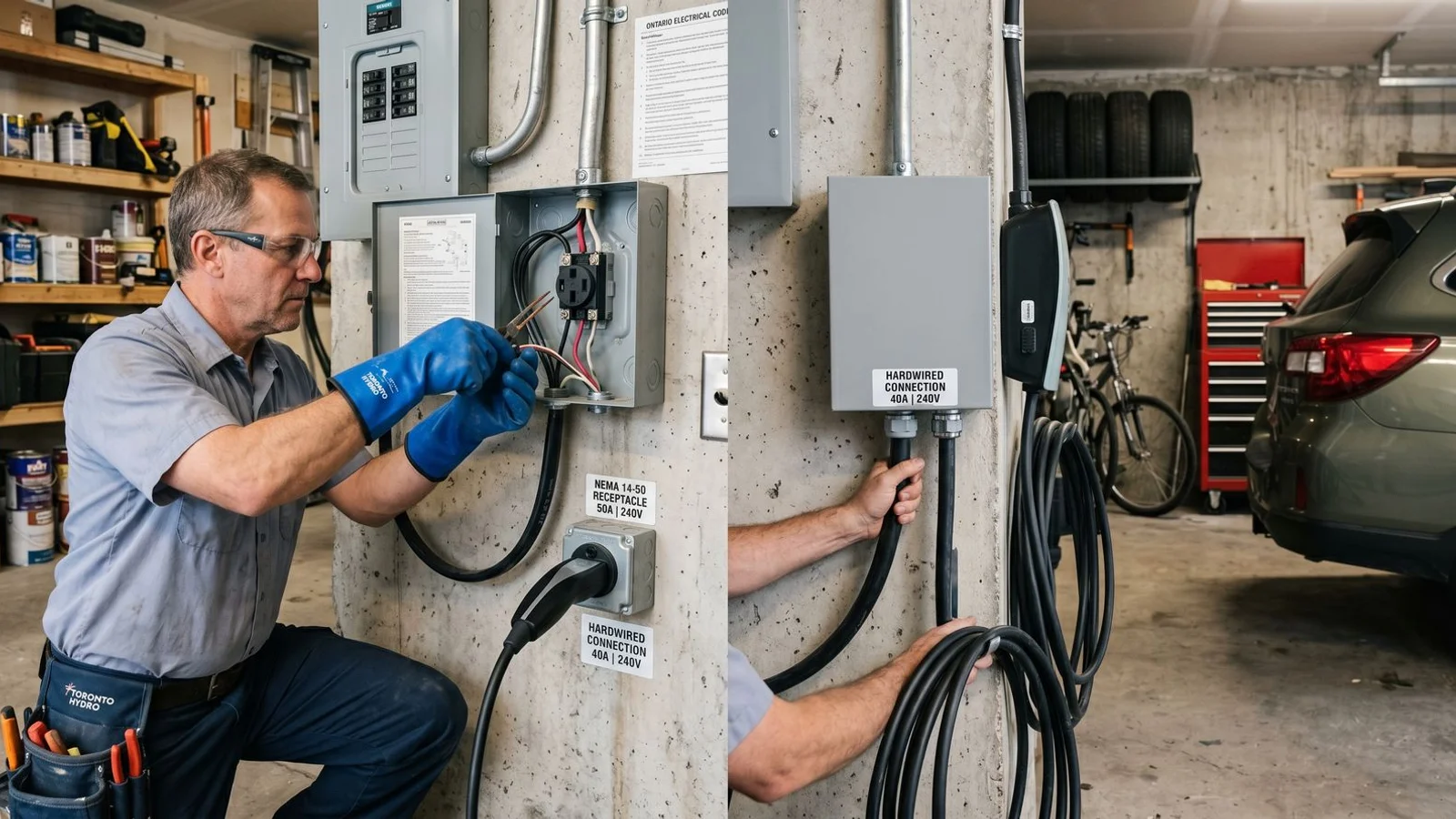
We advise hardwiring directly into your electrical panel to eliminate a potential point of failure. An ev charger receptacle introduces a plug connection that can wear down from heavy loads over time.
The Ontario Electrical Safety Code classifies EV chargers as continuous loads. This rule dictates that you can only utilize 80% of a circuit’s maximum rating for safety. A standard 50-amp circuit with a NEMA 14-50 plug limits your maximum charging rate to 40 amps.
We typically handle these installations across Toronto and the Greater Toronto Area with ease. Hardwiring an advanced unit like the 2026 Tesla Wall Connector allows you to use a 60-amp circuit. This specific configuration delivers a full 48 amps of charging power to your vehicle.
- Circuit Limitations: Plugs restrict you to 40 amps of continuous power.
- Maximum Speed: Hardwiring unlocks up to 48 amps on a properly sized circuit.
- Safety Compliance: Hardwired units meet strict ESA requirements without needing expensive extra components.
- Neutral Wires: Plugs require a neutral wire for installation, while most hardwired chargers do not.
2. GFCI requirement on NEMA 14-50 (and the nuisance-trip risk)
We see homeowners struggle with nuisance tripping when using plug-in chargers. The newest Ontario Electrical Safety Code mandates Ground Fault Circuit Interrupter protection for all 240-volt garage and outdoor outlets. This means your electrician must install a special GFCI breaker in your panel for a plug setup.
Our team always warns clients about the compatibility problems this creates. Popular EV chargers like the Grizzl-E and the Tesla Mobile Connector already have built-in ground fault protection. Plugging a protected charger into a protected outlet causes the two safety systems to interfere with each other.
We completely avoid this headache by hardwiring the charger. When you hardwire an ev charger, Ontario code allows you to legally skip the GFCI breaker requirement because the charger’s internal safety mechanisms satisfy the standard.
Pro Tip: If you have an older Toronto panel that pre-dates modern GFCI rules, a major renovation will trigger a mandatory retrofit. Hardwiring your EV charger prevents you from having to purchase a costly 50-amp GFCI breaker during these panel upgrades.
3. Portability tradeoff (move charger between homes vs fixed)
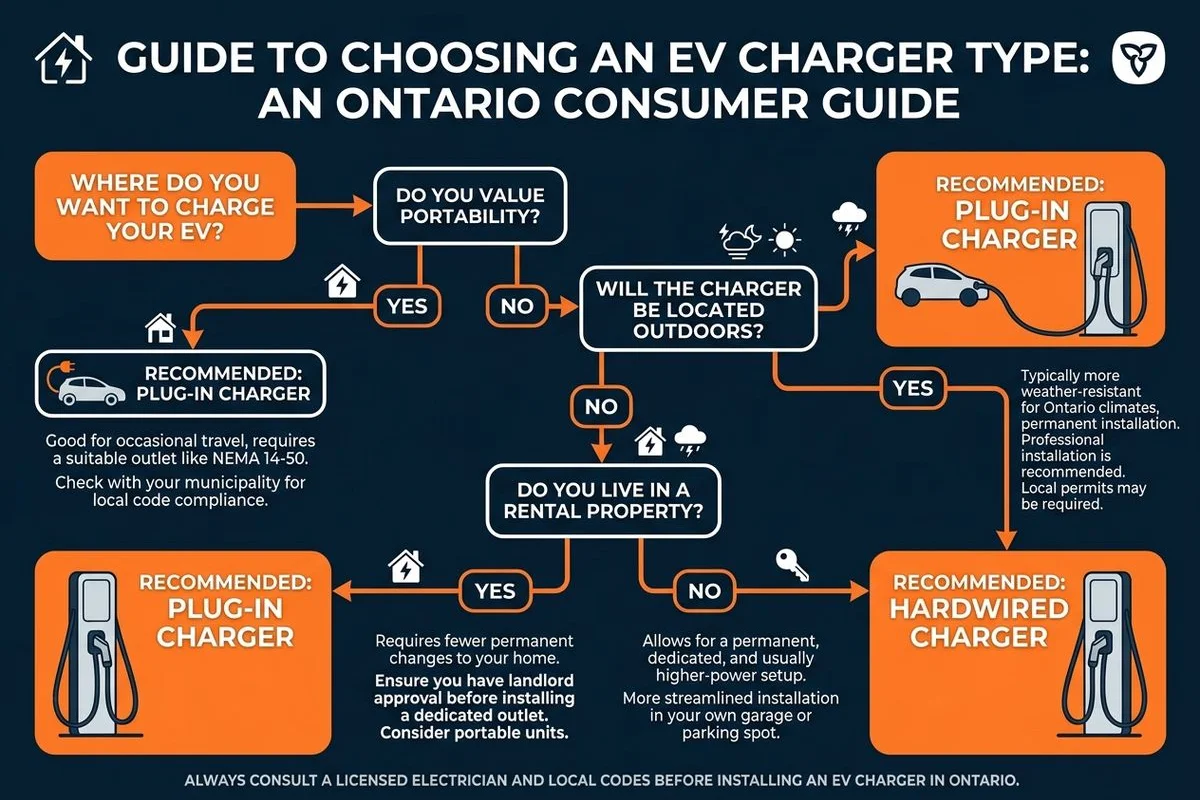
We recommend plug-in models primarily for renters who want to take their charger to their next home. A standard Level 2 EV charger installation in Toronto generally costs between $800 and $1,500 CAD, including the mandatory ESA permit. Taking your hardware with you saves money on equipment later.
Our condo clients face a completely different set of rules. Toronto condo boards frequently require specific energy management systems to protect the building’s electrical capacity. The DCC-9 load management system is a very common requirement in multi-residential buildings.
We handle the entire condo board approval workflow and install these systems efficiently. A DCC-9 unit alone costs approximately $1,240 CAD before factoring in installation labor. A permanent, hardwired installation is strongly preferred in these detailed residential scenarios.
| Feature | NEMA 14-50 Plug-In | Hardwired Charger |
|---|---|---|
| Portability | High (Easy to unplug and move) | Low (Requires an electrician to remove) |
| Condo Approval | Rarely approved for shared garages | Preferred by property managers |
| Max Charging Speed | 40 Amps | Up to 48 Amps |
4. Cost difference (~$50 to $150 swing)
We constantly correct the misconception that a plug-in installation is the budget-friendly option. A standard hardware store Leviton receptacle might only cost $15, but it cannot handle continuous electrical vehicle loads. These cheap plastic outlets frequently melt under the thermal stress of an overnight charge.
Our installers strongly advise using industrial-grade receptacles like Hubbell or Bryant to prevent serious fire hazards. These heavy-duty outlets cost roughly $100 to $150 CAD. You must also purchase the mandatory GFCI breaker, adding another $150 CAD to your total bill.
We eliminate these specific component costs entirely by hardwiring the equipment. The savings from skipping the industrial plug and specialty breaker easily offset the minor labor difference. A licensed electrical contractor scoping a typical residential job in Toronto will provide a fixed price within 24 hours of a site walk.
- Industrial Receptacle: $100 to $150 CAD for a safe, heavy-duty Hubbell outlet.
- GFCI Breaker: $150 to $200 CAD required by Ontario code.
- Neutral Wire: Extra copper wiring costs extra per foot.
- Replacement Costs: Outlets wear out over time and require paid replacement.
5. Why hardwired is preferred for outdoor and permanent installs
We exclusively recommend hardwired installations for clients charging their vehicles outside. A nema 14-50 ev charger setup requires a large, specialized weatherproof cover to meet code. These oversized covers are prone to cracking in freezing temperatures and rarely keep condensation out perfectly.
Our team sees moisture damage ruin outdoor plug connections frequently. Hardwired chargers boast a superior NEMA 4 weather rating, meaning they are completely sealed against driving rain, snow, and ice. This enclosed design prevents moisture from reaching the sensitive electrical contacts.
We have successfully completed this scope of work across North York, Scarborough, Etobicoke, Mississauga, Vaughan, and Markham. The installation steps follow a consistent, predictable pattern when handled by an ESA-licensed electrician equipped with diagnostic gear. Specific requirements will always depend on your home’s vintage, exterior wall finish, and existing service capacity.
Important Warning: Snow and ice accumulation inside a standard outdoor receptacle cover creates a severe shock hazard. A sealed hardwired unit removes this risk completely.
Ready for a Quote?
We would be happy to discuss your specific needs and scope this project together. Every project comes with a flat-rate quote, ESA permits filed in our name, and your official Certificate of Acceptance.
We never hide fees or surprise you with unexpected material costs at the end of a job.
Visit our ev charger installation page for the full scope of what we provide. You can also contact us directly to schedule your free site walk and secure your fixed price today.
For more context on related decisions, read our guide on eV Charger Installation Cost in Ontario (2026).
Frequently Asked Questions
Is GFCI required on a NEMA 14-50?
+
Yes per current OESC for new installs. And dual GFCI (outlet + charger internal) often causes nuisance trips. For Toronto homes specifically, we handle this through our LEC with the ESA permit included in the flat-rate quote. Free estimates on residential projects.
Can I move a hardwired charger?
+
Possible but requires an electrician at both ends; plug-in is genuinely portable. For Toronto homes specifically, we handle this through our LEC with the ESA permit included in the flat-rate quote. Free estimates on residential projects.
Which is safer?
+
Hardwired. Fewer connection points and no exposed receptacle to corrode or arc. For Toronto homes specifically, we handle this through our LEC with the ESA permit included in the flat-rate quote. Free estimates on residential projects.