Heritage Home K&T Removal (Plaster Wall Specialty)
Plaster wall preservation, fishing wire through historic structures, minimal-cut techniques, lath considerations, and heritage trim protection.
By Michael Chen, Licensed Master Electrician ·
Owner of an Annex / High Park / Cabbagetown heritage home, wants reassurance the rewire won’t destroy original details.
Heritage Home Knob and Tube Removal Toronto (Plaster Wall Specialty)
You know how stressful it feels when an insurance provider flags your vintage property for outdated wiring.
We see this constantly with buyers requiring the annex k&t removal who need to secure coverage within 30 days of purchase.
A 2026 report from Insurely notes that active knob and tube wiring can add up to $800 annually to your premium, or lead to outright coverage denial.
Our team specializes in heritage home knob and tube removal toronto, solving this exact problem without destroying your home’s historic charm. Let’s look at the data, what it is actually telling us, and then explore practical rewiring methods.
What This Guide Covers
Before you book an electrician, you need a clear plan to protect your investment.
We break down the exact strategies used to satisfy both the Electrical Safety Authority and the Ontario Heritage Act.
1. Plaster wall preservation techniques
Old-growth wood lath and horsehair plaster require a delicate touch to prevent widespread cracking.
We avoid aggressive reciprocating saws that vibrate the walls and loosen the structural keys holding the plaster together.
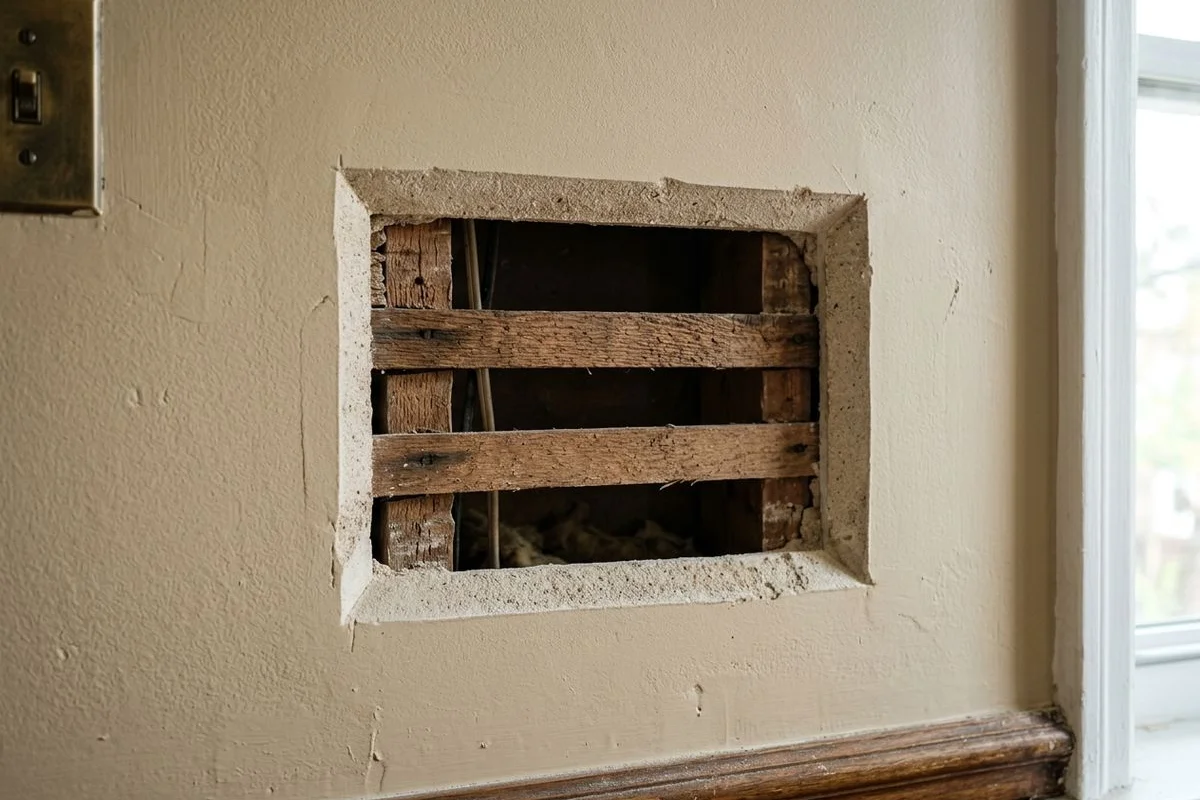
A multi-tool with a specialized masonry blade creates clean, surgical access points for plaster wall rewiring.
Our electricians use these small cutouts to fish modern copper wiring behind the walls.
This method minimizes the need for extensive repairs and keeps the messy plaster dust to a bare minimum.
The preservation facts you should know:
- The Plaster Key Fact: The “keys” are the plaster bits squeezed between wood laths that hold the wall up.
- Vibration Warning: Using heavy power tools snaps these keys, causing massive wall failure.
- Surgical Cuts: Small, perfectly square cuts make patching with veneer plaster much easier later.
2. Minimal-cut fishing through lath
Blindly drilling through century-old walls is a guaranteed way to damage hidden plumbing or structural supports.
We rely on high-definition boroscope cameras to map out the empty cavities behind your lath and plaster.
This technology allows the installation crew to bypass solid wood fire blocks without tearing down entire wall sections.
Our process uses flexible fiberglass push-pull rods to guide the new wiring safely into place.
| Feature | Traditional Rewiring | Minimal-Cut Fishing |
|---|---|---|
| Wall Damage | Large trenches cut across rooms | Small 2-inch access holes |
| Repair Cost | Very high due to full room replastering | Low due to minor patching |
| Timeframe | Weeks of disruption | Usually completed in 5 to 10 days |
3. Working around heritage trim and millwork
Original tall baseboards and intricate wainscoting are often the most valuable architectural features in a vintage property.
We take extreme care to route wiring behind these elements rather than cutting through them.
Sometimes, careful removal of the baseboard is the safest way to hide wire runs horizontally across a room.
Our team scores the century-old paint lines with a utility knife before gently prying the wood loose.
This specific technique prevents the dry, brittle wood from splintering.
Common mistakes to avoid with heritage millwork:
- Forcing brittle wood: Century-old pine splits easily if not pryed gradually.
- Ignoring paint seals: Failing to score the edges guarantees chipped lead paint.
- Losing original nails: Reusing the square-cut antique nails maintains the authentic look.
4. Original moulding and crown protection
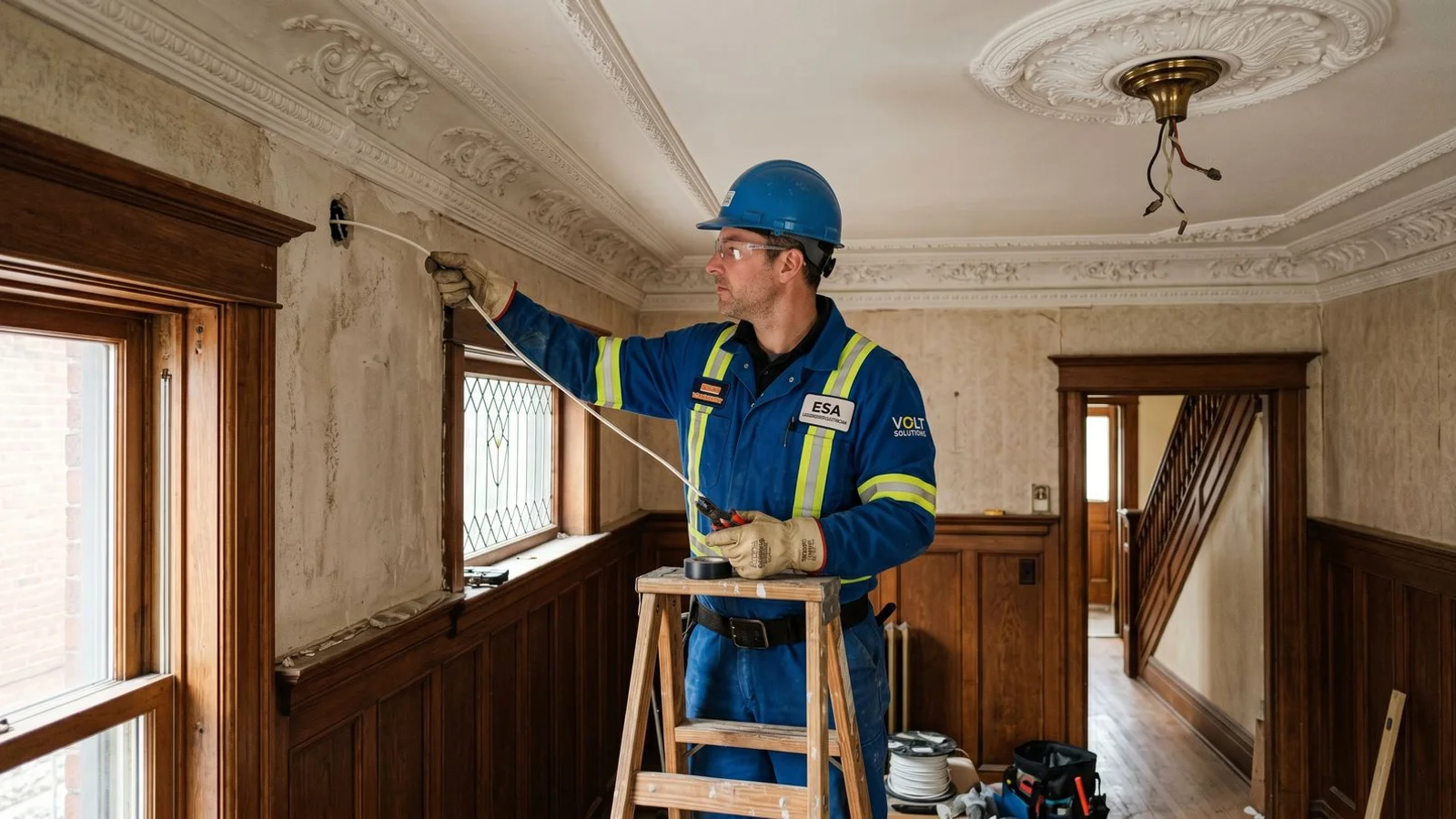
Ceiling medallions and plaster crown mouldings are nearly impossible to replicate perfectly if damaged.
We frequently tackle ceiling light fixtures by working from the floor above, lifting floorboards to drop wires down.
This top-down approach completely bypasses the fragile decorative plaster on the ceiling below.
Our electricians also use existing picture rails as natural camouflage for new wire paths when necessary.
Preserving these ornate details keeps the historical integrity of your home intact.
”A 2025 assessment from local heritage experts confirms that original plaster ceiling medallions significantly boost property values in pre-1950 Toronto neighbourhoods.”
5. Heritage Toronto designation considerations
Dealing with municipal regulations is a major hurdle for older properties located in protected districts like Cabbagetown.
We coordinate the project to comply strictly with the Ontario Heritage Act, whether your home is a Part IV individual designation or sits in a Part V conservation district.
Interior electrical upgrades rarely trigger a full Heritage Permit unless they impact designated exterior attributes.
Our support team always documents the existing conditions to satisfy City of Toronto planning officials if questions arise.
The Electrical Safety Authority permit remains the primary legal requirement for heritage rewiring toronto.
Key heritage classifications to know:
- Part IV Designation: Individual properties with specific bylaws protecting unique attributes.
- Part V Designation: Neighbourhood-wide Heritage Conservation Districts with broader visual guidelines.
- Listed Properties: Homes on the registry that require a 60-day notice before any demolition.
Ready for a Quote?
Securing a safe, modern electrical system is the best way to protect your historic property.
We provide clear, flat-rate quotes for heritage home knob and tube removal toronto, covering the GTA including North York, Scarborough, Etobicoke, Mississauga, Vaughan, and Markham.
Every job includes an ESA permit pulled under our Licensed Electrical Contractor (LEC) name, and you receive the final Certificate of Acceptance.
Our process ensures you have the exact paperwork required by Ontario insurance providers.
Visit knob and tube wiring replacement for the full scope of what we do, or contact us directly.
For more context on related decisions, read our guide on active vs Abandoned Knob and Tube: When Partial Replacement Works.
Frequently Asked Questions
Will plaster walls survive the rewire?
+
Yes. Minimal-cut fishing techniques and proper patching preserve plaster walls cleanly. For Toronto homes specifically, we handle this through our LEC with the ESA permit included in the flat-rate quote. Free estimates on residential projects.
Do you protect original mouldings?
+
Yes. Masking and covering before any cut, hand-tool work near original woodwork only. For Toronto homes specifically, we handle this through our LEC with the ESA permit included in the flat-rate quote. Free estimates on residential projects.
Is heritage designation a problem?
+
Not for interior wiring work. Exterior service changes may need heritage permits. For Toronto homes specifically, we handle this through our LEC with the ESA permit included in the flat-rate quote. Free estimates on residential projects.