How to Identify Knob and Tube in Your Toronto Home
Where to look (basement joists, attic), what porcelain knobs/tubes look like, age-of-home as proxy, and our free in-home assessment offer.
By Michael Chen, Licensed Master Electrician ·
Homeowner buying or owning a pre-1950 home, wants to self-assess presence before booking an electrician.
How to Identify Knob and Tube in Your Toronto Home
We know that older properties hide surprises.
A century-old house often reveals its history during a simple renovation or a routine inspection. The discovery of outdated electrical systems is a common hurdle for many property buyers today. Our team helps pre-purchase and current homeowners self-assess these situations and book a free assessment.
Understanding how to identify knob and tube wiring is the first critical step in modernizing your property. This knowledge protects your investment and ensures your family stays safe. We will walk you through exactly what to look for and explain the practical implications for your home insurance.
What This Guide Covers
Quick overview of the points worth knowing before you book any work. We outline the key inspection areas so you can confidently evaluate your current setup. The details below help clarify the process and expectations.
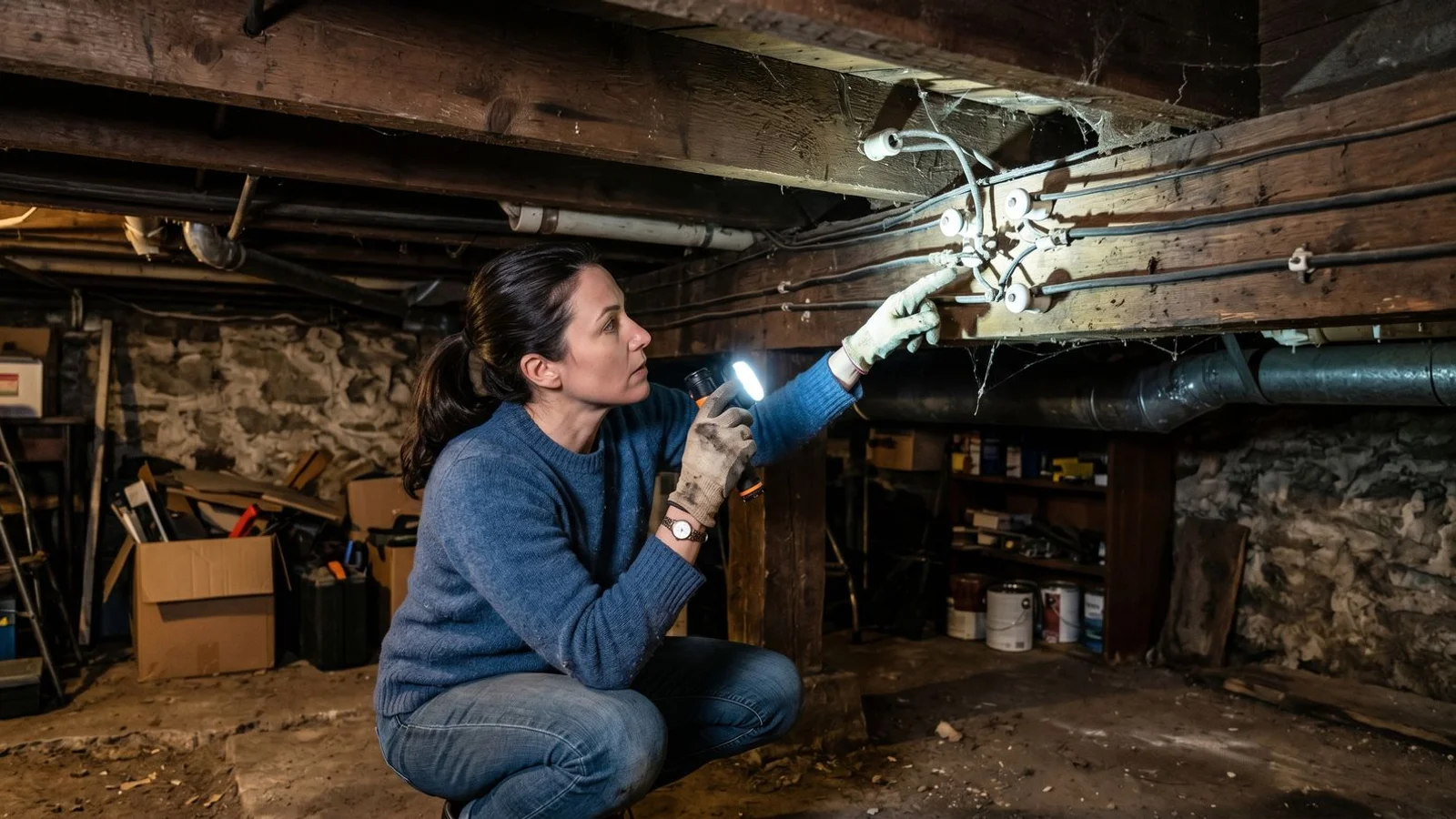
1. Where to Look: Basement Joists, Attics, and Behind Drop Ceilings
Knowing where to look for k&t saves time and prevents unnecessary demolition. Unfinished spaces provide the clearest view of your property’s electrical skeleton. Our electricians always start their assessments by checking exposed wooden floor joists in the basement. You will often see the main lines running parallel to the support beams in these lower levels.
Attics present another common location to spot knob and tube basement and overhead runs. Heat dissipation was a crucial part of this old design. The Electrical Safety Authority (ESA) strictly prohibits covering these specific wires with thermal insulation, as trapped heat creates a severe fire risk.
To conduct a safe visual check, focus on these four areas:
- Unfinished Basements: Scan the ceiling joists for wires running through the wood.
- Attics: Look for wires stretched across ceiling joists above the living space.
- Drop Ceilings: Lift a tile in a renovated basement to check the original ceiling structure above.
- Utility Rooms: Inspect the area immediately surrounding your main electrical panel.
Toronto secondary suites (legal basement apartments) require dedicated kitchen and laundry circuits, AFCI protection, interconnected smoke and CO alarms between the unit and the main house, and often a separate sub-panel. Permits are filed under our Licensed Electrical Contractor (LEC) number and coordinated with the City of Toronto building permit so inspections happen in the same window.
2. Porcelain Knob and Tube Identification With Photos
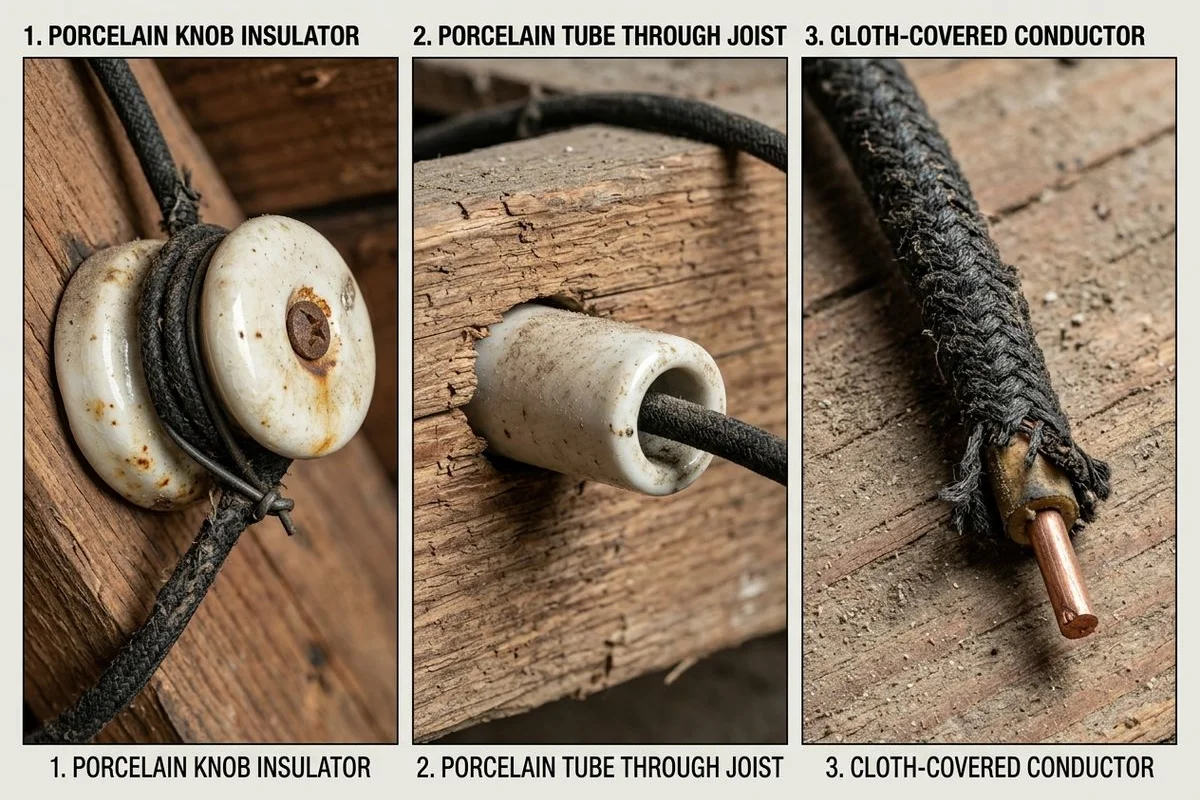
Visual confirmation is the most reliable way to identify this outdated system. The setup looks distinctly different from the modern bundled cables used today. Our crews easily recognize the white ceramic cylinders and small porcelain knobs nailed directly into the wooden framing. These components kept the hot and neutral lines separated and suspended in the open air.
The wires themselves feature a thick, rubberized cloth insulation. This protective layer becomes extremely brittle after seventy or eighty years of use. You will often notice frayed black or white fabric peeling away from the copper wire inside.
Here is a quick breakdown of the three main components:
- Ceramic Knobs: Small white insulators that anchor the wire to the side of a stud.
- Porcelain Tubes: Hollow ceramic pipes inserted through holes drilled in the joists to protect the wire passing through.
- Cloth Insulation: A woven fabric sheath covering single copper conductors, entirely lacking a ground wire.
3. Age of Home as a Proxy: The Pre-1950 Strong Indicator
Construction dates offer a massive clue about what hides behind your drywall. The timeline of your property’s development is often the strongest indicator before opening any walls. We find this wiring heavily concentrated in Toronto neighbourhoods built before 1950, such as The Annex, High Park, Cabbagetown, and Riverdale.
Cloth insulation degrades over time, and modern attic insulation traps the heat the original design needed to dissipate. Most Ontario insurers refuse to renew coverage on active K&T systems because of these safety risks. Full removal in a typical Toronto home currently runs $8,000 to $25,000 in 2026, depending on square footage and accessibility.
The scope of replacing this system depends heavily on your home’s vintage, wall finish, and existing service capacity. In a typical residential project, the work here is straightforward when handled by an ESA-licensed electrician with the right diagnostic gear. We have handled this scope across the Greater Toronto Area, including North York, Scarborough, Etobicoke, Mississauga, Vaughan, and Markham, and the steps follow a consistent pattern.
4. Two-Prong Outlets as a Secondary Signal
You can often spot clues without ever venturing into the basement or attic. The type of receptacles installed in your bedrooms and living areas provides a strong hint about the wiring behind them. Our technicians view classic two-slot outlets as a major red flag for older ungrounded systems.
These older systems operate using only a hot and a neutral wire. Modern building codes require a third grounding conductor to protect sensitive electronics and prevent electrical shocks. A two-prong outlet physically prevents you from plugging in modern, three-prong appliances, signaling that the circuit cannot safely disperse a power surge.
Consider this comparison to understand the safety differences:
| Feature | Knob and Tube Wiring | Modern NM Cable (Romex) |
|---|---|---|
| Grounding | None (Two wires only) | Included (Bare copper ground) |
| Insulation Material | Rubberized cloth (often brittle) | PVC or thermoplastic (highly durable) |
| Heat Dissipation | Requires open air | Safe inside insulated walls |
| Average Capacity | 15 Amps maximum | 15 to 20+ Amps per circuit |
5. Free In-Home Assessment Offer
Guesswork has no place in electrical safety. A thorough k&t inspection toronto property owners request often involves mapping out the exact routes of active and abandoned circuits hidden in the walls. Our service includes comprehensive evaluations to locate every trace of this outdated infrastructure. An accurate review determines if previous renovations properly disconnected the old lines or simply buried them behind new drywall.
A comprehensive assessment also checks your main electrical panel. Many historic properties still operate on outdated 60-amp or 100-amp fused services that cannot support modern electrical loads. Upgrading the panel alongside the wiring ensures your entire system complies with current ESA regulations.
A clear, itemized plan removes the stress from major electrical updates. We provide these detailed reports so you know exactly what the job involves before making any decisions. The process always concludes with a mandatory ESA inspection, giving you the necessary paperwork to satisfy your home insurance provider.
Ready for a Quote?
Safety upgrades add massive value and peace of mind to any older property. If you are ready to apply what you learned about how to identify knob and tube wiring and scope this work, we would be happy to talk. Our team provides free, flat-rate quotes on residential projects across the Greater Toronto Area. All ESA permits are filed directly under our Licensed Electrical Contractor name, and the final Certificate of Acceptance is always included.
Visit the knob and tube wiring replacement page for the full scope of what we do. You can also contact us directly to book your consultation today.
For more context on related decisions, read our guide on why Ontario Insurance Companies Reject Knob and Tube.
Frequently Asked Questions
Where do I look first?
+
Unfinished basement ceiling joists. That's where K&T is most often visible. For Toronto homes specifically, we handle this through our LEC with the ESA permit included in the flat-rate quote. Free estimates on residential projects.
If outlets are three-prong, is K&T still possible?
+
Yes. Outlets can be replaced without rewiring, so three-prong doesn't rule out K&T upstream. For Toronto homes specifically, we handle this through our LEC with the ESA permit included in the flat-rate quote. Free estimates on residential projects.
Is the assessment really free?
+
Yes for residential. Included with any quote, no obligation. For Toronto homes specifically, we handle this through our LEC with the ESA permit included in the flat-rate quote. Free estimates on residential projects.