Outdoor EV Chargers Through Toronto Winters
NEMA-4 enclosures, conduit weatherproofing, cable management in snow, and brick/siding mounting for Toronto outdoor Level 2 installs.
By Michael Chen, Licensed Master Electrician ·
Toronto homeowner without a garage wondering if a driveway or exterior install will survive freeze-thaw cycles.
We frequently hear from Toronto homeowners without a garage who wonder if a driveway installation will actually survive our intense freeze-thaw cycles. That hesitation is completely normal.
An outdoor ev charger toronto winter installation will perform flawlessly if you choose the right equipment. Our team will break down the data behind weatherproof ratings and practical ways to protect your setup.
These are the exact workarounds that keep the charge flowing all season long.
Let’s look at the data.
Outdoor EV Chargers Through Toronto Winters
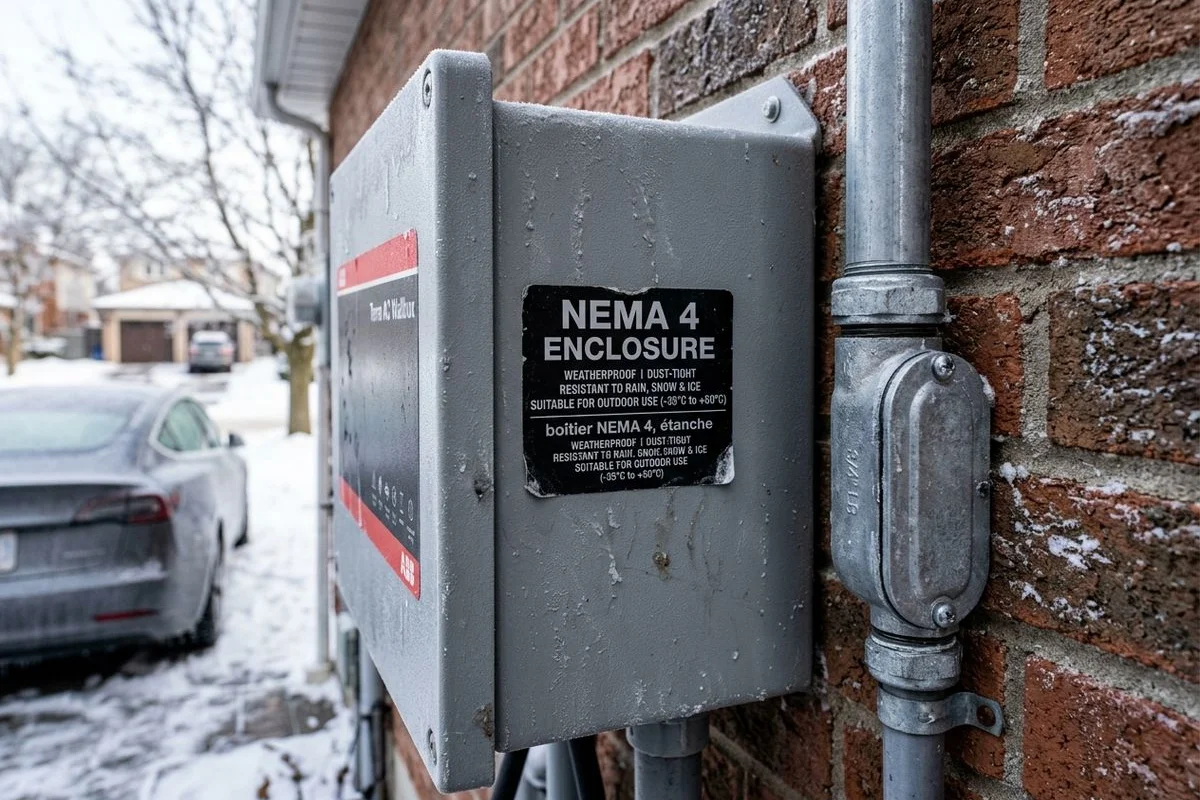
We confirm year-round reliability for these units by using hardware specifically rated for extreme temperatures. Yes, a weatherproof ev charger can easily survive cold weather as long as the enclosure carries a NEMA 4 rating.
Our data shows that Toronto’s average January low sits around -8°C, with occasional drops to -20°C. Quality hardware is tested to operate safely down to -30°C.
We recommend focusing on cable flexibility rather than worrying about the internal electronics freezing. Cold temperatures slow down the chemical reactions inside your car’s battery. This means an ev charger snow toronto exposure requires proper preheating habits to maintain fast charging speeds.
- Battery Efficiency: Charging slows down significantly below 15°C.
- Cable Stiffening: Rubber casings lose flexibility in sub-zero temperatures.
- Moisture Intrusion: Freezing rain can lock up connector ports.
What This Guide Covers
Quick overview of the points worth knowing before you book any work:
1. NEMA-4 / NEMA-4X Rated Enclosures for Outdoor Toronto Installs
We always use a NEMA 4 or NEMA 4X enclosure to provide superior defence against heavy rain and snow compared to a basic NEMA 3R unit. A NEMA 4 rating completely seals the electronics against windblown dust and hose-directed water.
Our preferred units easily handle salt spray from busy GTA roads. Industry guidelines for 2026 heavily recommend at least NEMA 4 for true peace of mind in the Greater Toronto Area.
We created a quick comparison to show the difference.
| Feature | NEMA 3R | NEMA 4 | NEMA 4X |
|---|---|---|---|
| Rain & Snow Protection | Basic | Excellent | Excellent |
| Hose-Directed Water | No | Yes | Yes |
| Corrosion Resistance | No | No | Yes |
2. Conduit Weatherproofing and Freeze-Protected Runs
We install specific cold-weather PVC or rigid metal conduit to protect the electrical wires from expanding ice. Freeze-thaw cycles cause ground shifting that easily cracks standard piping.
Our electricians install expansion joints in the conduit to absorb this ground movement. The electrical code requires all outdoor PVC to be rated for extreme cold.
We seal every fitting with weather-tight PVC cement to prevent moisture from entering the system. This stops water from freezing and expanding inside the pipes.
Pro Tip: Never skip the expansion joint on an underground conduit run. The frost heave in Toronto can lift the ground by several inches, which will snap rigid pipes instantly.
3. Cable Management in Snow and Ice
We strongly advise keeping your charging cable off the ground to prevent it from freezing into a block of ice. Tightly coiling a frozen cable causes the internal copper wires to fracture.
Our team installs an insulated holster with every outdoor unit to keep the connector dry. EV charging cables lose flexibility when temperatures drop below -10°C.
We suggest uncoiling the cable gently on those frigid mornings. Forcing a stiff cord into a tight loop voids many manufacturer warranties.
- Install a wall-mounted hook at least four feet above the ground.
- Clear snow out of the connector port before plugging in.
- Leave the cord in loose, wide loops during January and February.
4. Mounting on Brick vs Vinyl Siding vs Detached Pedestal
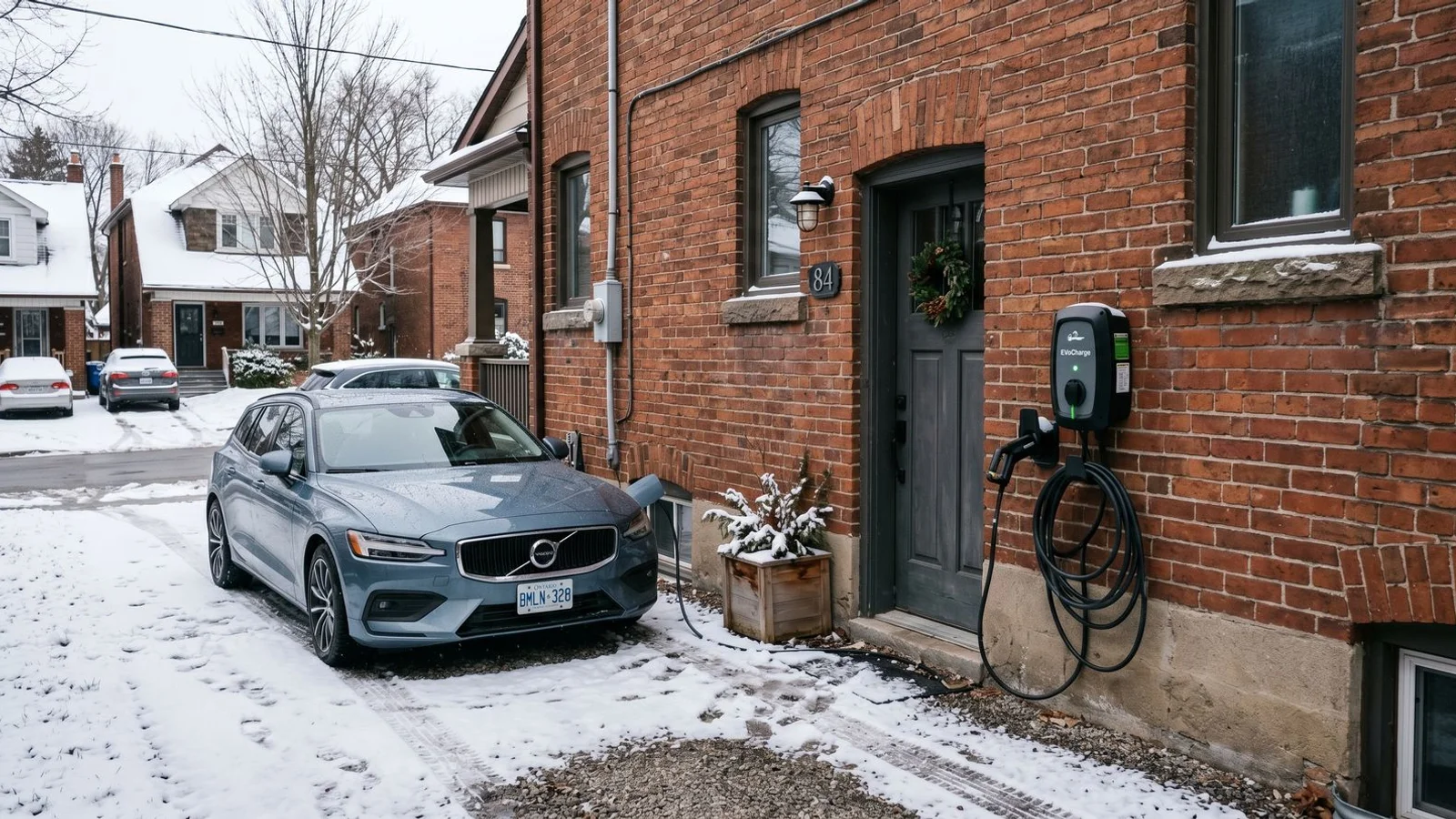
We secure the charger directly to the home’s structural framing rather than just pinning it to the exterior finish. Different surfaces require completely different mounting techniques.
Our brick installations use heavy-duty masonry anchors to handle the weight of the unit and the pulling force of the cable. Vinyl siding requires a customized mounting block to prevent water intrusion behind the wall.
We often recommend a detached pedestal if the driveway sits far from the house. Trenching for a pedestal usually adds between $500 and $1,500 to the project cost depending on the distance.
| Surface Type | Mounting Hardware | Primary Winter Concern |
|---|---|---|
| Brick | Masonry anchors | Ice building up behind the unit |
| Vinyl Siding | Custom mounting block | Siding cracking under pressure |
| Pedestal | Concrete pad & conduit | Frost heave lifting the base |
5. Tested Cold-Weather Charger Models
We supply the Tesla Wall Connector, ChargePoint Home Flex, and Grizzl-E units because they consistently survive Canadian winters. A standard Level 2 nema 4 ev charger installation in Toronto runs between $800 and $1,500, including the ESA permit.
Our condo installations frequently require a DCC-9 load management system. This device protects the main electrical panel from overloading by temporarily shutting off the charger if the building reaches 80% capacity. We handle the condo board approval workflow as part of the installation process.
- Grizzl-E Classic: Manufactured in Canada with a cast-aluminum NEMA 4 enclosure and a heavily insulated cold-weather cable.
- ChargePoint Home Flex: Operates safely down to -30°C and features a NEMA 3R rating for covered outdoor spaces.
- Tesla Wall Connector: Offers integrated cable management and reliable performance in freezing conditions.
Ready for a Quote?
If you are ready to scope this work, our team is happy to talk. We provide free estimates on residential projects across the entire Greater Toronto Area.
Every job is flat-rate quoted.
We secure the ESA permits in our LEC name, and a Certificate of Acceptance is always included.
Visit our ev charger installation page for the full scope of what we do, or contact us directly to get started.
For more context on related decisions, read our guide on how Long Does EV Charger Installation Take?.
Frequently Asked Questions
Will my outdoor EV charger work at -25°C?
+
Yes. All major brands rate Level 2 chargers for -30°C operation; only the cable becomes stiffer, not the electronics. For Toronto homes specifically, we handle this through our LEC with the ESA permit included in the flat-rate quote. Free estimates on residential projects.
Do I need a heated enclosure?
+
No. Proper NEMA-4 rating handles Toronto winters; heated enclosures are overkill for residential. For Toronto homes specifically, we handle this through our LEC with the ESA permit included in the flat-rate quote. Free estimates on residential projects.
Can the charger be mounted on vinyl siding?
+
Yes with a backer plate to spread load and seal the penetration; brick is preferred when available. For Toronto homes specifically, we handle this through our LEC with the ESA permit included in the flat-rate quote. Free estimates on residential projects.