What to Expect During a Whole-Home Rewiring
Timeline (typical 5–10 days), room-by-room sequence, drywall and plaster patching scope, occupied vs vacant work, and dust/cleanup expectations.
By Michael Chen, Licensed Master Electrician ·
Homeowner anxious about disruption, wants to know if they need to move out and what mess to expect.
What to Expect During a Whole-Home Rewiring
Expect a structured 5 to 10 day process where electricians work from the top floor down, opening small access holes that get patched daily. The whole home rewire process is much less destructive than most homeowners imagine. We know the anxiety that comes with opening up walls and upgrading your electrical system.
This guide breaks down exactly what to expect knob and tube replacement to look like on a daily basis. Clear expectations reduce stress and help you plan your week. Our detailed breakdown bridges the gap between booking the job and understanding the daily reality.
What This Guide Covers
This guide outlines the specific timeline, room sequence, patching scope, occupancy options, and dust mitigation standards for your project. A quick overview of the points worth knowing before you book any work gives you a massive advantage. We structure every job to maximize safety and minimize your inconvenience.
Proper planning removes the guesswork from major electrical upgrades. Knowing the exact timeline helps you coordinate with other trades. Our approach guarantees a predictable and stress-free renovation process.
1. Typical 5 to 10 day timeline
Most residential rewiring projects in Toronto take between 5 and 10 days to complete. The exact rewiring timeline depends heavily on the square footage and whether the walls are original plaster or updated drywall. We handle the ESA permit process directly across Toronto, North York, Scarborough, Etobicoke, Mississauga, Vaughan, and Markham to avoid administrative delays.
Here are the main factors that influence your project duration:
- Square footage: Larger homes require more wire and labor.
- Wall material: Lath and plaster takes longer to patch than drywall.
- Panel capacity: Upgrading the main service adds a full day.
A standard 1,500-square-foot semi-detached home in the GTA typically lands closer to the five-day mark. Larger properties might push toward ten days. Our team coordinates the mandatory ESA inspection to keep the project moving forward.
Rough-in wiring takes up the bulk of this time. Finishing devices and final inspections happen in the last two days. We schedule these phases carefully to maintain steady progress.
2. Room-by-room sequence (top floor down, kitchens last)
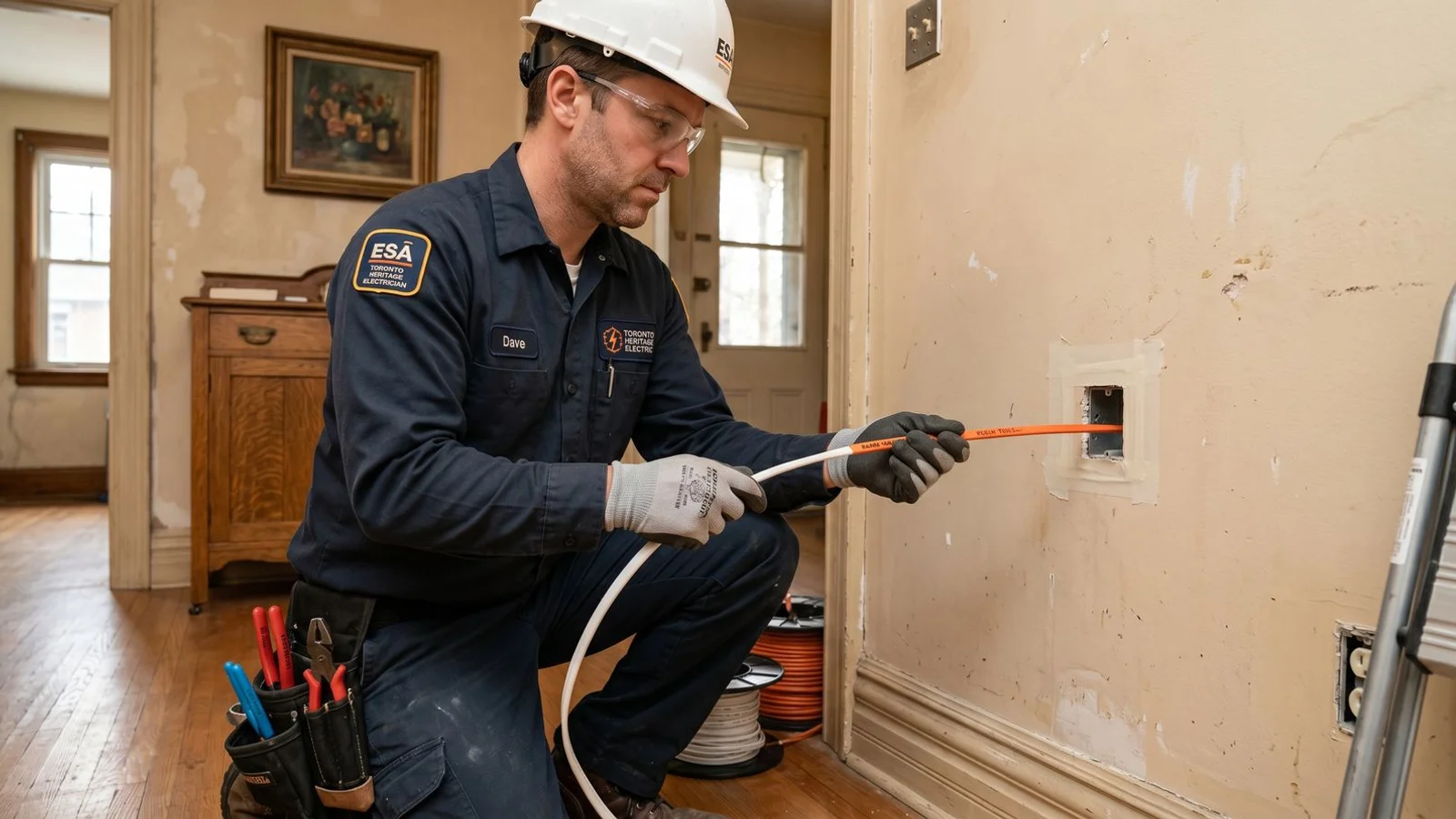
Contractors tackle rewiring from the top floor down, always leaving the kitchen for last. This specific sequence keeps the mess contained and minimizes disruption to your daily routine. We save the kitchen for the end because it requires the most complex circuits.
Gravity works in our favour when fishing new wires from the attic down through the wall cavities. Bedrooms and upper-level bathrooms get completed first. Our electricians follow this exact top-down approach on every single job.
Kitchen electrical upgrades typically require dedicated circuits for:
- Refrigerators
- Microwaves
- Countertop appliances
- Dishwashers
The Ontario Electrical Safety Code mandates dedicated 20-amp receptacles for modern kitchen counters. Upgrading these kitchen circuits takes extra time and careful routing back to the main electrical panel. We allocate the final days specifically for these demanding kitchen runs.
3. Drywall and plaster patching scope (we patch but do not paint)
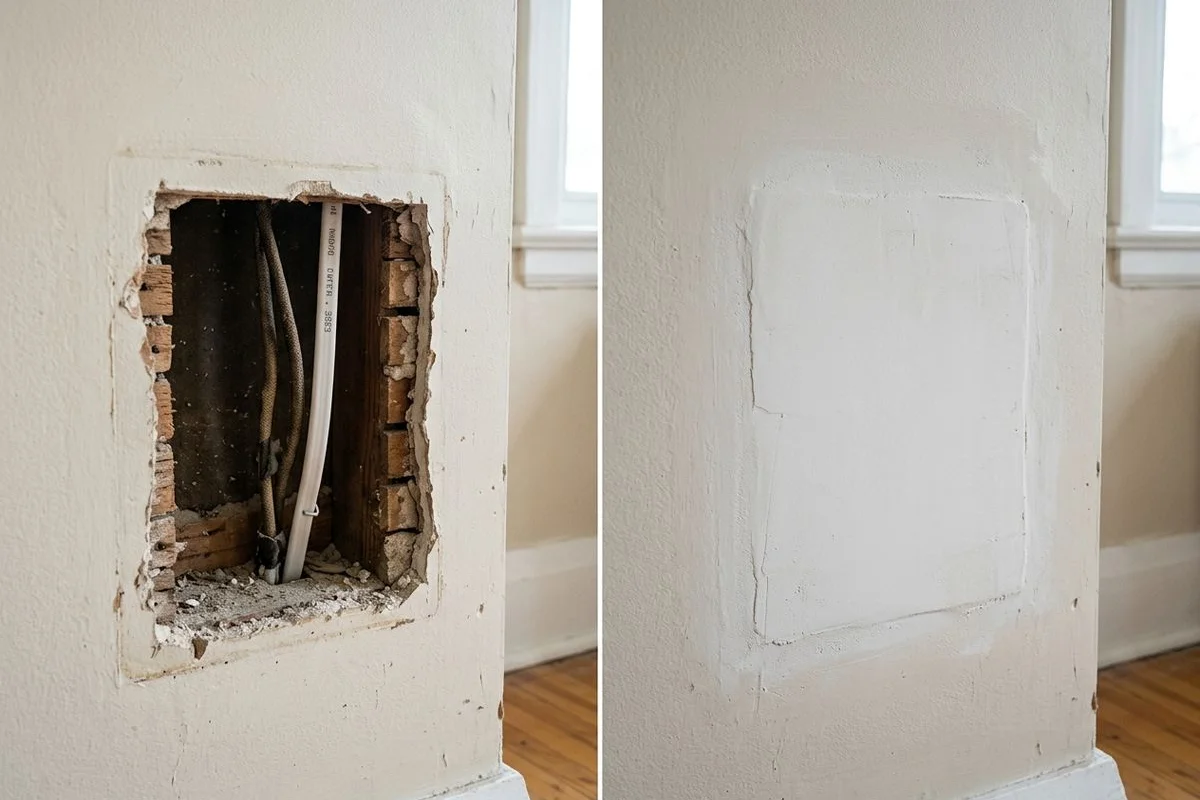
Your project includes professional patching for all necessary access holes, but you will need to arrange for final sanding and painting. The hole sizes usually range from four to six inches in diameter. We use fast-setting joint compounds, like Sheetrock 90, to seal these access points securely.
Older Toronto homes, particularly those built before 1950, feature thick lath and plaster walls. Cutting through plaster creates more dust and requires specialized repair techniques. Our patching process ensures your walls are structurally sound and ready for finishes.
The compound dries incredibly hard and prevents future cracking. A quick sanding by your painter is all that remains before applying primer. We fill these holes tightly to maintain your home’s original fire rating.
Here are the specifics of the patching phase:
- Access cuts: Typically 4 to 6 inches wide.
- Material: Setting-type compound for maximum durability.
- Finish level: Rough patched and flush.
- Exclusions: Final sanding and paint matching.
These standard practices apply to every room opened up during the project. This clarity helps you book your painters accurately. Our team cleans the patched areas before moving to the next room.
4. Occupied vs vacant work, both possible with planning
You can absolutely stay in your home during the knob and tube replacement experience. Moving out makes the job faster, but occupying the space is perfectly manageable with a little daily planning. We restore essential power to your fridge, internet router, and key lighting at the end of each shift.
Most homeowners choose to stay and work around the active zones. Power needs to be shut off to specific sections while the electrician is actively pulling wire. Our goal is to keep your household functional throughout the entire project.
If you work from home, setting up a temporary desk in an already-completed room works best. Extension cords can keep a home office running smoothly during the day. We find that an occupied home just requires moderate daily adjustments.
Reviewing the options side-by-side clarifies the impact on your schedule.
| Option | Impact on Timeline | Daily Disruption |
|---|---|---|
| Vacant Home | Fastest completion rate | Zero disruption to your family |
| Occupied Home | Standard 5 to 10 days | Moderate daily adjustments required |
A vacant home offers the fastest completion rate with zero disruption to your family. The final decision depends on your personal comfort level. Our project managers adapt the workflow to whichever option you choose.
5. Dust mitigation and end-of-day cleanup standard
Strict dust control measures go into effect before a single wall is opened. Daily site cleanups guarantee you are not walking through construction debris at night. We lay down heavy-duty Ram Board floor protection over hardwood and tile surfaces.
Plaster dust is incredibly fine and travels easily through forced-air HVAC systems. Plastic ZipWall dust barriers seal off active work areas from the rest of your house. Our crews execute a full cleanup protocol before leaving the site every single afternoon.
Protective gear used on site includes:
- ZipWall Poles: Creates airtight plastic barriers.
- Ram Board: Prevents scratches on hard flooring.
- HEPA Vacuums: Filters out 99.97% of fine dust.
- Drop Cloths: Shields immovable furniture.
Industrial HEPA vacuums run constantly to capture airborne particles right at the source. Drop cloths protect your heavy furniture from any settling debris. We use specialized filters to capture 99.97% of fine airborne particles.
Contractors rely on this specific equipment to protect your property completely. This thorough approach eliminates the lingering mess associated with major renovations. Our standard operating procedure leaves your home safe and accessible each evening.
Ready for a Quote?
If you are ready to scope this work, the next step is a detailed walkthrough. A proper assessment ensures your quote covers every required detail accurately. We do free estimates on residential projects across the GTA, always quoted at a flat rate.
Every project includes ESA permits registered under our Licensed Electrical Contractor (LEC) name. The final Certificate of Acceptance is always provided for your insurance records. Our team is ready to answer any lingering questions you might have.
Visit knob and tube wiring replacement for the full scope of what we do, or contact us directly. This is a quick and simple process to get started. We look forward to helping you modernize your home safely.
For more context on related decisions, read our guide on what Is Knob and Tube Wiring?.
Frequently Asked Questions
Do we need to move out?
+
Usually no. We sequence rooms so the home stays habitable; large families with infants sometimes choose to leave for a week. For Toronto homes specifically, we handle this through our LEC with the ESA permit included in the flat-rate quote. Free estimates on residential projects.
How much drywall damage?
+
Minimal access cuts only. We use minimal-cut fishing techniques and patch every access we make. For Toronto homes specifically, we handle this through our LEC with the ESA permit included in the flat-rate quote. Free estimates on residential projects.
Do you paint after patching?
+
We patch to paint-ready; final paint is typically homeowner or painter scope. For Toronto homes specifically, we handle this through our LEC with the ESA permit included in the flat-rate quote. Free estimates on residential projects.